
Smart Electric Heaters Market Is Growing 14.3% Annually — Here's Why
From dumb baseboard heaters to grid-responsive thermal assets, the smart heating shift is already underway.
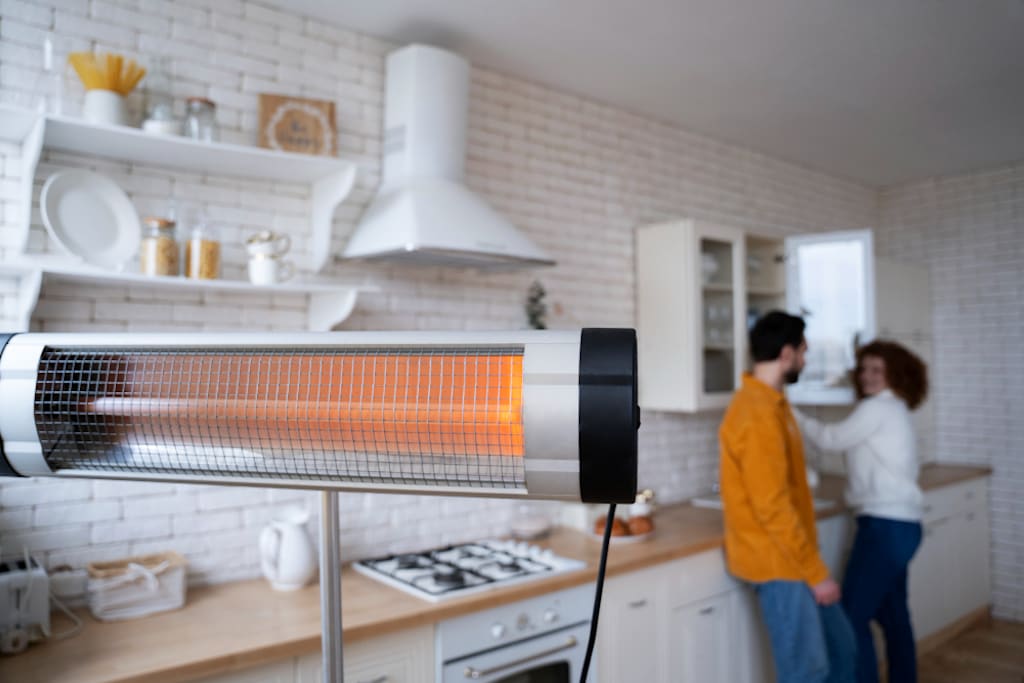
Why Your Thermostat Is About to Become the Smartest Appliance in the Room
Heating accounts for nearly 45% of residential energy bills across the European Union — and for decades, most households have been burning that money on dumb, blunt-instrument heaters with no scheduling, no awareness, and no ability to tell whether anyone is actually home. That's beginning to change. The Smart Electric Heaters Market size stood at roughly $1.7 billion in 2025, and detailed figures on its current trajectory are available in this smart electric heaters industry overview. The projection tells its own story: analysts expect that figure to climb to $6.4 billion by 2035, a compound annual growth rate of 14.3% sustained over an entire decade. That's not incremental. That's a category rewriting itself.
The Problem with "Set It and Forget It" Heating
There's a strange paradox at the center of home energy use. Consumers spend enormous energy tracking their streaming subscriptions, their nutrition apps, their sleep cycles — and then completely ignore a device responsible for nearly half their electricity bill. Conventional electric baseboard heaters and panel radiators operate on a single logic: on or off. Some have manual dials with vague temperature markings. That's more or less where the technology sat for forty years.
Smart electric heaters disrupt that complacency in a specific, measurable way. Models from companies like Rointe and Elnur — both European manufacturers with strong footholds in the UK and Spanish markets — now ship with integrated Wi-Fi connectivity, load-balancing algorithms, and occupancy detection. The Rointe D Series, for instance, uses adaptive start technology that calculates how long a room takes to heat and works backward from the user's target time. That's not a minor upgrade. That's the difference between heating a room you're already sitting in cold and having it ready when you arrive.
Geography Is Driving the Numbers More Than Technology
It would be tempting to assume Silicon Valley is leading this transition. It isn't. Europe is. Building efficiency regulations across the EU — particularly the revised Energy Performance of Buildings Directive, which pushes member states toward near-zero energy standards for existing buildings by the early 2030s — are creating legal and economic pressure that North American markets simply don't yet face at the same scale. Countries like Norway and Sweden, where electricity grids are predominantly renewable and electric heating is already the norm, are seeing rapid adoption of smart controls simply because the infrastructure supports a feedback loop: smart heaters can respond to real-time grid pricing signals and reduce consumption during peak demand periods.
China, meanwhile, is pursuing smart electric heating from a different angle. Urban residential construction in northern provinces like Heilongjiang and Inner Mongolia has historically relied on centralized district heating systems. As those systems strain under aging infrastructure, developers are turning to decentralized electric alternatives — and the smart variants, with their remote monitoring and zone-based control, make facility management substantially easier. That's a demand driver that has almost nothing to do with consumer preference and everything to do with logistics.
Connectivity Is the Real Differentiator — and the Real Risk
Integrations with platforms like Amazon Alexa, Google Home, and Apple HomeKit have moved smart heaters from specialty products to mainstream retail consideration. A user can now schedule heating room by room, set temporary overrides from an app while commuting, and receive alerts when a child's bedroom drops below a set temperature. These aren't gimmicks. For families in older homes with poor insulation and high heating costs, granular zone control can produce measurable savings.
But the connectivity angle introduces a complication the industry hasn't fully resolved. Any Wi-Fi-enabled appliance is a network endpoint, and home heating systems sit on the same networks as financial apps, personal devices, and smart locks. Several cybersecurity researchers have flagged vulnerabilities in IoT-connected HVAC devices, and regulators in the UK have begun tightening smart device security standards under the Product Security and Telecommunications Infrastructure Act. Manufacturers who treat security as an afterthought will face growing liability. Those who build it into the firmware early will have a durable advantage.
The Smart Electric Heaters Market share is expected to remain fragmented for the foreseeable future, with no single manufacturer commanding dominant global presence. Regional players — particularly those with established relationships with European builders and housing associations — hold real advantages over the global consumer electronics brands trying to enter from above.
Where This Actually Goes
The decade ahead won't be defined by the heaters themselves so much as by what they connect to. As residential battery storage becomes more common — driven by falling lithium-ion costs and programs like the UK's Smart Export Guarantee — smart heaters will increasingly function as thermal batteries in their own right, absorbing cheap overnight electricity and releasing it as heat throughout the day. The appliance stops being a cost center and starts acting more like an asset. That reframing, more than any single feature or product launch, is what the next generation of smart heating manufacturers will be selling.
About the Creator
Mark K. Belton
I’m Mark K. Belton, 26 years old, currently working as a Digital Marketing Intern. I have a strong interest in digital marketing and have been developing my skills in SEO, social media marketing, content creation, and online campaign
Enjoyed the story? Support the Creator.
Subscribe for free to receive all their stories in your feed.
Comments
There are no comments for this story
Be the first to respond and start the conversation.