
Small Satellites, Big Impact: The Rise of the CubeSat Market
From Earth observation to global internet coverage, CubeSats are redefining how industries use space technology

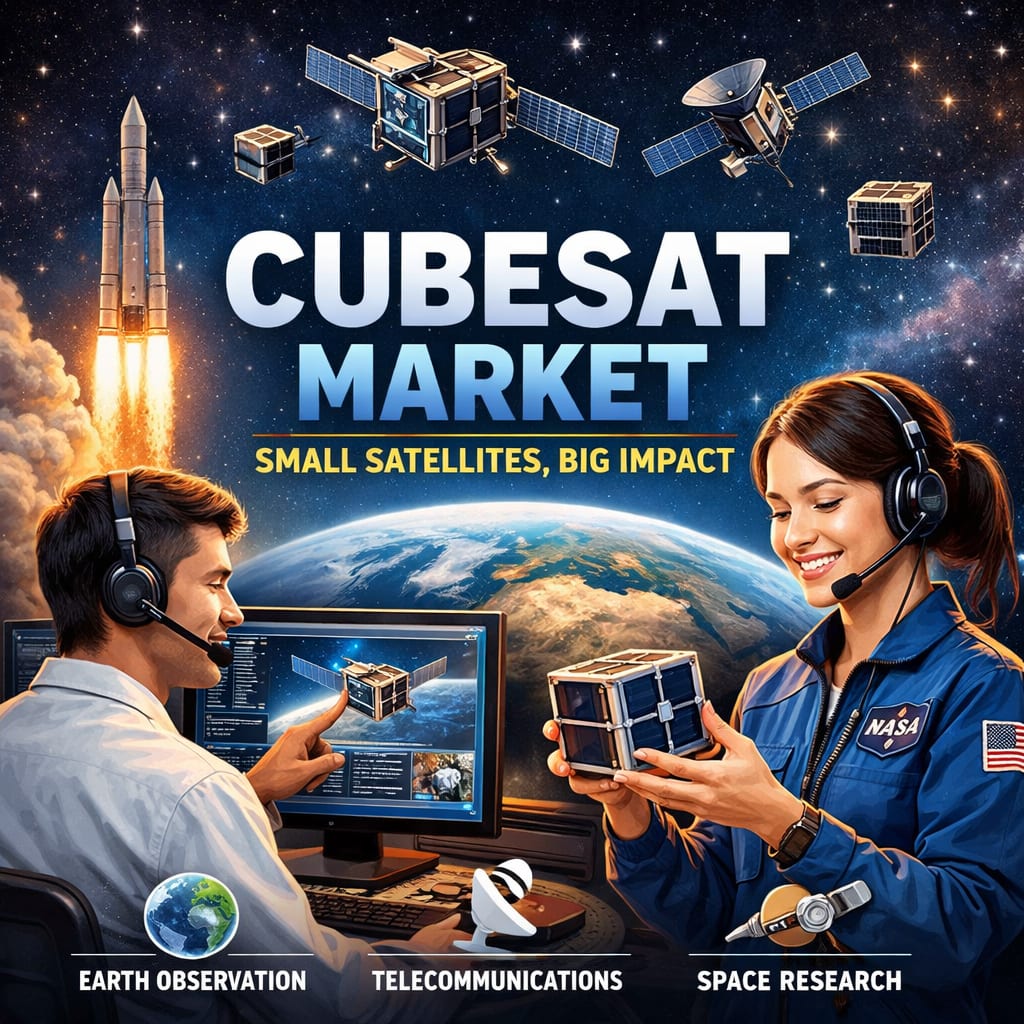
Space is no longer the exclusive domain of billion-dollar missions and giant satellites․
There is a new wave of innovation that is quietly sweeping across the space industry‚ and it is being driven by something small․ CubeSats‚ tiny satellites no bigger than a shoebox‚ promise to forever change the economics of access to space․
No longer the sole domain of government agencies‚ CubeSats are being built by start-ups‚ universities and companies around the world․ The growing demand for real-time data and global connectivity has made the tiny satellites a key feature of modern space infrastructure․
A Market Growing Faster Than Expected
The global CubeSat market size was directed at US$482 million in 2025 and is anticipated to reach around US$1․76 billion by 2034‚ growing nearly 3-fold during 2025-2034․
This would denote a growth rate of more than 15% per year between 2026 and 2034‚ an indication that small satellites are no longer a niche innovation․
This rapid growth is fueled by a simple belief: space technology does not have to be expensive to be powerful․
CubeSats are a lower-cost way to do missions that used to require large‚ complex‚ heavy satellites - which is changing who is involved in the space industry․
Why are CubeSats becoming popular?
CubeSats are lightweight and modular‚ making them easier to build and less costly to launch and operate than larger satellites․
Their greatest asset was their versatility․
They are used in:
- Earth observation and environmental monitoring
- Communication and data transmission
- Scientific research and experimentation
- Technology testing and validation
Cheap satellites also offer universities and small businesses opportunities to begin their own spaceflight missions‚ which were previously unrealistic or impractical a decade ago․
The Rise of Commercial Space Applications
One of the biggest drivers in the CubeSat market is the increasing involvement of commercial companies․
Businesses are increasingly using satellite observations for:
- Weather tracking
- Agriculture monitoring
- Asset tracking and logistics
- Disaster management
- Global internet connectivity
CubeSats make these services accessible and scalable․
Instead of a single satellite‚ companies may also launch constellations of CubeSats or small satellites for continuous coverage and real-time data capture․
This approach is not only more efficient‚ but also more flexible‚ tunable‚ and easier to upgrade․
How Space Launch Is Becoming More Accessible
Advancements in launch services have also contributed to the growth in CubeSat numbers and deployments․
More and more private companies have been entering the satellite launching market‚ which had been previously restricted to governments and government space agencies․ This has led to a reduction in the cost and frequency of satellite launches‚ particularly rideshare launches for multiple CubeSats․
For example‚ dozens of launches occur in the United States annually‚ signifying that access to space is on the rise at a rapid pace․
Continuing accessibility is encouraging organizations to experiment with new applications for CubeSat technology as well․
Expanding Connectivity Through CubeSats
One of the most exciting applications of CubeSats is telecommunications․
As the world becomes more interconnected‚ the demand for internet access in remote or underserved regions is increasing‚ and CubeSats can complement existing satellite networks to provide internet connectivity․
They are being used for:
- Expanding broadband coverage
- Supporting satellite phones
- Easing maritime and aviation operational communications
- Strengthening emergency communication systems
CubeSats are also being used in new networks such as 5G‚ where they are used for low-latency data delivery․
The role of education and research
One could say that CubeSats are transforming commercial and educational sectors․
Universities and research institutions have used CubeSats as platforms for students to learn about space science‚ engineering and technology․ Students design‚ build and operate the spacecraft‚ providing experience that is otherwise unavailable to most․
These can be government programs‚ or international collaborations that make space exploration more accessible and affordable․
CubeSats are in many ways the training wheels for the next generation of space․
Demand Based on IoT and Real-Time Data
Another factor in the growth of the CubeSat market has been the rise of the IoT․
With billions of devices‚ reliable transmission of data is a must‚ despite some areas not having cell phone coverage or Wi-Fi․
CubeSats may be able to provide global coverage․
They collect and send data from sensors used in industries such as:
- Agriculture
- Shipping and logistics
- Oil and gas
- Environmental monitoring
A benefit of CubeSats is that‚ when used in large numbers‚ they can provide perpetual‚ real-time data to decision makers․
The Most Famous CubeSats Are
CubeSats are not all the same․
The 3U to 6U CubeSats are the most common and successful commercially because they represent the best compromise for size‚ cost and capability․
They are:
- Large enough to carry advanced payloads
- Small enough to be economically viable․
- Capable of multiple mission types
CubeSats are extensively used in Earth observation‚ telecommunications‚ and research‚ and thus are the most widely used class of satellites․
Where Most of the Growth Is Happening
The CubeSat market is geographically concentrated․
The regional market is led by North America‚ accounting for over 75% of the market share due to:
- Strong presence of space agencies and private companies
- Highly developed infrastructure for satellite construction and launch
- Substantial investment in research and innovation
Asia-pacific and Europe are also beginning to experience rapid growth as investment in space program and satellite technology grows․
Emerging markets in Latin America and the Middle East are turning to CubeSat solutions to improve communications and digital infrastructure․
An industry characterized by competition and innovation․
The CubeSat marketplace is a competitive race between major aerospace firms and new start-ups working to build the best CubeSat․
Companies are focusing on:
- Specifically for high-performance miniaturized components
- Developing advanced payload systems
- Offering affordable launch services
- Creating scalable satellite constellations
Collaboration between university‚ government‚ and private industry is also a large trend‚ which helps to accelerate innovation and further expand the use of CubeSats in all sectors․
Challenges That Could Influence the future
Despite its rapid growth‚ the CubeSat market does encounter difficulties․
- Shorter lifespan than larger satellites․
- Satellite launches increasing‚ raising concerns about space debris
- Regulation and spectrum allocation issues
- Technical limitations on power and payload capacity
As research and technology continue to progress‚ CubeSats are being developed that are more reliable and capable․
The Future of CubeSats
The future looks bright for CubeSats․
Demand for better real time data‚ global connectivity and inexpensive access to space will make CubeSats a central feature of the commercial space economy․
We are headed for a future where
- Space missions are becoming more affordable and frequent
- Data from space becomes instantly accessible
- Small satellites in smart networks․
- Large companies and startups are also driving innovation․
The CubeSat market is expected to reach over USD 1․7 billion by 2034‚ indicating the market segment's growing importance to the space industry․
Final Thoughts
CubeSats show size is no hindrance to space science․
These microsatellites may be used for potential scientific exploration and data collection‚ as well as Earth observation‚ and may serve as communications satellites‚ providing worldwide coverage and connectivity․
With continuing progress CubeSats will be on the leading edge of a revolution in space exploration‚ one that is more accessible‚ more open‚ and where even the smallest of satellites can make an impact․
If you’re interested in how space technology is evolving, CubeSats are definitely worth keeping an eye on in the coming years.
About the Creator
Robert
Senior Market Researcher at IMARC Group, specializing in global market analysis, industry trends, and data-driven insights across diverse sectors.
Enjoyed the story? Support the Creator.
Subscribe for free to receive all their stories in your feed.
Comments
There are no comments for this story
Be the first to respond and start the conversation.