
Silicon Fertilizer Market Trends: Crop Yield Improvement, Stress Resistance & Industry Forecast to 2034
How rising demand for higher crop yields, stress tolerance, and nutrient efficiency is accelerating the use of silicon-based fertilizers in modern agricultural practices

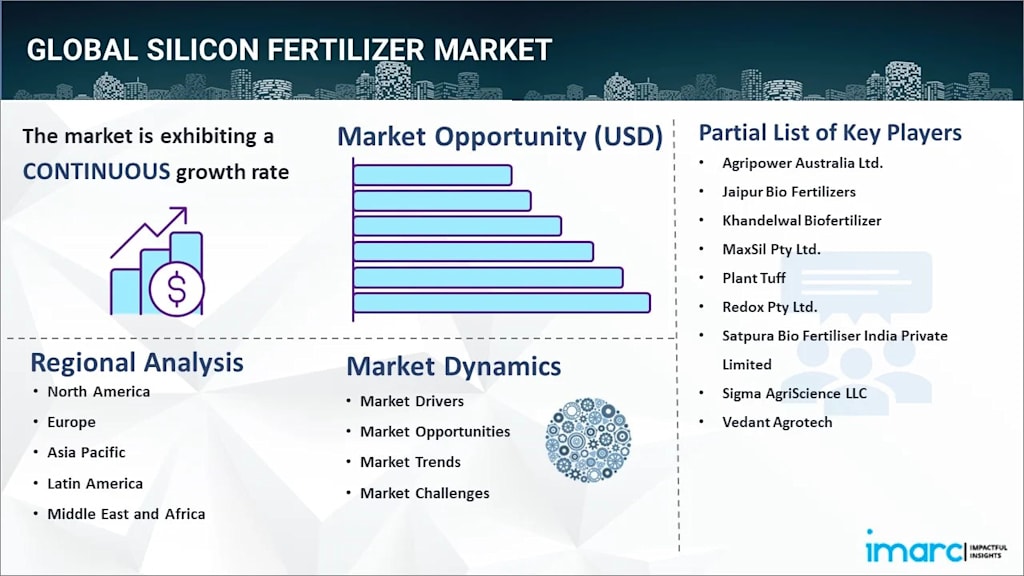
The global demand for silicon fertilizers is surging as agricultural sectors prioritize crop resilience, soil health, and sustainable yield optimization. According to IMARC Group’s latest data, the global silicon fertilizer market size was valued at USD 114.0 Million in 2025. Looking forward, IMARC Group estimates the market to reach USD 147.7 Million by 2034, exhibiting a CAGR of 2.83% from 2026-2034.
Silicon fertilizers have emerged as a critical component in modern agriculture, moving beyond niche applications to become a multi-million-dollar industry. This growth is underpinned by the urgent need to mitigate abiotic stresses such as drought and salinity, alongside biotic pressures like pest infestations. As farmers seek to maximize productivity on shrinking arable land, the focus has shifted toward high-efficiency formulations including liquid, solid, and nano-silicon variants. The market is increasingly characterized by product innovation, such as slow-release technologies that ensure prolonged nutrient availability and improved plant cell wall strength.
Get Instant Access to the "Silicon Fertilizer Market" Sample Report!
Silicon Fertilizer Market Growth Drivers:
- Rising Adoption in Rice and Staple Crop Cultivation
Rice is a prominent silicon-accumulator, requiring significant quantities of this element to maintain structural integrity and yield. In India, for instance, the Ministry of Agriculture estimated rice production at over 136 million metric tons for the 2023-24 season, a rise that directly correlates with increased fertilizer demand. Silicon strengthens cell walls, preventing "lodging" or the bending of stalks, which can otherwise devastate harvests. By enhancing the plant's natural defense against stem borers and fungal diseases, these fertilizers reduce the need for aggressive chemical pesticides, making them indispensable for large-scale grain producers across Asia and South America.
- Mitigation of Climate-Induced Water Stress
With nearly 2.4 billion people living in water-stressed regions, agriculture is under immense pressure to optimize water-use efficiency. Silicon fertilizers play a vital role in drought resistance by regulating transpiration and helping plants retain moisture during dry spells. Research indicates that silicon-treated crops exhibit better osmotic adjustment, allowing them to survive in arid conditions where traditional crops might fail. This functionality is driving significant uptake in regions like Sub-Saharan Africa and the Western United States, where unpredictable rainfall patterns have made water-saving agricultural inputs a top priority for both farmers and regional policymakers.
- Enhancement of Soil Health and Nutrient Synergy
Silicon fertilizers do more than just nourish the plant; they actively improve soil chemistry by enhancing the availability of other essential nutrients like phosphorus. In many intensive farming systems, phosphorus becomes "locked" in the soil and unavailable to plants, but silicon application can help release these bound nutrients. This synergy allows farmers to achieve better results with fewer total chemical inputs. Furthermore, as the global population heads toward a projected 9.8 billion by 2050, the pressure to maintain soil fertility without causing degradation has positioned silicon as a "cleaner" alternative that supports long-term agricultural sustainability and land productivity.
Silicon Fertilizer Market Trends:
- Technological Shifts Toward Nano-Silicon and Water-Soluble Formulations
The industry is witnessing a rapid transition from traditional slag-based products to advanced nano-silicon and highly water-soluble formulations. Approximately 60% of current manufacturers are now focusing on these high-bioavailability options to ensure more rapid root absorption and targeted delivery. Nano-fertilizers are particularly gaining traction because they can be applied in much smaller doses while achieving superior results in stress tolerance and photosynthetic efficiency. This trend is highly visible in the hydroponics and greenhouse segments, where precise nutrient management is critical for the production of high-value berries, leafy greens, and ornamental flowers.
- Integration with Sustainable and Bio-Based Farming Initiatives
There is a growing trend of combining silicon with beneficial microbes and bio-stimulants to create synergistic "bio-silicon" products. These combinations not only provide the structural benefits of silicon but also improve the microbial life of the soil, leading to a more holistic approach to plant health. Governments in regions like the European Union are increasingly incentivizing such eco-friendly alternatives through "Green Deal" frameworks that discourage the overuse of traditional synthetic nitrogen and phosphorus. This regulatory tailwind is encouraging major fertilizer companies to diversify their portfolios with silicon-based solutions that align with organic and low-impact farming standards.
- Focus on Premiumization in Horticultural and Export-Oriented Crops
In the competitive global fruit and vegetable market, physical appearance and transportability are paramount. Silicon application is increasingly used to improve the "rind" thickness and mechanical strength of produce like grapes, tomatoes, and melons. This trend, often referred to as premiumization, helps reduce post-harvest losses, which can account for up to 30% of total production in some regions. By ensuring that produce remains firm and bruise-resistant during long-distance shipping, silicon fertilizers provide a clear economic advantage to exporters. Consequently, the horticultural segment is seeing robust value growth as growers invest in these inputs to secure higher market prices.
Recent News and Developments in Silicon Fertilizer Market
- January 2026: Researchers at a prominent agricultural university in Australia released a multi-year study confirming that silicon-enriched fertilizers reduced irrigation requirements by 15% in wheat trials, sparking new commercial interest from local drought-affected farming cooperatives.
- March 2026: A major fertilizer producer in the Asia-Pacific region launched a "Smart-Silicon" granules line, utilizing a proprietary coating technology designed to release silicon slowly over a 90-day period, specifically for high-yield rice varieties.
- April 2026: Several European agricultural startups entered into a collaborative partnership to develop "Carbon-Neutral Silicon," sourced from recycled industrial bi-products, aligning with the EU’s strict circular economy and carbon reduction mandates.
Note: If you require specific details, data, or insights that are not currently included in the scope of this report, we are happy to accommodate your request. As part of our customization service, we will gather and provide the additional information you need, tailored to your specific requirements. Please let us know your exact needs, and we will ensure the report is updated accordingly to meet your expectations.
About the Creator
Andrew Sullivan
Hello, I’m Andrew Sullivan. I have over 9+ years of experience as a market research specialist.
Enjoyed the story? Support the Creator.
Subscribe for free to receive all their stories in your feed.
Comments
There are no comments for this story
Be the first to respond and start the conversation.