
Shrimp Feed Market Witnesses Strong Growth Amid Aquaculture Demand
The Shrimp Feed Market is witnessing strong growth driven by the rapid expansion of the global aquaculture industry and increasing shrimp production.

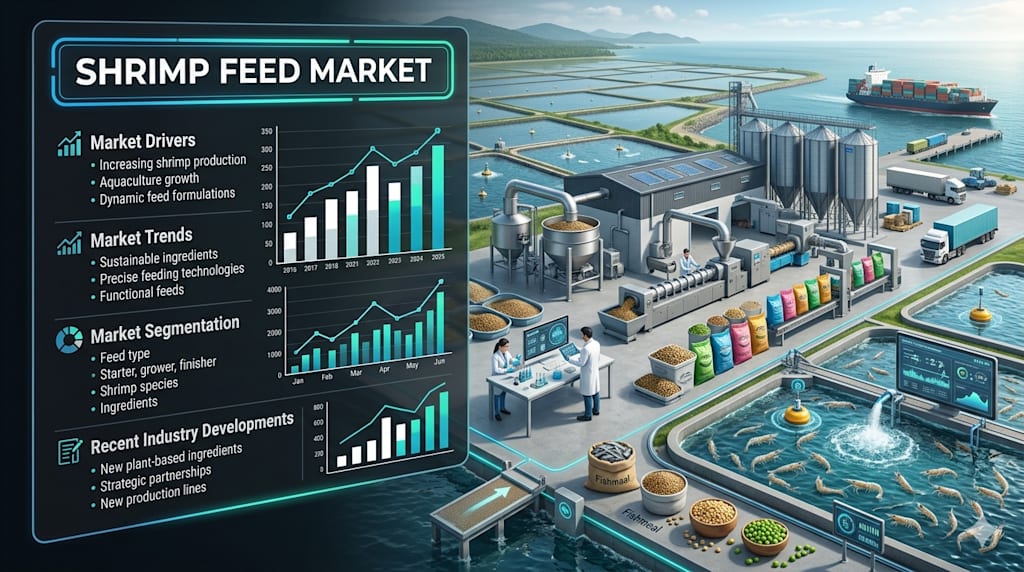
According to IMARC Group's latest research, The global shrimp feed market size reached USD 7.5 Billion in 2025. Looking forward, IMARC Group expects the market to reach USD 11.4 Billion by 2034, exhibiting a growth rate (CAGR) of 4.50% during 2026-2034.
How AI is Reshaping the Future of Shrimp Feed Market
- Precision Feed Optimization and Nutrient Management: AI algorithms analyze individual shrimp health data and growth patterns to deliver tailored nutritional profiles. Real-time monitoring systems adjust feed composition automatically, improving feed conversion ratios by up to 12 percent while reducing waste significantly.
- Automated Feeding Systems and Quantity Control: Smart IoT-enabled feeders dispense optimal portions based on environmental conditions and fish behavior patterns. Automated systems reduce overfeeding by 18 percent, lowering costs while maintaining consistent growth rates and minimizing water quality deterioration.
- Disease Prediction and Immune Support Formulation: Machine learning models predict disease outbreaks by analyzing water quality, temperature, and historical health data. AI systems recommend preventive feed formulations with targeted additives, reducing disease incidence by up to 25 percent in farming operations.

Shrimp Feed Industry Overview
Asia-Pacific dominates global shrimp feed demand through intensive farming in China, Vietnam, India, and Thailand, accounting for over 70 percent of regional revenue. The region combines favorable climate conditions with advanced aquaculture infrastructure, supporting millions of shrimp farming operations. Supportive government policies encouraging sustainable seafood production and investments in modern hatcheries and processing facilities strengthen market fundamentals across the region.
Shrimp Feed Market Trends & Drivers
Rising Global Shrimp Consumption and Protein Demand: Shrimp represents one of the most sought-after seafood products globally, driven by changing dietary preferences toward protein-rich foods. Growing middle-class populations in developing economies increasingly consume shrimp as a premium protein source. Health-conscious consumers recognize shrimp's nutritional benefits, including omega-3 fatty acids and essential amino acids, driving steady demand growth that directly benefits aquaculture producers requiring specialized nutritional feeds.
Expansion of Shrimp Aquaculture Infrastructure: Shrimp farming has evolved as a economically viable alternative to wild harvesting, attracting substantial global investment. Modern aquaculture facilities are expanding across Asia, Latin America, and Africa to meet international seafood demand. This expansion requires efficient, nutritionally optimized feeds designed for specific growth stages, driving innovation in feed formulation and supporting market expansion among established and emerging aquaculture operators worldwide.
Sustainability Focus and Eco-Friendly Feed Innovation: The aquaculture industry increasingly emphasizes environmental responsibility and sustainable farming practices. Insect-based proteins from black soldier fly and other alternative sources are gaining traction as sustainable alternatives to traditional fish meal. Industry players are developing plant-based formulations reducing environmental footprints while maintaining nutritional completeness, aligning with consumer demand for responsibly sourced seafood and regulatory requirements for sustainable aquaculture operations.
Shrimp Feed Market Segmentation
By Type
Grower: Dominant segment formulated for juvenile shrimp during critical growth phase
Finisher: Tailored for mature shrimp nearing harvest size with focus on weight and quality
Starter: Essential for newly hatched postlarvae requiring specialized early-stage nutrition
By Ingredients
Soybean Meal: Largest ingredient segment providing cost-effective, sustainable protein source
Fish Meal: Significant contributor offering high-quality protein and essential fatty acids
Wheat Flour: Key carbohydrate source serving as binder in feed formulations
Fish Oil: Critical ingredient providing omega-3 fatty acids for tissue development
Others: Including plant oils, mineral sources, and specialty ingredients
By Additives
Vitamins and Proteins: Leading segment supporting metabolic processes and tissue development
Fatty Acids: Significant component enhancing immune response and tissue formation
Antioxidants: Important additives protecting feed quality and supporting shrimp health
Feed Enzymes: Enhance digestibility and nutrient absorption efficiency
Antibiotics: Declining segment due to antibiotic resistance concerns and alternative approaches
Others: Specialty additives supporting specific health and performance objectives
By Region
Asia Pacific: Dominant region with over 70 percent market share driven by intensive farming centers
Latin America: Significant contributor with sustainable farming emphasis and favorable climates
Europe: Growing segment prioritizing high-quality feeds and environmental responsibility
North America: Steady market with focus on specialized and premium feed formulations
Middle East and Africa: Emerging region with growing aquaculture development potential
Leading Companies Operating in the Global Shrimp Feed Industry
Charoen Pokphand Group Company, Ltd.
Cargill, Incorporated
Nutreco N.V.
BioMar Group A/S
Guangdong Yuehai Feeds Group Co., Ltd.
BASF SE
Alltech Inc.
Archer Daniels Midland Co.
Avanti Feeds Ltd.
DuPont de Nemours Inc.
Recent News and Developments in Shrimp Feed Market
May 2025: Thai Union Group secured a landmark USD 150 million blue loan from the Asian Development Bank for sustainable shrimp farming and climate goals. This financing supports investments in eco-friendly feed formulations, improved farming practices, and supply chain sustainability initiatives across Southeast Asian operations.
December 2024: Thai Union Feedmill unveiled an organic-certified shrimp feed targeting specialty and premium market segments. The product development reflects growing consumer demand for sustainably sourced shrimp and commitment to environmental stewardship in global aquaculture operations.
September 2025: Schouw & Co. (BioMar) and Innovafeed announced large-scale commercial integration of insect protein from black soldier fly into shrimp feed in Ecuador. Insect-based proteins provide functional benefits including antimicrobial peptides supporting shrimp immunity while offering sustainable alternatives to traditional fish meal.
April 2026: IFB Agro Industries completed integration and capacity expansion following its acquisition of Cargill India's shrimp and fish feed business in 2025. The consolidation optimizes production networks across Indian facilities in Andhra Pradesh, strengthening regional market position.
October 2024: Nissui Corporation published its third sustainability survey of procured marine resources, demonstrating industry commitment to environmental responsibility and transparent supply chain management across global aquaculture operations.
Note: If you require specific details, data, or insights not currently included in the scope of this report, we are happy to accommodate your request. As part of our customization service, we will gather and provide the additional information you need, tailored to your specific requirements. Please let us know your exact needs, and we will ensure the report is updated accordingly to meet your expectations.
About the Creator
Michael Richard
Michael Richard is a Market Research Expert specializing in market intelligence, competitive analysis, and data-driven insights. He helps organizations understand trends and emerging opportunities through in-depth research.
Enjoyed the story? Support the Creator.
Subscribe for free to receive all their stories in your feed.
Comments
There are no comments for this story
Be the first to respond and start the conversation.