
Shampoo Market: The USD 71 Billion Industry That Never Has a Bad Year — and Why It Is Getting More Interesting
From everyday cleansing to scalp-health science and solid shampoo bars — the global shampoo market is quietly reinventing one of the most purchased products on the planet

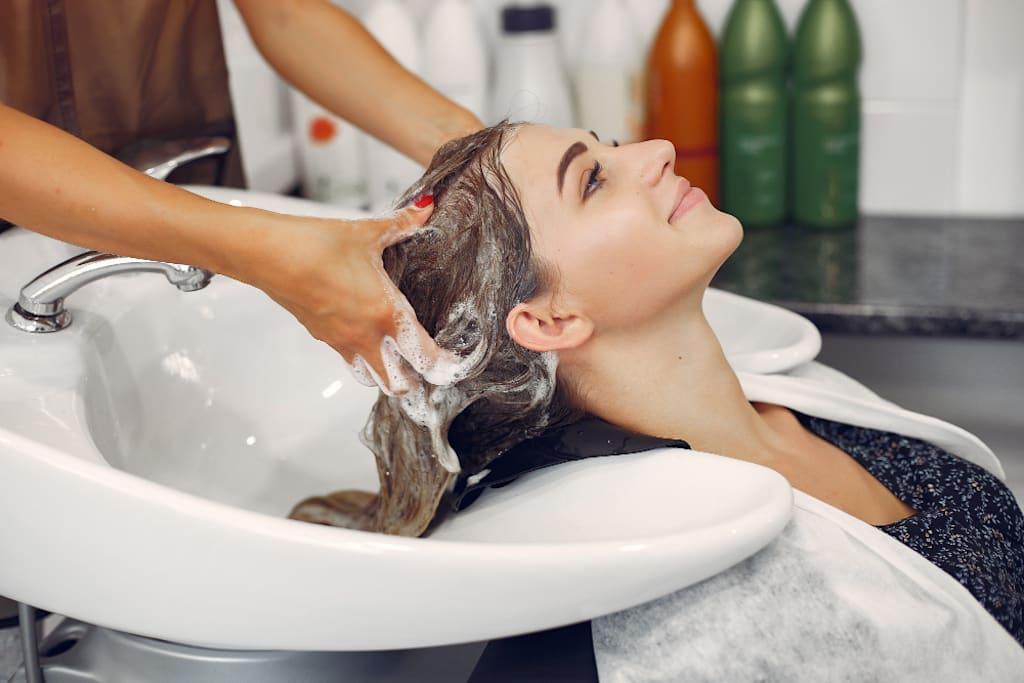
There is a product in almost every shower on the planet. It has been there for decades. It does not have boom years or bust years — it has consistent, compounding, recession-proof demand because the alternative to buying it is simply not washing your hair. It is the most purchased personal care product in human history, and most people give it about thirty seconds of thought before tossing it in their shopping basket.
That product is shampoo. And right now, it is getting genuinely interesting for the first time in a long time.
The global shampoo market was valued at USD 38.23 billion in 2025 and is projected to reach USD 71.83 billion by 2035, growing at a CAGR of 6.51%. Premiumization, scalp health innovation, and the emergence of entirely new product formats are pushing mid-single-digit growth across both mass and prestige channels globally. For brand managers, retail category buyers, investors, and industry professionals who need the complete analytical breakdown — covering product types, formats, distribution channels, end-user demographics, hair types, and regional forecasts through 2035 — the full research is available in the shampoo market report from Evolvance Market Research.
Shampoo Market Size and Growth
Asia Pacific leads all regions with a 39.8% revenue share valued at USD 15.21 billion in 2025 — driven by the largest population of daily shampoo users on the planet, a deeply established hair cleansing culture, and rapidly expanding middle-class purchasing power that is consistently trading up from economy to mid-tier formulations.
The United States shampoo market was valued at USD 13.96 billion in 2025 and will grow at a 2.80% CAGR to reach USD 17.90 billion by 2035. That growth rate is below the global average — reflecting a fully mature market where volume is stable and growth comes entirely from trading up rather than expanding the buyer base. Premium hair care already holds 39% revenue share in North America, and shampoo is where that premiumization trend is most visible — as consumers who have educated themselves on ingredient quality consistently move away from economy formulations toward products with credible clinical or natural positioning.
The major FMCG operators confirmed the category's resilience in 2025 results. L'Oréal's H1 2025 operating profit reached EUR 4,740.1 million — 21.1% of sales. Unilever posted an underlying operating margin of 20.0% backed by EUR 670 million in cumulative productivity savings. Procter and Gamble's core earnings per share reached USD 6.83 in fiscal 2025, up 4% year-on-year. These are not growth numbers built on volume expansion — they are margin numbers built on premiumization and operational efficiency in categories that include shampoo as a core revenue driver.
Shampoo Market Trends: The Scalp-First Revolution
The single most important trend reshaping the shampoo market is the migration of product positioning from hair to scalp. For most of shampoo's commercial history, the product was marketed on what it did to hair — how shiny, how voluminous, how smooth it made the strands. The new generation of shampoo is marketed on what it does to the scalp — how it balances the microbiome, reduces inflammation, supports follicle health, and addresses the root causes of the hair concerns consumers actually experience.
This shift is not cosmetic. It is driven by a decade of consumer education on social media that has made scalp biology a mainstream topic — where dermatologists explaining the sebaceous gland on TikTok reach millions of viewers who previously had no idea why their scalp behaved the way it did. Brands that positioned scalp health first — Head and Shoulders built the original scalp-first brand with anti-dandruff chemistry, but a new wave of prestige scalp care shampoos from brands like Act plus Acre and Vegamour are building scalp positioning at premium price points — are capturing the consumers who have done that research.
Bond repair shampoo is the fastest-growing product innovation in the category. Originally developed for salon use in the context of chemical treatment and color damage, bond repair technology has expanded into daily-use shampoo formats as consumers with heat-damaged or chemically treated hair seek cleansing products that actively strengthen rather than merely clean. Olaplex, Redken, and K18 have all built significant shampoo revenue on bond repair positioning — and every major mass-market brand is now developing competitive responses.
Shampoo Market Segments: Non-Medicated Leads but Specialist Formats Grow
Non-medicated regular shampoos hold a 58.58% revenue share — the largest product segment by a margin that reflects the daily purchase behavior of billions of consumers worldwide who simply want effective, affordable cleansing. But the growth in value terms is happening at the specialist end of the category.
Anti-dandruff shampoos address a concern that affects roughly half the global adult population at some point — making them the largest medicated sub-segment with deep mass-market penetration. Hair-fall shampoos are among the fastest-growing formats as consumer awareness of scalp health and hair loss prevention drives proactive purchase behavior. Bond repair and volumizing formats are capturing the premium consumer trading up from basic cleansing.
Women account for 66.89% of global shampoo revenue — a figure that reflects both higher purchase frequency and larger basket size. Men's shampoo is the segment showing the most dynamic growth rate, as younger male consumers adopt multi-step routines that include dedicated shampoos rather than the two-in-one formats that dominated men's hair care for decades.
The most disruptive format innovation is the shampoo bar — solid concentrated shampoo that eliminates plastic bottles entirely and delivers more active ingredients per gram than liquid equivalents. Shampoo bars align perfectly with the sustainability values of younger consumers and the ingredient concentration preferences of the premium buyer. They remain a small percentage of total revenue today but are growing at rates that suggest meaningful category impact within the forecast period.
Shampoo Market Distribution: Supermarkets Hold But Online Grows
Hypermarkets and supermarkets control 62.15% of shampoo distribution — confirming that physical retail remains the dominant shampoo purchase channel despite e-commerce expansion. The weekly grocery shop remains the most common shampoo repurchase occasion for the majority of consumers globally, and mass-market brands maintain their competitive positions through shelf placement, promotional pricing, and the visual impact of large format packaging.
Online retail is growing fastest — driven partly by the same subscription economics that benefit all fast-moving consumer goods, and partly by the discovery function that digital channels serve particularly well for premium and specialist shampoo brands. Social commerce — where products are discovered and purchased within social media platforms — is emerging as a meaningful channel for Gen Z consumers who make purchase decisions on the basis of peer reviews and creator content rather than traditional advertising.
Key Players in the Shampoo Market
Procter and Gamble's Head and Shoulders is the world's best-selling shampoo brand by volume — a position built on decades of anti-dandruff clinical credibility and distribution reach that no competitor has matched. Pantene anchors P&G's mainstream positioning with formula technology messaging that has proved remarkably durable. L'Oréal's Elvive and Garnier Fructis serve the mass-to-mid market while Kérastase and Redken anchor the professional prestige end. Unilever's Dove, TRESemmé, and Sunsilk serve distinct consumer segments across mass and accessible-premium positioning.
The competitive battleground is increasingly at the indie-to-prestige transition zone — where digitally native brands with compelling ingredient stories and social proof are building loyal customer bases that legacy brands are either trying to acquire or learning to compete with. That dynamic will define the shampoo market's competitive landscape through 2035 as much as any formulation innovation.
The product in your shower has been there your whole life. The brands competing for your next purchase are more interesting than they have ever been.
About the Creator
Suge kun
Research Analyst passionate about data & market insights. I turn complex information into clear, actionable strategies. Detail-driven & results-focused — helping businesses make smarter decisions. — Suge Kun
Enjoyed the story? Support the Creator.
Subscribe for free to receive all their stories in your feed.
Comments
There are no comments for this story
Be the first to respond and start the conversation.