
Self Storage Market Outlook: Urban Space Constraints and Growth Opportunities
The Self Storage Market is experiencing steady growth driven by increasing urbanization and limited residential and commercial space availability. S

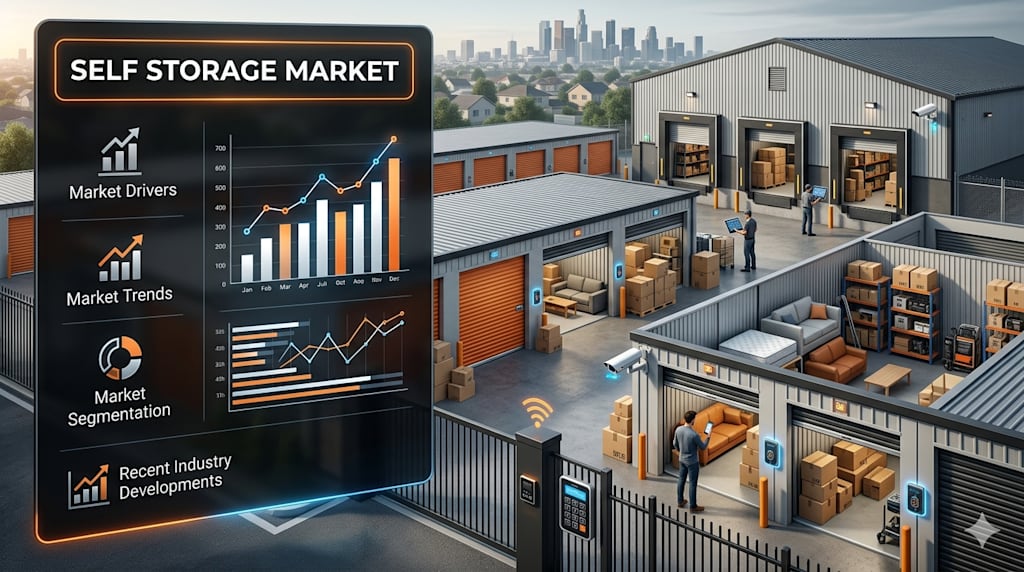
The global self storage market continues to expand steadily, supported by urbanization, evolving consumer lifestyles, and increasing demand for flexible space solutions. According to IMARC Group’s latest research, the global self storage market size reached USD 62.9 Billion in 2025. It is projected to reach USD 92.0 Billion by 2034, growing at a CAGR of 4.19% during 2026–2034.
Self storage facilities are becoming an essential part of modern urban infrastructure. As residential and commercial spaces become more compact, individuals and businesses are increasingly relying on external storage to manage belongings, inventory, and equipment efficiently.
Role of AI in the Self Storage Market
- In addition, predictive maintenance supported by machine learning and IoT sensors is improving facility management. Equipment such as HVAC systems and access control infrastructure can be monitored in real time, helping operators detect potential failures early and reduce downtime. This is especially important for climate-controlled units, where maintaining stable conditions is essential.
- AI is also enhancing security through advanced surveillance systems. Modern facilities are increasingly integrating smart monitoring tools capable of identifying unusual activity patterns and unauthorized access attempts. Automated entry systems and digital authentication methods are further improving convenience and safety.
Self Storage Industry Overview
The self storage market is primarily driven by rising urban population density and limited living space. As cities continue to grow, individuals are facing space constraints, leading to increased reliance on external storage facilities. E-commerce growth is another important factor contributing to market expansion. Businesses, particularly small and medium enterprises, require additional space for inventory storage and logistics management. Self storage offers a cost-effective alternative to expanding physical office or warehouse space. Changing lifestyles are also influencing demand. Events such as relocation, downsizing, and temporary transitions create a consistent need for short-term and long-term storage solutions.
Key Market Drivers
Urbanization continues to reshape living patterns worldwide. A significant portion of the global population now resides in cities, and this number is expected to grow further in the coming decades. As residential spaces become smaller, external storage solutions serve as an extension of homes and offices, allowing users to manage space more efficiently.
Frequent relocation and life transitions are important contributors to self storage demand. Workforce mobility, housing changes, and personal circumstances often require temporary storage solutions. Flexible rental periods and scalable unit sizes make self storage a practical choice for individuals during these transitions.
The rise of small businesses and online retail platforms is driving demand for storage space. Many businesses operate from limited spaces and rely on storage facilities for inventory, documents, and equipment. Self storage provides a convenient and affordable solution, supporting business expansion without high infrastructure costs.
Self Storage Market Segmentation
- By Storage Unit Size
- Small Storage Units
- Medium Storage Units
- Large Storage Units
Medium storage units account for the largest share, as they cater to both individual and business needs. These units are commonly used for storing furniture, appliances, and business inventory.
By End Use
- Personal Use
- Business Use
Personal use dominates the market, driven by individuals managing household items during relocation, renovation, or lifestyle changes.
Regional Insights
North America holds the largest share of the global self storage market. The region’s strong demand is supported by high urbanization levels, consumer spending patterns, and frequent residential mobility.
The United States, in particular, represents a mature market where self storage has become a common service. Features such as drive-up units and easy accessibility enhance user convenience and contribute to widespread adoption.
Recent Developments
- January 2025: A major portfolio transaction involving multiple self storage properties in the Dallas-Fort Worth region highlighted continued investment interest in high-growth urban markets.
- April 2025: New self storage management software platforms were introduced, focusing on automation, pricing optimization, and financial integration tools for operators.
- April 2025: Industry service providers expanded specialized brokerage and advisory capabilities to strengthen market presence in key regions.
- May 2025: Strategic acquisition activity reflected efforts to scale operations and expand geographic reach in international markets.
- November 2024: Flexible leasing programs were introduced to support businesses in accessing storage solutions without large upfront costs.
Note: If you require specific details, data, or insights not currently included in the scope of this report, we are happy to accommodate your request. As part of our customization service, we will gather and provide the additional information you need, tailored to your specific requirements. Please let us know your exact needs, and we will ensure the report is updated accordingly to meet your expectations.
About the Creator
Olivia Smith
Olivia Smits is a Research and Marketing Analyst who specializes in market research, trend analysis, and consumer insights. I help businesses make smarter marketing and strategy decisions by turning data into clear, actionable insights.
Enjoyed the story? Support the Creator.
Subscribe for free to receive all their stories in your feed.
Comments
There are no comments for this story
Be the first to respond and start the conversation.