
Seafood Market Outlook: Rising Protein Consumption and Growth Opportunities
The Seafood Market is experiencing strong growth driven by increasing global demand for protein-rich and nutritious food products.

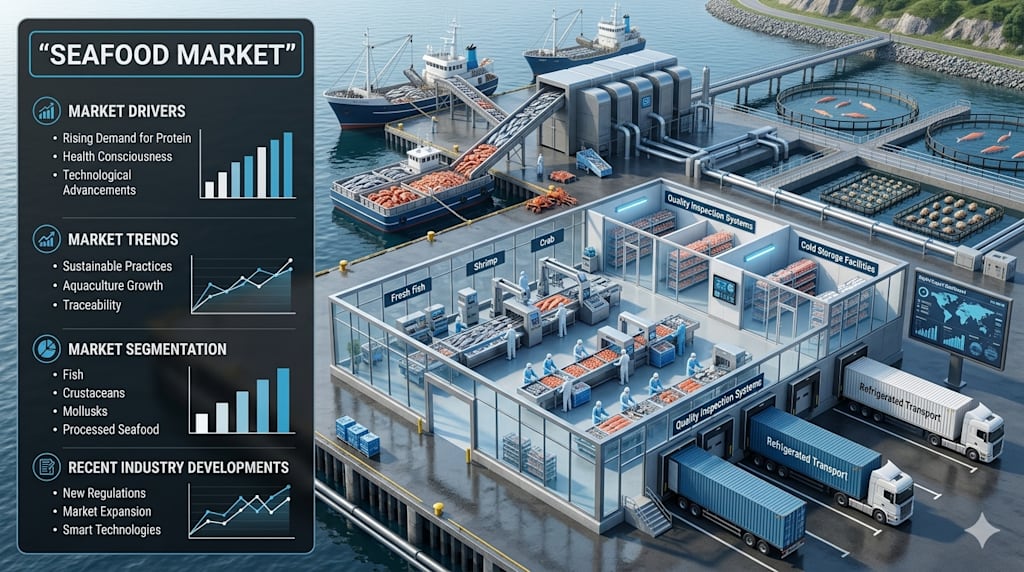
According to IMARC Group's latest research publication, The global seafood market size was valued at USD 381.6 Billion in 2025. Looking forward, IMARC Group estimates the market to reach USD 504.0 Billion by 2034, exhibiting a CAGR of 2.98% from 2026-2034.
How AI is Reshaping the Future of Seafood Market
- AI-Driven Smart Feeding and Aquaculture Optimization: Machine learning algorithms analyze fish behavior patterns, water quality parameters, and environmental conditions to automate feeding schedules with precision timing and portion control. Advanced systems reduce feed waste by up to 30 percent while improving fish health and growth rates through real-time adjustments based on appetite detection and biomass estimation.
- Automated Quality Control and Freshness Detection: Computer vision systems equipped with AI-powered YOLO models perform non-destructive seafood quality assessments, analyzing color, texture, and surface defects at processing speeds impossible for manual inspection. Algorithms predict shelf life by simultaneously evaluating multiple indicators including total volatile base nitrogen levels, bacterial counts, and sensory attributes with remarkable accuracy.
- Blockchain-Enhanced Traceability and Supply Chain Transparency: AI technologies combined with blockchain platforms enable end-to-end product tracking from ocean to consumer, creating immersive digital records of every transaction, catch location, and processing stage. Intelligent analytics identify supply chain risks including unauthorized suppliers, temperature deviations, and potential fraud, enhancing transparency and enabling rapid response to quality or compliance issues.
Seafood Industry Overview:
The FAO reported that global fisheries and aquaculture production reached 223.2 Million Tons in 2022, reflecting a 4.4 percent increase from 2020 levels. Farmed aquatic animals totaled 94.4 Million Tons, exceeding captured fisheries at 91.0 Million Tons by volume for the first time, marking a historic shift toward sustainable aquaculture as wild fish stocks decline globally and demand continues rising.
Seafood Market Trends & Drivers
Health consciousness drives seafood consumption as consumers increasingly prioritize protein-rich, nutrient-dense food options supporting heart health, cognitive function, and overall wellness. Aquatic food items account for 15 percent of animal protein intake and 6 percent of total protein consumption worldwide, with over 3.2 Billion people deriving more than 20 percent of their animal protein from seafood products. Omega-3 fatty acids, lean protein profiles, essential vitamins, and minerals position fish and shellfish as preferred choices for wellness-oriented consumers seeking alternatives to red meat and poultry. The rising adoption of pescatarian and flexitarian diets reflects growing awareness about seafood's nutritional advantages, particularly among health-conscious millennials and working professionals.
Aquaculture expansion addresses declining wild fish populations while meeting surging global seafood demand through sustainable farming practices and technological innovations. The first sale value of global aquatic animal production increased from USD 406 Billion in 2020 to USD 452 Billion in 2022, with aquaculture contributing USD 296 Billion versus USD 157 Billion from capture fisheries. Modern fish farming employs environment-friendly techniques including low-head oxygenation, modular biofilters, integrated microalgae units for waste conversion, and cold atmospheric plasma disinfection improving biosecurity and operational efficiency. China, India, and Southeast Asian nations lead aquaculture production with extensive coastal infrastructure, government support programs, and favorable climatic conditions enabling year-round farming cycles. In October 2023, Nippon Suisan Kaisha entered land-based white-leg shrimp farming operations targeting 100 Tons annual production, exemplifying industry commitment to controlled environment aquaculture reducing environmental impact.
Sustainability initiatives and digital transformation reshape seafood supply chains as consumers demand transparency regarding sourcing practices, environmental impact, and labor standards. Traceability improvements can potentially increase global seafood profits by 60 percent according to industry analyses, addressing longstanding challenges around food safety, environmental compliance, and human rights protections throughout value chains. The Sustainable Shrimp Partnership gained associate partner status in the Worldwide Sustainable Seafood Initiative in June 2024, establishing specialized platforms facilitating stakeholder discussions among traceability specialists, technology suppliers, and civil society organizations promoting responsible farming practices. Advanced Enterprise Resource Planning systems integrate Internet of Things sensors for real-time monitoring, blockchain for immutable transaction records, and artificial intelligence for predictive analytics enabling comprehensive oversight from catch to consumer. E-commerce platforms and direct-to-consumer delivery models democratize access to premium seafood products, with subscription boxes and online marketplaces bypassing traditional distribution channels.
Leading Companies Operating in the Global Seafood Industry:
- American Seafoods Company LLC
- Cermaq Group AS (Mitsubishi Corporation)
- Grieg Seafood
- Kangamiut Seafood A/S
- Lee Fishing Company
- Maruha Nichiro Corporation
- Mowi ASA
- Pacific Seafood
- Phillips Foods Inc.
- Royal Greenland A/S
- Sysco Corporation
- Thai Union Group PCL
- Trident Seafoods Corporation
Seafood Market Report Segmentation:
By Type:
- Fish
- Shrimps
- Others
Fish represents the largest segment, as it provides the most versatile and affordable seafood protein source consumed globally across diverse cuisines and preparation methods.
By Form:
- Fresh/Chilled
- Frozen/Canned
- Processed
Fresh/chilled accounts for the majority of market share, as consumers perceive it as the highest quality option retaining natural flavors, textures, and nutritional value.
By Distribution Channel:
- Off Trade
- On Trade
Off trade dominates the market with 60.0 percent share, driven by growing consumer preference for home cooking, online grocery shopping, and convenient retail access to diverse seafood selections.
Regional Insights:
- North America (United States, Canada)
- Asia Pacific (China, Japan, India, South Korea, Australia, Indonesia, Others)
- Europe (Germany, France, United Kingdom, Italy, Spain, Others)
- Latin America (Brazil, Mexico, Others)
- Middle East and Africa
Asia Pacific exhibits clear dominance in the seafood market, holding 44.6 percent share due to extensive coastlines, large-scale aquaculture operations, abundant marine resources, and high per capita seafood consumption.
Recent News and Developments in Seafood Market
- October 2025: Maruha Nichiro Corporation announced a partnership with a leading technology firm to develop an AI-driven platform aimed at improving aquaculture efficiency. The collaboration combines Maruha Nichiro's extensive fisheries expertise with advanced artificial intelligence capabilities targeting automated feeding systems, disease prediction models, and optimal harvest timing to maximize yields and sustainability across farming operations throughout Asia-Pacific markets.
- August 2025: Mowi ASA unveiled a comprehensive sustainability report detailing its commitment to reducing carbon emissions by 30 percent by 2030. This ambitious environmental target reflects the world's largest Atlantic salmon farmer's proactive approach toward climate action, positioning the company favorably among increasingly eco-conscious consumers while enhancing brand loyalty through verified progress toward decarbonization across Norwegian, Scottish, Canadian, Chilean, and Irish operations.
- July 2024: ReelData, a Canada-based software firm, launched an AI-driven camera system for aquaculture capturing high-resolution underwater video to assist with behavioral tracking, feed management, and fish health assessments. The innovation enables aquaculture operators to make data-driven decisions improving operational efficiency, reducing labor costs, and enhancing fish welfare through continuous monitoring capabilities previously unattainable with manual observation methods.
- June 2024: The Sustainable Shrimp Partnership gained associate partner status in the worldwide sustainable seafood initiative, aiming to enhance better practices in the shrimp farming industry and promote availability of eco-conscious options. A specialized website was established to enhance stakeholder discussions among industry leaders including traceability specialists, civil society members, and technology suppliers advancing responsible aquaculture practices globally.
- January 2024: The Central Marine Fisheries Research Institute collaborated with Neat Meatt to develop plant-based and cell-cultured alternatives for kingfish, pomfret, and several other marine fish species. The partnership aims to replicate authentic flavor profiles, textures, and nutritional composition of traditional seafood in innovative products addressing overfishing concerns, environmental sustainability, and dietary preferences among flexitarian and vegetarian consumers seeking ocean-friendly protein sources.
Note: If you require specific details, data, or insights that are not currently included in the scope of this report, we are happy to accommodate your request. As part of our customization service, we will gather and provide the additional information you need, tailored to your specific requirements. Please let us know your exact needs, and we will ensure the report is updated accordingly to meet your expectations.
About the Creator
Olivia Smith
Olivia Smits is a Research and Marketing Analyst who specializes in market research, trend analysis, and consumer insights. I help businesses make smarter marketing and strategy decisions by turning data into clear, actionable insights.
Enjoyed the story? Support the Creator.
Subscribe for free to receive all their stories in your feed.
Comments
There are no comments for this story
Be the first to respond and start the conversation.