
Saudi Arabia Wound Care Market: Chronic Wounds, Advanced Dressings & Growth Outlook
How rising prevalence of chronic conditions such as diabetes, increasing surgical procedures, and growing investments in advanced healthcare infrastructure are driving demand for innovative wound management solutions, faster healing technologies, and improved patient outcomes in the Saudi Arabia wound care market
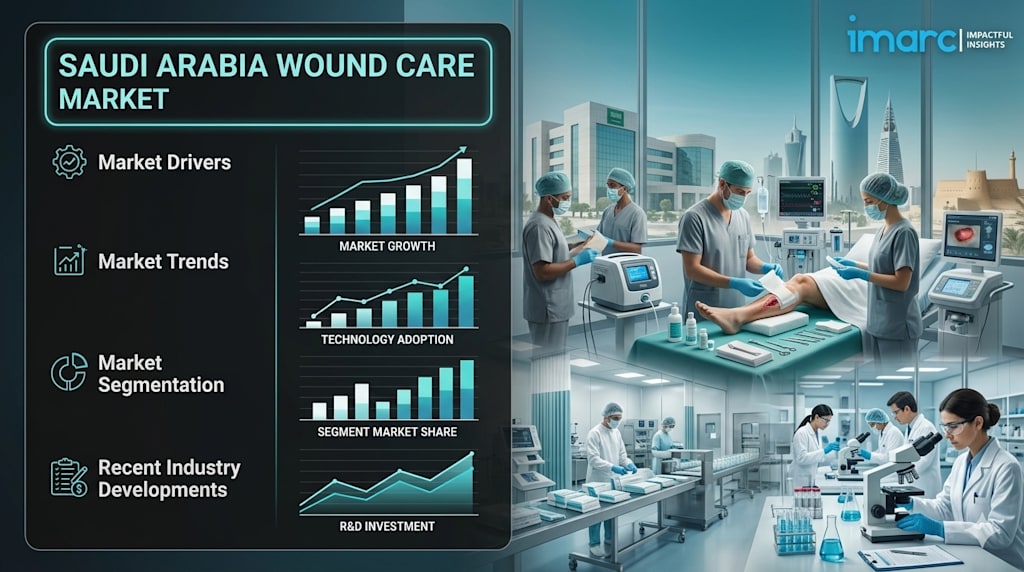
Saudi Arabia's wound care sector is on a clear upward trajectory, driven by rising rates of chronic diseases, a fast-expanding healthcare infrastructure, and meaningful policy support under Vision 2030. According to IMARC Group's latest research, the Saudi Arabia wound care market size reached USD 0.22 Billion in 2024. Looking forward, IMARC Group expects the market to reach USD 0.32 Billion by 2033, exhibiting a growth rate (CAGR) of 4.35% during 2025–2033. The market is seeing consistent momentum driven by chronic wound prevalence, government healthcare investment, and a growing appetite for advanced wound management technologies.
Saudi Arabia’s wound care industry has evolved from being largely dependent on conventional dressings to actively adopting advanced therapies like foam and hydrocolloid dressings, negative pressure wound therapy (NPWT), and biological skin substitutes. Chronic conditions are a key driver diabetes alone affects 17.7% of the adult population, placing the Kingdom seventh globally for prevalence. Couple this with a rapidly aging population and a government committed to improving healthcare access, and you have all the ingredients for a sustained market expansion. Hospitals, home care providers, and long-term care facilities are all ramping up procurement of both traditional and next-generation wound care products.
Saudi Arabia Wound Care Market Growth Drivers:
- Surging Burden of Chronic Diseases
Diabetes and obesity are reshaping wound care demand in Saudi Arabia at a pace that’s hard to ignore. With 17.7% of adults living with diabetes mellitus the second-highest rate in the MENA region the volume of diabetic ulcers and chronic non-healing wounds is putting real pressure on hospitals and clinics. Obesity compounds the problem, increasing the likelihood of pressure ulcers and venous leg ulcers. This disease burden is pushing healthcare providers to move away from basic gauze dressings toward advanced options like alginate and hydrogel formulations that offer better healing outcomes and lower complication rates.
- Elevated Government Healthcare Investment
Saudi Arabia’s Vision 2030 has put healthcare infrastructure front and center. The government has committed billions to expanding hospital capacity, improving patient outcomes, and reducing dependency on foreign medical supplies. These investments directly benefit wound care new hospitals and clinics require fully stocked wound management departments, and procurement budgets are actively growing. In a concrete example of this momentum, TVM Capital Healthcare closed its Saudi-focused TVM Healthcare Afiyah Fund at approximately USD 250 million, with proceeds earmarked for healthcare advancements including advanced wound care solutions for the local market.
- Rapid Expansion of Healthcare Infrastructure
The Kingdom’s healthcare buildout is creating a significantly larger market for wound care products across multiple settings. New hospitals, specialist clinics, and long-term care facilities are all emerging in tier-2 cities, not just Riyadh and Jeddah. This geographic expansion is broadening access to advanced wound care for patients who previously had limited options. Home healthcare is also a fast-growing segment, with self-application wound dressings and antiseptic kits in growing demand as more patients manage recovery at home a trend actively supported by the Ministry of Health’s primary care and telemedicine initiatives.
Saudi Arabia Wound Care Market Trends:
- Accelerating Shift Toward Advanced Wound Care Products
Clinicians across Saudi Arabia are actively moving away from conventional dressings and toward more effective, evidence-backed alternatives. Foam dressings, hydrocolloids, and hydrogels are no longer niche products they’re fast becoming the standard of care in hospitals managing diabetic foot ulcers and post-surgical wounds. The rationale is straightforward: these products demonstrably reduce healing time, lower infection risk, and cut down on repeat dressing changes, which translates into real cost savings for healthcare systems. As procurement teams grow more cost-conscious and outcome-focused, the shift to advanced wound care products is expected to continue accelerating across both public and private facilities.
- Growth of Home-Based Wound Management
Home care is becoming a meaningful segment in Saudi Arabia’s wound care landscape. The ratio of people aged over 65 is set to nearly double between 2020 and 2030, and this aging cohort is particularly prone to pressure ulcers and slow-healing wounds. User-friendly wound care kits, antiseptics, and self-application dressings allow patients to manage conditions at home rather than occupying valuable hospital beds. This plays directly into Vision 2030’s goal of shifting more routine care away from hospitals. Telemedicine platforms are also enabling remote wound monitoring, allowing healthcare providers to support patients without in-person visits.
- International Players Entering the Saudi Market
Saudi Arabia is increasingly on the radar of global wound care companies looking for high-growth emerging markets. Recent examples illustrate the trend well: Oxybarica announced plans to expand hyperbaric oxygen therapy (HBOT) capabilities into the Middle East, including Saudi Arabia, targeting advanced wound healing use cases. STADA similarly acquired FITO™ from LEO Pharma, integrating its wound and burn treatment product line into Saudi Arabia and other key Middle Eastern markets. These moves reflect growing confidence in the Kingdom’s regulatory environment, patient volume, and willingness to adopt premium wound care technologies aligned with international clinical standards.
Recent News and Developments in Saudi Arabia Wound Care Market
- September 2024: Oxybarica, a specialist in hyperbaric oxygen therapy (HBOT), announced its strategic expansion into the Middle East, including Saudi Arabia, to address growing demand for advanced wound care and therapeutic recovery solutions. The company aims to collaborate with regional healthcare providers to lift clinical outcomes and integrate HBOT into mainstream wound management protocols.
- August 2024: STADA, a global pharmaceutical group, completed the acquisition of FITO™ from LEO Pharma to strengthen its consumer healthcare portfolio across the Middle East. FITO™, a medical device based on the wheat extract Rigenase, is used for treating wounds, first- and second-degree burns, ulcers, and abrasions. The deal includes operational integration across Saudi Arabia and neighboring markets.
- May 2024: TVM Capital Healthcare officially closed its Saudi-focused TVM Healthcare Afiyah Fund at approximately USD 250 million. Among its initial investment targets, DEBx Medical a Dutch company known for innovative chronic wound care products announced plans to enter the Saudi Arabian market, bringing next-generation wound care solutions aimed at improving patient care and supporting the Kingdom’s Vision 2030 healthcare objectives.
Note: If you require specific details, data, or insights that are not currently included in the scope of this report, we are happy to accommodate your request. As part of our customization service, we will gather and provide the additional information you need, tailored to your specific requirements. Please let us know your exact needs, and we will ensure the report is updated accordingly to meet your expectations.
About the Creator
Shubham Sharma
Market research enthusiast sharing insights on global industries, emerging trends, growth opportunities, and data-driven analysis across diverse markets.
Enjoyed the story? Support the Creator.
Subscribe for free to receive all their stories in your feed.
Comments
There are no comments for this story
Be the first to respond and start the conversation.