
Saudi Arabia Wine Market Expands as Luxury Hospitality and Non-Alcoholic Trends Redefine Consumer Demand
Vision 2030, premium tourism, and rising interest in sophisticated alcohol-free beverages are driving growth in Saudi Arabia’s evolving wine industry.

Saudi Arabia’s beverage industry is undergoing a remarkable transformation. While the Kingdom continues to maintain strict cultural and legal restrictions on alcohol consumption, changing consumer preferences, luxury tourism growth, and international hospitality standards are quietly creating opportunities for premium non-alcoholic wine products.
The Saudi Arabia wine market, once considered almost non-existent, is now attracting increasing attention from global beverage companies and hospitality operators.
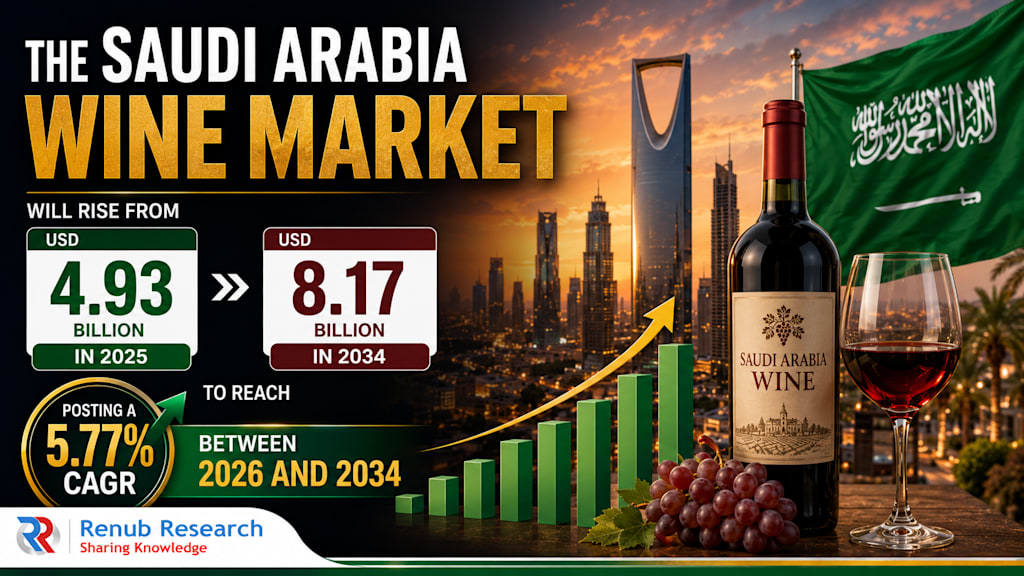
According to Renub Research, the Saudi Arabia wine market is projected to grow from USD 4.93 billion in 2025 to USD 8.17 billion by 2034, expanding at a compound annual growth rate (CAGR) of 5.77% between 2026 and 2034.
This growth does not represent the rise of traditional alcoholic wine consumption. Instead, it reflects the increasing popularity of premium alcohol-free wines and sophisticated beverage alternatives that align with Saudi Arabia’s cultural values while still delivering luxury dining experiences.
As Vision 2030 reshapes the Kingdom’s tourism and hospitality sectors, non-alcoholic wine products are emerging as an important category within premium dining, luxury hotels, corporate events, and upscale social gatherings.
The Rise of a New Beverage Category
Wine has traditionally been associated with fine dining, luxury hospitality, and global culinary culture.
Across many countries, wine complements meals, social occasions, celebrations, and premium hospitality experiences. In Saudi Arabia, however, strict regulations surrounding alcohol have historically limited the development of any traditional wine market.
Yet consumer behavior is evolving.
Today, non-alcoholic wines are becoming increasingly popular among consumers seeking sophisticated alternatives that replicate the taste, presentation, and social experience of traditional wines without containing alcohol.
These products include:
- Red non-alcoholic wine
- White non-alcoholic wine
- Rosé non-alcoholic wine
- Sparkling alcohol-free beverages
Modern production technologies now allow beverage companies to create premium wine alternatives that preserve flavors, aromas, and textures while removing alcohol content.
This innovation is helping global brands enter markets like Saudi Arabia in ways that comply with local cultural and religious expectations.
The market remains highly specialized, but demand is growing steadily among expatriates, luxury hospitality operators, tourists, and affluent urban consumers.
Health-Conscious Consumers Are Driving Demand
One of the biggest drivers behind Saudi Arabia’s wine market growth is the increasing interest in healthier lifestyle choices.
Younger consumers in particular are becoming more health-conscious and selective about the beverages they consume. Many are looking for premium products that deliver sophistication and social appeal without the negative associations connected to alcohol consumption.
Non-alcoholic wines fit perfectly into this trend.
Consumers increasingly view these beverages as:
- Premium lifestyle products
- Health-conscious alternatives
- Sophisticated social drinks
- Fine dining companions
- Luxury hospitality beverages
The rise of wellness culture across the Middle East is also influencing consumer behavior.
Urban professionals, younger generations, and affluent consumers are embracing moderation and premium experiences over traditional consumption habits. Non-alcoholic wines allow consumers to participate in celebratory and dining experiences while remaining culturally aligned.
Global beverage companies are responding aggressively to this opportunity.
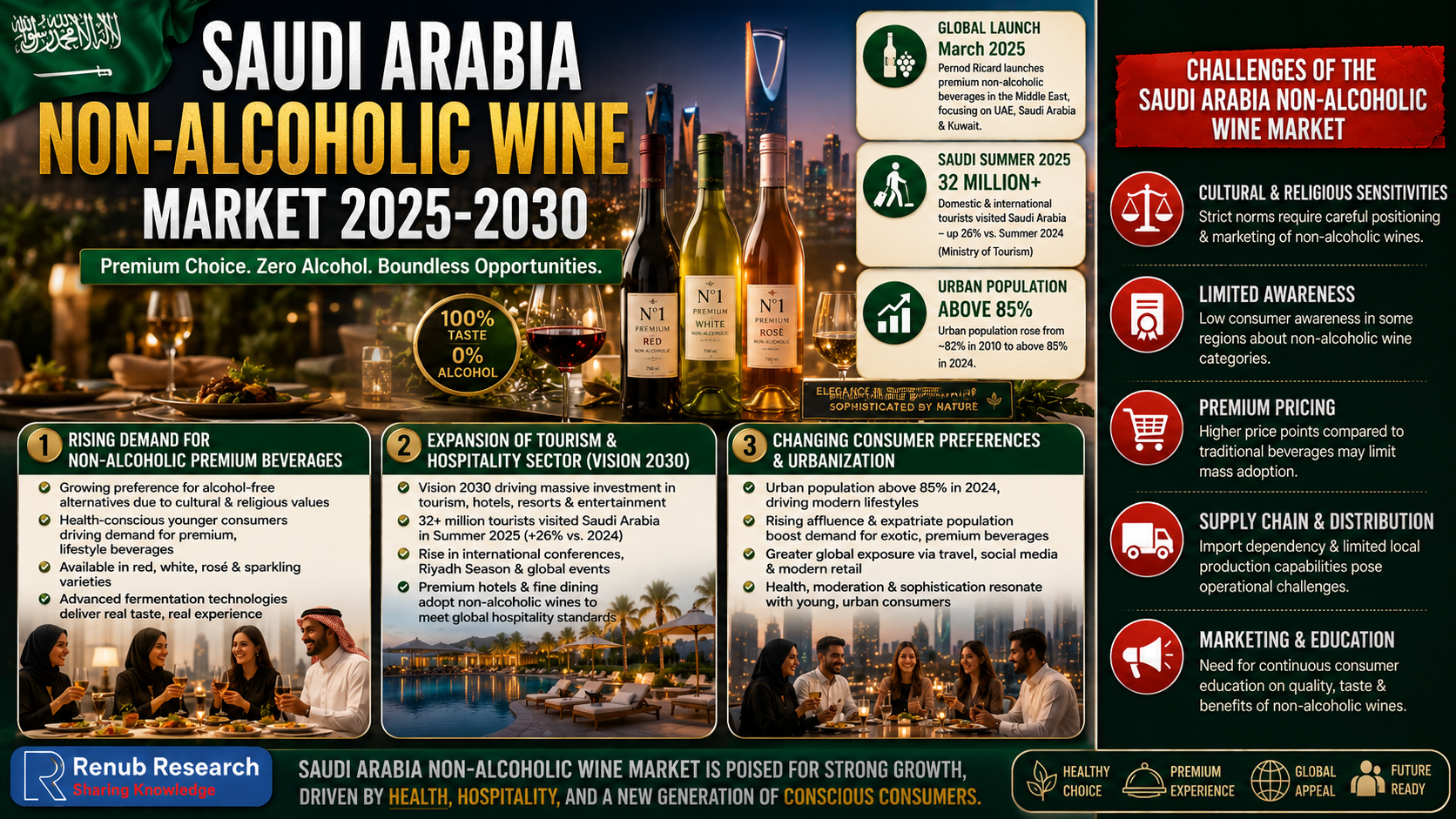
In March 2025, Pernod Ricard announced the launch of premium non-alcoholic beverages across Saudi Arabia, the UAE, and Kuwait, reflecting the growing commercial potential of this category in the region.
Vision 2030 Is Reshaping Hospitality and Tourism
Saudi Arabia’s Vision 2030 initiative continues to transform the country’s tourism and hospitality landscape.
The government is investing billions of dollars into tourism infrastructure, luxury resorts, entertainment cities, sporting events, and international business hubs designed to attract millions of visitors from around the world.
Projects such as:
- NEOM
- The Red Sea Project
- Riyadh Season
- Qiddiya
- Luxury coastal resorts
are reshaping the Kingdom into a major global tourism destination.
As tourism expands, hospitality standards are evolving rapidly.
International hotels, luxury resorts, and fine dining establishments increasingly seek beverage options that meet global hospitality expectations while remaining compliant with local regulations.
This creates significant opportunities for premium non-alcoholic wines.
Saudi Arabia’s “Saudi Summer” tourism campaign reportedly attracted more than 32 million domestic and international tourists, representing a major increase compared to previous years.
Tourists and international business travelers often expect premium dining experiences similar to those available globally. Alcohol-free wine products help luxury hospitality operators provide elegant dining experiences that align with Saudi Arabia’s legal and cultural framework.
As a result, many luxury hotels and fine dining restaurants now feature premium non-alcoholic wine selections as part of their hospitality offerings.
Urbanization and Lifestyle Changes Are Influencing Consumption
Rapid urbanization is another major factor contributing to market growth.
Saudi Arabia’s urban population ratio has steadily increased over the past decade, exceeding 85% in recent years. Urban consumers are generally more exposed to international lifestyle trends, premium dining experiences, and global hospitality standards.
Social media has also played a major role.
Consumers are increasingly influenced by global food and beverage trends through digital platforms, luxury lifestyle marketing, and international travel experiences.
Modern Saudi consumers — especially younger demographics — are showing greater interest in:
- Premium dining experiences
- International cuisine
- Stylish beverages
- Luxury hospitality culture
- Sophisticated social settings
Non-alcoholic wines fit naturally into this environment because they offer elegance, premium branding, and social appeal without conflicting with cultural expectations.
Affluent consumers and expatriates in major cities such as Riyadh and Jeddah are helping accelerate this trend.
Sparkling Wine Alternatives Are Becoming Especially Popular
Among all product categories, sparkling non-alcoholic wine is emerging as one of the fastest-growing segments in Saudi Arabia.
Sparkling beverages are strongly associated with celebrations, weddings, business events, luxury hospitality, and festive social occasions.
Consumers are increasingly choosing alcohol-free sparkling beverages because they offer:
- Elegant presentation
- Premium packaging
- Celebration-focused appeal
- Compatibility with fine dining
- Luxury lifestyle branding
Hotels, resorts, wedding venues, and corporate event organizers are increasingly incorporating sparkling non-alcoholic beverages into their hospitality offerings.
Manufacturers are also investing heavily in premium packaging, fruit-based flavor innovations, and sophisticated branding to strengthen consumer appeal.
As tourism and luxury events continue growing under Vision 2030, sparkling non-alcoholic beverages are expected to remain one of the market’s strongest segments.
Red, White, and Rosé Wine Categories Continue Expanding
Different wine categories are attracting different consumer demographics within Saudi Arabia’s evolving beverage market.
Red Non-Alcoholic Wine
Red wine alternatives are particularly popular among consumers seeking richer and bolder flavor experiences.
These beverages often replicate traditional red wine characteristics such as:
- Berry flavors
- Woody notes
- Tannin-like textures
- Complex aromas
Fine dining establishments and upscale hotels increasingly offer red non-alcoholic wines alongside gourmet meals.
White Non-Alcoholic Wine
White wine alternatives are highly attractive in Saudi Arabia’s warm climate.
Consumers often prefer lighter, refreshing beverages that pair well with seafood, salads, and international cuisine. White non-alcoholic wines are commonly served chilled and are becoming increasingly visible within luxury hospitality settings.
Rosé Wine
Rosé non-alcoholic wine has become especially popular among younger urban consumers and expatriates.
Stylish packaging, modern branding, and social media influence have helped position rosé beverages as trendy and fashionable products associated with luxury lifestyle culture.
Beach resorts, cafés, and fine dining venues often feature rosé alternatives as part of premium hospitality experiences.
Riyadh Leads the Saudi Arabia Wine Market
Riyadh remains the largest and most important market for premium non-alcoholic wines within Saudi Arabia.
As the Kingdom’s capital and business center, Riyadh hosts:
- Multinational corporations
- Luxury hotels
- Government institutions
- International conferences
- Fine dining establishments
The city’s growing entertainment and hospitality sectors are creating increased demand for premium beverage options that align with international standards.
Luxury hotels and upscale restaurants regularly offer sparkling, red, white, and rosé non-alcoholic wines to affluent consumers, expatriates, and foreign business travelers.
High-end supermarkets and specialty stores in Riyadh also provide growing access to imported premium beverage brands.
Jeddah, Dammam, and Dhahran Are Emerging Markets
Jeddah represents another major growth center.
As a tourism gateway along the Red Sea, Jeddah attracts international visitors, expatriates, and affluent residents who contribute to demand for luxury dining and hospitality services.
Beach resorts, luxury hotels, and gourmet restaurants are increasingly incorporating premium alcohol-free beverages into their menus.
Dammam and Dhahran also play important roles due to their strong expatriate communities connected to the oil and industrial sectors.
International professionals working in these cities often seek premium global beverage experiences within culturally compliant environments.
As a result, imported non-alcoholic wine products are becoming more visible in luxury grocery stores, hotels, and hospitality venues across the Eastern Province.
Major Challenges Still Limit Market Expansion
Despite positive growth forecasts, Saudi Arabia’s wine market continues facing several major challenges.
The most significant obstacle remains the Kingdom’s strict religious and cultural stance regarding alcohol.
Traditional alcoholic wine remains prohibited under Sharia law, making Saudi Arabia fundamentally different from conventional wine markets.
As a result, companies operating within the country must focus entirely on non-alcoholic alternatives.
Cultural acceptance also remains limited in some areas.
Many consumers still associate wine — even alcohol-free versions — with foreign luxury culture rather than traditional local beverage habits. Tea, coffee, juices, and herbal drinks continue dominating mainstream consumption patterns.
Marketing restrictions further complicate expansion.
Brands must promote non-alcoholic wines carefully without relying heavily on traditional wine-related imagery or alcohol-centered messaging commonly used in global markets.
Consumer education therefore becomes critically important.
The Future of Saudi Arabia’s Wine Market
Saudi Arabia’s wine market is unlikely to resemble traditional wine industries found in Europe or North America.
However, the market’s future appears increasingly tied to premium hospitality, luxury tourism, and sophisticated non-alcoholic beverage innovation.
As Vision 2030 continues transforming the Kingdom into a global tourism and business destination, demand for premium alcohol-free dining experiences is expected to rise steadily.
Future market growth will likely be shaped by:
- Luxury hospitality expansion
- Rising tourism numbers
- Premium wellness trends
- Urban lifestyle modernization
- Product innovation in alcohol-free beverages
- International hotel development
Global beverage companies are already recognizing the potential.
Saudi Arabia represents one of the world’s most unique premium beverage opportunities because it combines strong purchasing power, luxury tourism growth, and a rising appetite for sophisticated alcohol-free products.
Final Thoughts
Saudi Arabia’s wine market is not a story about traditional alcohol consumption. Instead, it reflects the emergence of a new luxury beverage category shaped by cultural adaptation, tourism growth, and evolving consumer lifestyles.
According to Renub Research, the market’s projected growth from USD 4.93 billion in 2025 to USD 8.17 billion by 2034 highlights the rising importance of premium non-alcoholic beverages within the Kingdom’s hospitality and tourism sectors.
Luxury hotels, international restaurants, expatriate communities, and younger urban consumers are all contributing to demand for sophisticated alcohol-free alternatives that align with modern lifestyle expectations.
As Saudi Arabia continues modernizing under Vision 2030, the non-alcoholic wine industry is expected to become an increasingly important part of the country’s premium hospitality ecosystem.
For global beverage companies and hospitality brands, Saudi Arabia is quickly becoming a market that can no longer be ignored.
About the Creator
Enjoyed the story? Support the Creator.
Subscribe for free to receive all their stories in your feed.
Comments
There are no comments for this story
Be the first to respond and start the conversation.