
Saudi Arabia Transportation Infrastructure Construction Market: Mega Projects, Connectivity & Growth Outlook
How large-scale infrastructure investments, Vision 2030 initiatives, and increasing demand for efficient connectivity are driving project development, advanced construction technologies, and long-term growth in the Saudi Arabia transportation infrastructure construction market
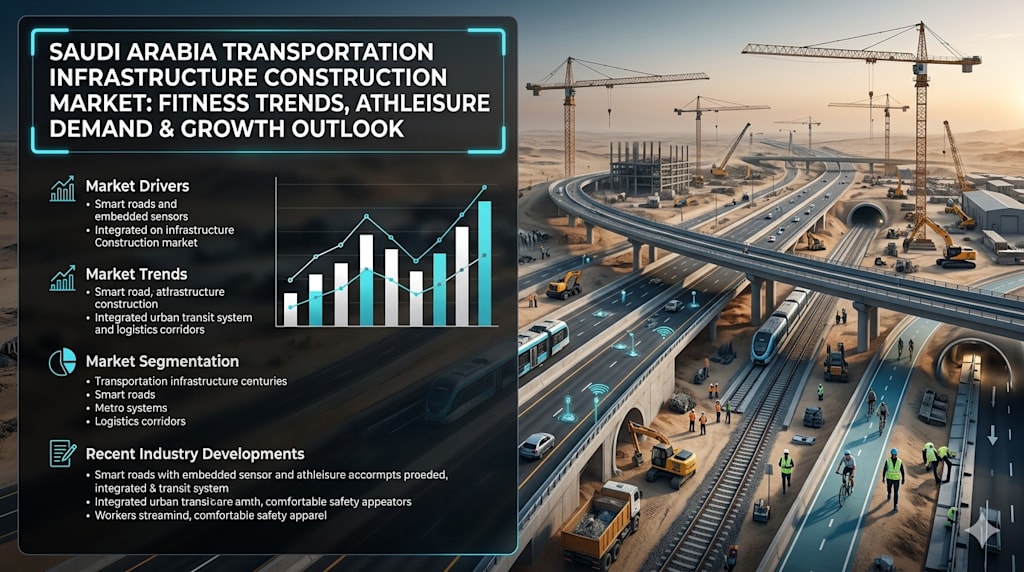
According to IMARC Group's latest research publication, Saudi Arabia transportation infrastructure construction market size reached USD 9.9 Billion in 2024. The market is projected to reach USD 12.3 Billion by 2033, exhibiting a growth rate (CAGR) of 2.20% during 2025-2033.
How AI is Reshaping the Future of Saudi Arabia Transportation Infrastructure Construction Market
• Predictive Maintenance for Infrastructure Assets: AI-powered monitoring systems track the health of roads, bridges, and tunnels in real-time, predicting maintenance needs before failures occur. Smart sensors embedded in highway projects across Riyadh and Jeddah detect structural weaknesses early, reducing repair costs and extending asset lifespan while ensuring safer travel for millions.
• Smart Traffic Management Systems: Machine learning algorithms optimize traffic flow through intelligent transportation systems deployed across major cities. Real-time data analysis reduces congestion by up to 30%, improving commute times and supporting the efficient movement of goods between ports, airports, and urban centers.
• Construction Planning and Project Management: AI-driven tools enhance scheduling accuracy and resource allocation for mega-projects like King Salman International Airport and the Saudi Landbridge Railway. Digital twins and Building Information Modeling enable contractors to simulate construction scenarios, reducing delays and keeping projects on budget.
• Automated Quality Control: Computer vision and AI inspect construction materials and completed work for compliance with safety standards. Automated systems on airport expansion and metro projects detect defects instantly, ensuring infrastructure meets international quality benchmarks and reducing costly rework.
• Sustainable Infrastructure Design: AI assists in creating energy-efficient transportation networks by optimizing route planning and material usage. Smart algorithms support green building initiatives in NEOM and other Vision 2030 projects, minimizing environmental impact while delivering world-class infrastructure that aligns with Saudi Arabia's decarbonization goals.
How Vision 2030 is Revolutionizing Saudi Arabia Transportation Infrastructure Construction Industry
Vision 2030 has become the driving force behind Saudi Arabia's transportation transformation, reshaping how people and goods move across the Kingdom. The government's National Transport and Logistics Strategy channels over USD 100 billion into creating a world-class network connecting three continents. Mega-projects like King Salman International Airport aim to handle 120 million passengers by 2030, while the Saudi Landbridge Railway will link Jeddah to Dammam, fundamentally changing trade flows. The Riyadh Metro alone represents a SAR 90 billion investment, now moving millions of daily commuters after its launch in late 2024. Beyond building roads and rails, Vision 2030 pushes for smart infrastructure integration—think AI-powered traffic management in NEOM and intelligent transportation systems in King Abdullah Economic City. Public-private partnerships have unlocked billions in foreign capital, with the Prince Mohammed bin Abdulaziz International Airport becoming the Middle East's first PPP airport project.
Download the Sample Report to Understand Market Trends and Outlook
Saudi Arabia Transportation Infrastructure Construction Market Trends & Drivers:
The market is riding a wave of transformation driven by urbanization and digital innovation. Smart infrastructure is becoming the norm, with projects like the Riyadh Metro incorporating AI-powered systems for traffic optimization and passenger safety. Sustainability has shifted from optional to essential—new highways, airports, and rail lines now integrate renewable energy, low-carbon materials, and green construction techniques to meet Vision 2030's environmental targets. Public-private partnerships are accelerating project delivery, bringing global expertise and billions in foreign capital to developments like King Salman International Airport. Modular construction and robotics are cutting build times; NEOM's partnership with Samsung C&T demonstrates how automation can reduce manual labor by 80%. There's also growing focus on integrated mobility hubs that seamlessly connect airports, metro stations, rail terminals, and bus networks, creating efficient multimodal transport ecosystems that reduce congestion and improve user experience across major cities.
Key Highlights of the Report:
Market Breakup by Mode:
• Roads
• Railways
• Airports
• Waterways
Market Breakup by Region:
• Northern and Central Region
• Western Region
• Eastern Region
• Southern Region
Market Growth Drivers:
• Vision 2030 and National Transport Strategy: The government's USD 100 billion commitment to transportation infrastructure through 2030 is fueling unprecedented construction activity. The National Transport and Logistics Strategy (NTLS) provides clear roadmaps for rail expansion, airport modernization, and highway development. Flagship projects like the Riyadh Metro (SAR 90 billion), King Salman International Airport, and the Saudi Landbridge Railway are creating sustained demand for contractors, materials, and engineering services while positioning the Kingdom as a global logistics hub connecting Asia, Europe, and Africa.
• Rapid Urbanization and Population Growth: Riyadh's population is projected to reach 15-20 million by 2030, dramatically increasing demand for metro systems, highways, and public transit infrastructure. Major urban centers like Jeddah and Dammam are experiencing similar growth, requiring expanded road networks and modernized transport facilities. This urban expansion is driving construction of integrated mobility hubs, bus rapid transit systems, and highway corridors. The Royal Commission for Riyadh City launched SAR 8 billion in road development projects in July 2025 specifically to accommodate this growth and improve inter-district connectivity.
• Public-Private Partnerships and Foreign Investment: The government's active PPP framework is attracting billions in private capital and international expertise to transportation projects. Prince Mohammed bin Abdulaziz International Airport in Madinah set the precedent as the Middle East's first airport PPP, valued at USD 1.2 billion. Bechtel's 2025 partnership for King Salman International Airport terminals exemplifies how global firms are participating in mega-projects. Clear risk-allocation rules and bankable project pipelines make Saudi transportation infrastructure increasingly attractive to international contractors and investors, accelerating project execution while transferring technical know-how.
Recent News and Developments in Saudi Arabia Transportation Infrastructure Construction Market:
• May 2025: Bechtel entered a partnership with the King Salman International Airport Development Company to act as the delivery partner for three new terminals at King Salman International Airport (KSIA) located in Riyadh. The new terminals would promote economic development in Riyadh and its neighboring areas, while improving global connectivity and providing a top-notch passenger experience.
• February 2025: The Royal Commission for Riyadh City (RCRC) declared the commencement of the road projects associated with the Second Group of the Riyadh Ring Roads and Main Axes Development Program. This comprised eight initiatives with a combined expenditure surpassing SAR 8 Billion. The initiative sought to enhance the transportation infrastructure in the capital, bettering the links between different roadways.
• January 2025: The Roads General Authority finished building a road in the Al-Ahsa governorate, utilizing recycled construction and demolition debris for the first time in the Kingdom. Incorporating recycled materials into infrastructure initiatives aided the Kingdom's aim of moving towards a circular economy.
• January 2025: King Khalid International Airport Terminal 1 expansion was completed, lifting passenger capacity to 7 million annually, supporting growing tourism and pilgrimage traffic while enhancing Riyadh's connectivity to global markets.
• November 2023: Saudi Arabia announced plans to implement the USD 7 billion Landbridge project at the outset of 2024, which will create a critical rail corridor connecting the Red Sea coast to the Arabian Gulf, fundamentally transforming freight logistics and trade capabilities across the Kingdom.
Note: If you require specific details, data, or insights that are not currently included in the scope of this report, we are happy to accommodate your request. As part of our customization service, we will gather and provide the additional information you need, tailored to your specific requirements. Please let us know your exact needs, and we will ensure the report is updated accordingly to meet your expectations.
About the Creator
Shubham Sharma
Market research enthusiast sharing insights on global industries, emerging trends, growth opportunities, and data-driven analysis across diverse markets.
Enjoyed the story? Support the Creator.
Subscribe for free to receive all their stories in your feed.
Comments
There are no comments for this story
Be the first to respond and start the conversation.