
Saudi Arabia Specialty Food Ingredients Market: Functional Nutrition, Clean Label Trends & Growth Outlook
How evolving consumer preferences for clean-label and functional foods, increasing demand from the food processing industry, and growing innovation in natural flavors, sweeteners, emulsifiers, and nutritional additives are driving product development and value creation across the Saudi Arabia Specialty Food Ingredients Market.
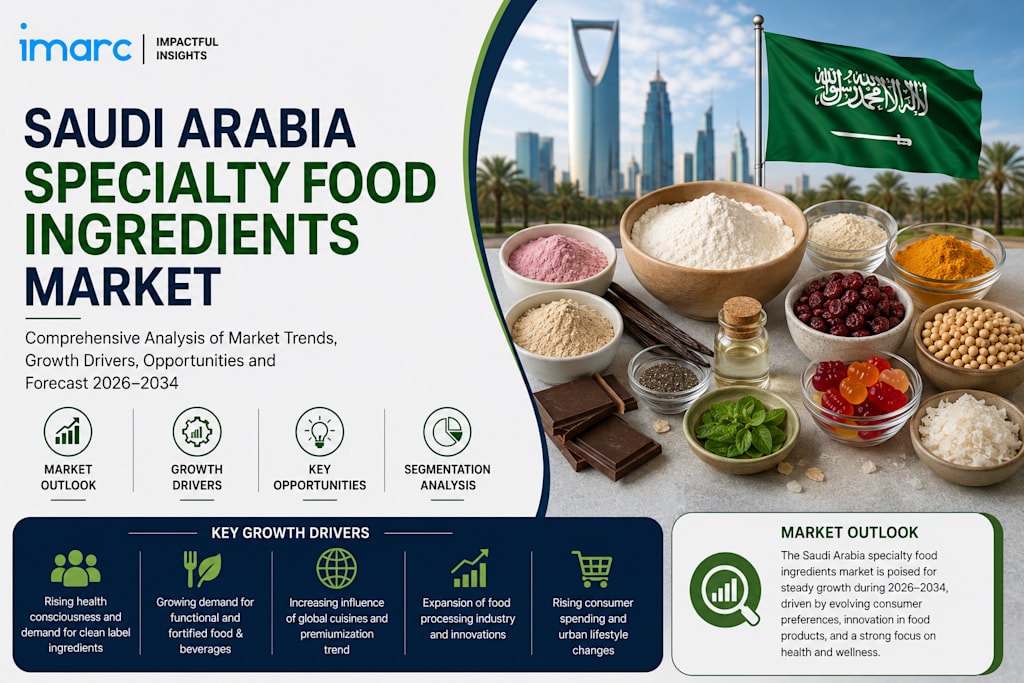
According to IMARC Group's latest research publication, Saudi Arabia specialty food ingredients market size reached USD 813.5 Million in 2025. The market is projected to reach USD 1,134.2 Million by 2034, exhibiting a growth rate of 3.76% during 2026-2034.
How AI is Reshaping the Future of Saudi Arabia Specialty Food Ingredients Market
- AI-Powered Flavor Innovation and Optimization: Machine learning algorithms analyze consumer taste preferences and emerging culinary trends across social media and retail platforms, identifying high-growth ingredients like pistachio butter that command premium pricing and rapid market adoption among health-conscious consumers.
- Smart Supply Chain Traceability Systems: AI-enabled track-and-trace technology monitors specialty ingredients from source through distribution, ensuring halal certification, authenticity verification, and compliance with the Saudi Food and Drug Authority's food safety protocols while reducing contamination risks by 40%.
- Predictive Demand Forecasting: Advanced analytics anticipate seasonal flavor trends and ingredient demand fluctuations across beverages, bakery, and dairy applications, optimizing inventory management and reducing waste in specialty ingredient distribution networks across retailers and manufacturers.
How Vision 2030 is Revolutionizing Saudi Arabia Specialty Food Ingredients Industry
Vision 2030's comprehensive food security strategy is fundamentally reshaping Saudi Arabia's specialty food ingredients landscape by driving domestic processing capability and reducing import dependency. The Kingdom invested USD 10 billion in food security initiatives while establishing the world's largest food manufacturing cluster in Jeddah spanning 11 million square meters with 75 factories and 20-billion-riyal investments designed to localize specialty ingredient production and reduce operational costs by 5-12%. Saudi Arabia has achieved unprecedented food self-sufficiency, with dairy production covering 109% of domestic demand and egg production at 116%, creating massive demand for specialty sensory and functional ingredients that enhance processed food quality. The agricultural GDP reached SAR 114 billion in 2024, surpassing targets, while dairy and eggs already exceed 100% self-sufficiency targets. Vision 2030's emphasis on halal certification, food safety excellence, and export readiness positions Saudi specialty ingredients as competitive globally, with the government providing subsidized industrial land, concessional financing, and local-content procurement preferences that specifically support ingredient manufacturers entering and expanding within the Kingdom.
Market Trends & Drivers:
Clean-Label and Natural Ingredient Revolution Accelerating
Saudi Arabia's specialty food ingredients market is experiencing explosive growth fueled by fundamental shifts in consumer preferences toward natural, clean-label, and preservative-free products. Global Data's Ai Palette Foresight Engine identified pistachio butter as a high-growth, high-engagement ingredient specifically trending in Saudi Arabia in 2025, reflecting local preferences for authentic, culturally relevant specialty flavors. Natural flavors derived from dates, cardamom, saffron, rose water, and traditional spice blends command premium pricing as manufacturers differentiate through cultural authenticity and health positioning. The organic spices market alone reached USD 287.4 Million in 2025 and is projected to reach USD 475.2 Million, driving specialty ingredient demand across bakery, beverage, and dairy categories. Younger, health-conscious demographics and women increasingly demand products free from synthetic chemicals, artificial additives, and allergens trends particularly strong among affluent urban consumers in Riyadh and Jeddah. Plant-based ingredient sourcing now dominates, with nearly 70% of specialty food ingredients sourced from botanical origins rather than synthetic alternatives. This movement aligns perfectly with Vision 2030's sustainability goals and Islamic dietary principles, creating sustained competitive advantages for companies positioning specialty ingredients as both healthy and ethically responsible.
E-Commerce Platform Expansion and Direct-to-Consumer Accessibility
The rapid growth of e-commerce platforms is fundamentally transforming how specialty food ingredients reach Saudi consumers and food manufacturers. Online orders across the MENA e-commerce sector grew 30% in 2024, with Saudi Arabia and the UAE leading in gross merchandise value creating unprecedented accessibility for specialty ingredient products in previously underserved markets. The Kingdom's registered e-commerce businesses totaled 40,953 in Q4 2024, representing a 10% increase year-over-year, with significant growth in food and ingredient-focused platforms. Digital marketplaces enable direct-to-consumer sales of premium specialty ingredients including rare herbs, exotic spices, and artisanal extracts, reducing distribution costs and expanding addressable markets beyond traditional wholesale channels. Specialty ingredient suppliers leverage online platforms to build brand loyalty, educate consumers about product benefits, and command premium pricing compared to conventional retail environments. The convenience of online shopping, combined with detailed product specifications, customer reviews, and fast delivery options, drives repeat purchases particularly among time-conscious professionals and food enthusiasts. Integration with subscription services and meal-kit platforms creates stable, predictable demand patterns for specialty ingredients, supporting manufacturers' production planning and inventory optimization. This e-commerce acceleration democratizes access to premium specialty ingredients historically available only through specialty retailers or professional foodservice suppliers.
International Brand Entry and Culinary Sophistication Driving Premiumization
Global specialty ingredient brands are rapidly entering Saudi Arabia's market, elevating consumer expectations and creating premium positioning opportunities for both imported and locally-produced specialty ingredients. Whole Foods, the American organic grocery pioneer, announced expansion to Jeddah in May 2025, signaling confidence in Saudi consumers' willingness to purchase premium, clean-label products featuring authentic natural flavors and artisanal specialty ingredients. Urth Caffe's introduction of the Pumpkin Chai Latte in Riyadh in October 2024 featuring the innovative Divine Spice Tea blend demonstrated market appetite for sophisticated, internationally-inspired specialty flavors featuring premium spice blends. Upscale hospitality venues including hotels, boutique resorts, and fine-dining restaurants increasingly source organic spices and specialty ingredients to align with global culinary standards and meet expectations of international visitors with Tourism Authority encouraging hotels to feature locally-sourced, specialty-ingredient-enhanced menus. Culinary schools and training centers now emphasize specialty ingredient sourcing and application techniques, creating a pipeline of professional chefs and food enthusiasts demanding premium ingredients. The expansion of international restaurant franchises like Pret A Manger opening in Riyadh in April 2025 creates institutional demand for consistent, high-quality specialty ingredients meeting global specifications while satisfying local taste preferences. This combination of consumer sophistication, international brand presence, and rising service-sector professionalism is driving sustained premiumization, allowing specialty ingredient manufacturers to capture expanding margins while serving increasingly discerning customer bases.
Saudi Arabia Specialty Food Ingredients Market Industry Segmentation:
The report has segmented the market into the following categories:
Product Type Insights:
- Specialty Sensory Ingredients
- Enzymes
- Emulsifiers
- Flavors
- Colorants
- Others
Specialty Functional Ingredients
- Vitamins
- Minerals
- Antioxidants
- Preservatives
- Others
Source Insights:
- Natural
- Synthetic
Application Insights:
- Beverages
- Bakery and Confectionery
- Dairy Products
- Processed Foods
- Meat Products
- Savory and Sweet Snacks
- Others
Distribution Channel Insights:
- Distributors
- Manufacturers
Regional Insights:
- Northern and Central Region
- Western Region
- Eastern Region
- Southern Region
Competitive Landscape:
The competitive landscape of the industry has also been examined along with the profiles of the key players.
Recent News and Developments in Saudi Arabia Specialty Food Ingredients Market
- May 2025: Whole Foods Market, the American grocery chain renowned for organic and natural products, announced expansion plans to Jeddah, Saudi Arabia, marking a transformative moment for the Kingdom's specialty food ingredients sector. The store's commitment to clean, healthy foods free from artificial preservatives, colors, and flavorings directly addresses rising health consciousness among Saudi consumers seeking premium specialty ingredients.
- April 2025: Pret A Manger launched its first Saudi Arabian outlet at Riyadh's Olaya Towers, marking a key milestone in the brand's GCC expansion and signaling growing demand for international brands emphasizing quality specialty ingredients and clean-label product positioning across the Kingdom.
- October 2024: Urth Caffe in Riyadh introduced the Urth Caffe Pumpkin Chai Latte, featuring the innovative Divine Spice Tea blend, marking the first beverage of its kind in Saudi Arabia and demonstrating consumer appetite for sophisticated specialty spice blends in premium beverage applications.
- July 2025: Tanmiah entered a strategic partnership with McDonald's Saudi Arabia to enhance poultry production standards and expand locally-sourced supply volumes, with AI-monitored supply chains improving ingredient traceability, quality consistency, and procurement reliability across ingredient networks serving major QSR operators.
- October 2024: SABIC, Lamb Weston, and OpackGroup launched a sustainable packaging solution for frozen food products using 60% bio-renewable polyethylene derived from used cooking oil, with AI-assisted material optimization reducing carbon footprint by 30% while maintaining food safety compliance for specialty ingredient-containing products.
Note: If you require specific details, data, or insights that are not currently included in the scope of this report, we are happy to accommodate your request. As part of our customization service, we will gather and provide the additional information you need, tailored to your specific requirements. Please let us know your exact needs, and we will ensure the report is updated accordingly to meet your expectations.
About the Creator
Shubham Sharma
Market research enthusiast sharing insights on global industries, emerging trends, growth opportunities, and data-driven analysis across diverse markets.
Enjoyed the story? Support the Creator.
Subscribe for free to receive all their stories in your feed.
Comments
There are no comments for this story
Be the first to respond and start the conversation.