
Saudi Arabia Seafood Market: How Is the Kingdom Building a Stronger and More Sustainable Seafood Industry?
Growing health awareness, expanding aquaculture investments, modern food infrastructure, and rising demand for premium seafood are transforming Saudi Arabia’s seafood market through 2034.

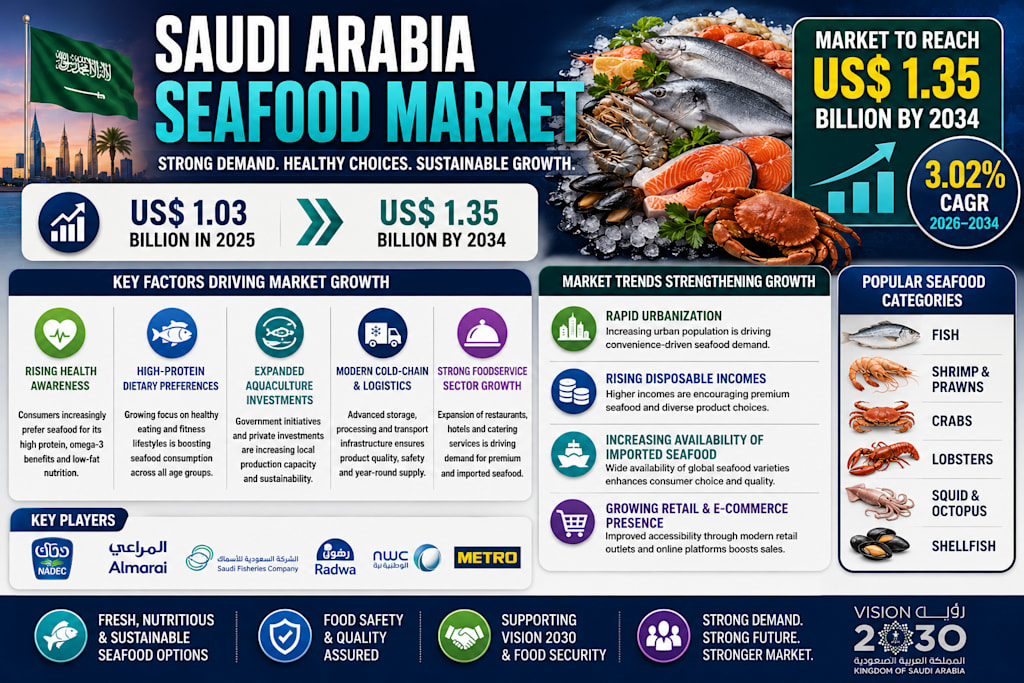
Saudi Arabia is undergoing a remarkable transformation across multiple sectors as part of its Vision 2030 economic diversification strategy. Among the industries benefiting from this transformation is the seafood sector, which is experiencing steady growth driven by changing consumer preferences, government-backed aquaculture initiatives, and expanding foodservice demand.
Seafood has become increasingly important within the Kingdom’s food ecosystem as consumers seek healthier protein alternatives and restaurants introduce more diverse culinary offerings. At the same time, policymakers are investing heavily in domestic aquaculture and food security programs designed to reduce reliance on imports and strengthen local production capabilities.
According to Renub Research, the Saudi Arabia Seafood Market is expected to grow from US$ 1.03 billion in 2025 to US$ 1.35 billion by 2034, registering a CAGR of 3.02% from 2026 to 2034. Rising health consciousness, increasing seafood consumption, modern cold-chain infrastructure, government support for aquaculture, and growing tourism activity are expected to support market expansion throughout the forecast period.
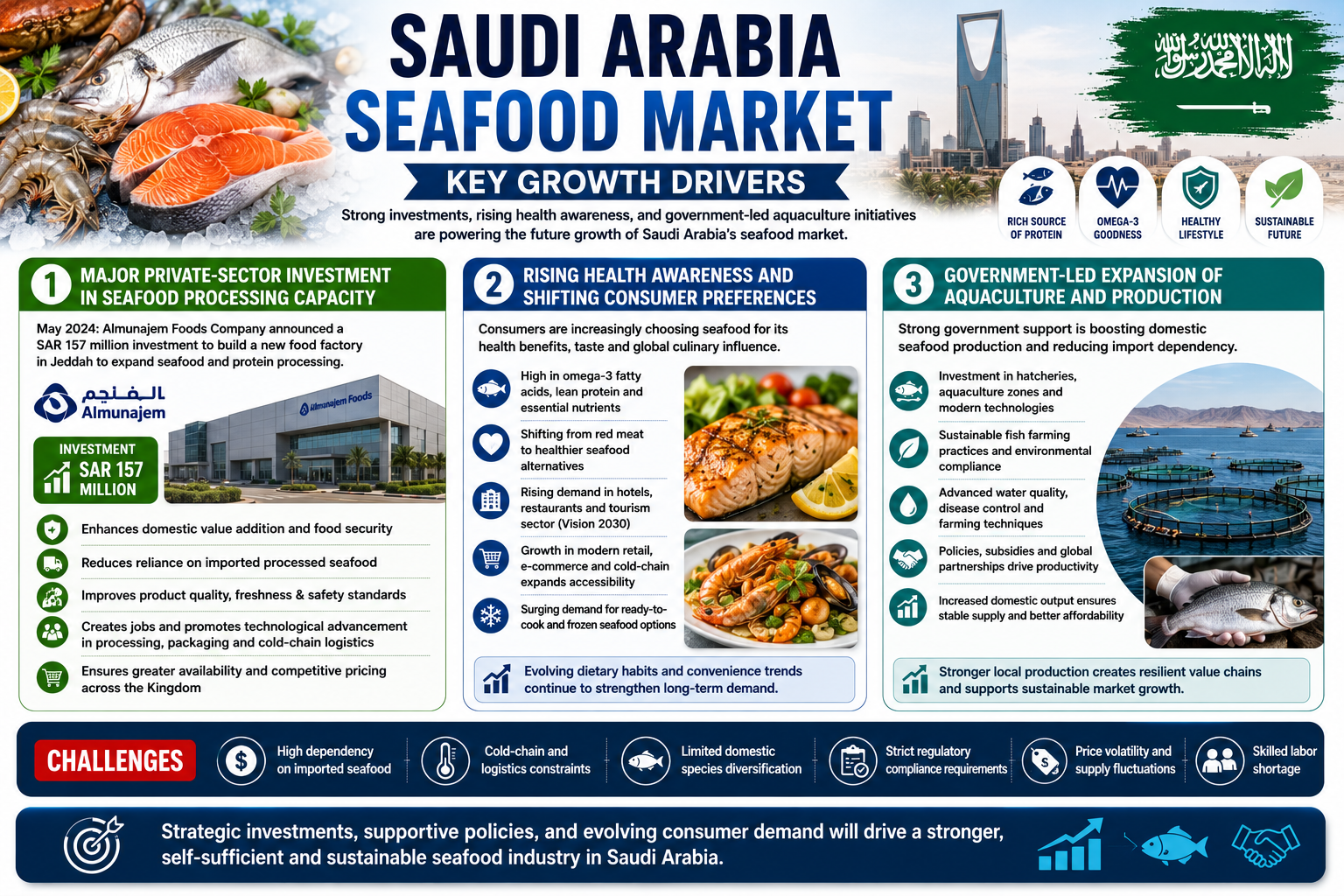
Understanding the Seafood Industry in Saudi Arabia
Seafood includes a broad range of edible aquatic organisms, including fish, shrimp, lobster, crab, mollusks, and other marine or freshwater species. These products may be sourced from wild fisheries or cultivated through aquaculture systems.
Seafood is widely recognized as one of the most nutritious food categories available. It provides high-quality protein, omega-3 fatty acids, essential vitamins, and minerals that contribute to overall health and wellness.
Consumers can purchase seafood in multiple formats, including fresh, chilled, frozen, canned, smoked, processed, and ready-to-cook products. This versatility makes seafood suitable for a wide variety of household and foodservice applications.
As dietary preferences evolve and awareness regarding healthy eating increases, seafood is becoming a more prominent component of daily diets across Saudi Arabia.
Rising Health Awareness Drives Consumption
One of the most significant growth drivers for Saudi Arabia's seafood market is increasing consumer awareness regarding nutrition and healthy eating.
Consumers are paying greater attention to the relationship between diet and long-term health. Seafood is often viewed as a healthier alternative to many traditional protein sources because it is naturally rich in lean protein and heart-healthy omega-3 fatty acids.
Growing concerns about obesity, cardiovascular disease, diabetes, and lifestyle-related health conditions are encouraging consumers to adopt more balanced eating habits. Healthcare professionals frequently recommend seafood as part of a healthy diet due to its nutritional profile and associated wellness benefits.
This shift is particularly noticeable among younger consumers, urban professionals, and higher-income households that actively seek nutritious food choices.
As awareness of seafood's health benefits continues to expand, demand is expected to remain strong throughout the forecast period.
Changing Dietary Habits Create New Opportunities
Saudi Arabia's population is becoming increasingly exposed to international cuisines and global dining trends.
The expansion of tourism, hospitality, and foodservice industries has introduced consumers to a broader range of seafood dishes and culinary experiences. Restaurants, hotels, and catering establishments are incorporating more seafood options into their menus to satisfy evolving consumer tastes.
The growing popularity of Mediterranean, Asian, and international cuisine has contributed significantly to seafood consumption growth. Consumers who experience seafood-based dishes through restaurants often incorporate similar products into their household purchasing habits.
Additionally, busy lifestyles are increasing demand for convenient meal solutions. Frozen seafood, pre-marinated products, and ready-to-cook formats are becoming increasingly popular among consumers seeking both nutrition and convenience.
These changing consumption patterns continue to support the expansion of the seafood market across the Kingdom.
Government Support Accelerates Aquaculture Development
Government initiatives play a critical role in shaping the future of Saudi Arabia's seafood industry.
As part of Vision 2030, the Kingdom has prioritized food security and economic diversification. Aquaculture development has emerged as a key strategy for reducing dependence on imported seafood while increasing domestic production capacity.
Government programs support investments in hatcheries, sustainable fish farming, advanced production technologies, and environmentally responsible aquaculture practices. These initiatives encourage private-sector participation while strengthening long-term industry resilience.
Authorities are also promoting species diversification and productivity improvements through research partnerships and technological innovation.
As domestic aquaculture expands, local seafood production is expected to play an increasingly important role in meeting rising consumer demand.
Major Investments Strengthen Processing Infrastructure
Investment in seafood processing and supply-chain infrastructure is helping transform the industry.
In May 2024, Almunajem Foods Company announced a SAR 157 million investment to establish a new food processing facility in Jeddah. The project is expected to significantly enhance domestic processing capacity for seafood and other protein categories.
Modern processing facilities improve product consistency, food safety standards, shelf life, and distribution efficiency. They also support greater value addition within the domestic market, reducing reliance on imported processed products.
These investments create employment opportunities, encourage technological advancement, and strengthen the Kingdom's overall food manufacturing ecosystem.
As additional processing infrastructure becomes operational, consumers can expect greater availability of locally produced seafood products.
Modern Cold-Chain Logistics Improve Accessibility
Efficient cold-chain infrastructure is essential for maintaining seafood quality and freshness.
Saudi Arabia has made substantial investments in refrigeration, transportation, warehousing, and distribution technologies that support seafood supply chains. These improvements allow products to move more efficiently from production facilities to retail outlets and foodservice establishments.
Modern cold-chain systems reduce spoilage, improve product quality, and extend shelf life. They also enable wider geographic distribution, ensuring that consumers across the Kingdom have access to fresh and frozen seafood products.
The expansion of logistics infrastructure has become particularly important as e-commerce and online grocery delivery services gain popularity among Saudi consumers.
Improved accessibility is helping stimulate seafood consumption in both major cities and emerging regional markets.
Foodservice Sector Creates Significant Demand
The rapid growth of Saudi Arabia's hospitality industry is creating substantial opportunities for seafood suppliers.
Hotels, restaurants, resorts, catering companies, and entertainment venues increasingly require premium seafood products to meet customer expectations. Tourism development projects associated with Vision 2030 are expected to further increase foodservice demand.
International visitors often seek seafood-based dining experiences, encouraging hospitality operators to expand menu offerings.
Fine-dining establishments, luxury hotels, and specialty seafood restaurants are particularly important drivers of demand for premium fish, shrimp, lobster, and other high-value seafood categories.
As tourism continues expanding, foodservice demand is expected to remain a major contributor to market growth.
Challenges Facing the Saudi Arabia Seafood Market
Despite positive growth prospects, several challenges continue to affect industry development.
Dependence on Imported Seafood
Saudi Arabia continues to rely heavily on imported seafood products to meet domestic demand.
Limited natural fisheries and environmental constraints restrict local wild-catch production, making imports necessary for many seafood categories. This dependence exposes the market to international price fluctuations, supply disruptions, shipping delays, and global trade uncertainties.
Premium seafood species are particularly vulnerable to international market dynamics.
Strengthening domestic aquaculture remains essential for reducing import dependence and improving long-term supply stability.
Shortage of Specialized Aquaculture Expertise
Modern aquaculture operations require advanced technical knowledge and specialized skills.
Fish farming involves complex processes related to water quality management, disease prevention, feeding systems, environmental monitoring, and production optimization. Many producers face challenges in accessing qualified personnel and advanced technologies.
The high capital requirements associated with modern aquaculture systems can also limit expansion opportunities.
Addressing these challenges will require continued investment in education, research, workforce development, and international collaboration.
Riyadh Seafood Market
Riyadh represents one of the largest seafood markets in Saudi Arabia.
The city's large population, high disposable incomes, and expanding retail infrastructure support strong demand for seafood products. Hypermarkets, supermarkets, specialty seafood retailers, and online grocery platforms provide consumers with extensive product choices.
The city's thriving hospitality sector further contributes to demand, particularly for premium seafood categories.
Increasing health awareness among urban consumers continues to support growth in household seafood consumption throughout Riyadh.
Jeddah Seafood Market
Jeddah plays a central role within Saudi Arabia's seafood ecosystem.
Its strategic coastal location provides direct access to major ports, facilitating seafood imports and domestic distribution. The city has a long-standing cultural connection to seafood consumption and hosts a vibrant hospitality industry.
Hotels, resorts, restaurants, wholesale markets, and processing facilities all contribute to strong seafood demand.
Ongoing investments in logistics, processing, and food infrastructure continue to reinforce Jeddah's position as a leading seafood hub.
Dammam Seafood Market
Dammam benefits from its strategic location within the Eastern Province and proximity to key industrial and logistics centers.
Strong regional demand, efficient transportation networks, and growing retail infrastructure support seafood market expansion. Foodservice establishments, corporate catering operations, and households all contribute to rising consumption levels.
Improvements in cold storage and distribution systems further strengthen market accessibility and product quality.
Dhahran Seafood Market
Dhahran's affluent population and diverse expatriate community contribute to strong seafood demand.
Consumers increasingly seek premium seafood products, including imported varieties and value-added offerings. Modern supermarkets, specialty retailers, and online delivery services ensure convenient access to a broad range of products.
Health-conscious purchasing behavior and evolving culinary preferences continue to support market growth throughout the city.
Recent Industry Developments
Several significant developments highlight the momentum within Saudi Arabia's seafood industry.
In January 2025, Saudi Arabia inaugurated the Middle East's largest salmon production facility in Hail. Developed through collaboration between the Ministry of Environment, Water and Agriculture and King Abdulaziz University, the facility targets annual production of 100,000 tons and strengthens national aquaculture capabilities.
In December 2024, Almarai announced investment plans totaling approximately USD 4.8 billion. The initiative includes new seafood production facilities designed to enhance domestic food security and support long-term industry growth.
Additionally, in November 2024, Saudi Fisheries Company launched a dedicated aquaculture entity focused on expanding fish farming production and promoting sustainability throughout the seafood sector.
These developments demonstrate the Kingdom's commitment to building a more self-sufficient and resilient seafood industry.
Future Outlook
The future of Saudi Arabia's seafood market appears highly promising.
Rising health awareness, growing tourism, increasing seafood consumption, expanding aquaculture production, and continued infrastructure investments are expected to create favorable market conditions throughout the coming decade.
Government support under Vision 2030 will continue encouraging private-sector participation, technological innovation, and sustainable production practices. Meanwhile, evolving consumer preferences and expanding retail accessibility will further strengthen demand.
As domestic production capacity increases and supply chains become more efficient, the market is expected to become increasingly competitive and diversified.
Final Thoughts
Saudi Arabia's seafood market is evolving into a more sophisticated and resilient industry supported by strong consumer demand and strategic government initiatives. The combination of health-conscious dietary trends, expanding foodservice activity, modern infrastructure, and ambitious aquaculture investments is creating substantial opportunities for growth.
With the market projected to increase from US$ 1.03 billion in 2025 to US$ 1.35 billion by 2034, seafood is expected to play an increasingly important role in the Kingdom's food security strategy and broader economic diversification efforts. Companies that invest in sustainable production, innovation, and efficient supply chains will be best positioned to benefit from the market's long-term growth potential.
About the Creator
Enjoyed the story? Support the Creator.
Subscribe for free to receive all their stories in your feed.
Comments
There are no comments for this story
Be the first to respond and start the conversation.