
Saudi Arabia Real Estate Market to Reach USD 141.6 Billion by 2034, Growing at 6.73% CAGR
Saudi Arabia’s real estate market is expanding rapidly, driven by urbanization, mega projects, and strong government initiatives under Vision 2030.

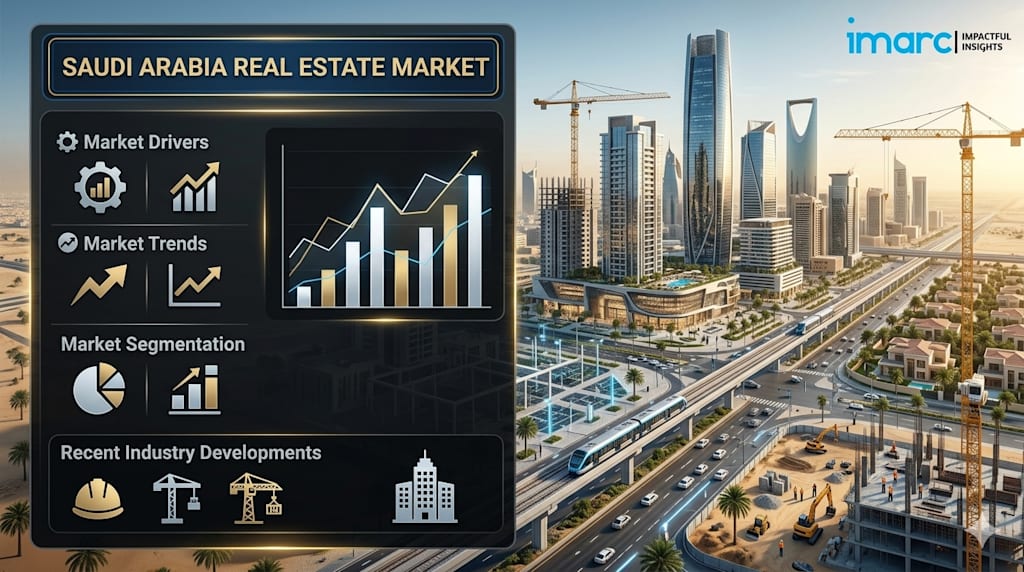
Market Overview:
Vision 2030’s economic diversification initiatives, large-scale infrastructure investments, rapid urbanization, and rising residential property demand are contributing to the growth of the Saudi Arabia real estate market. These developments are supported by regulatory reforms, expanding housing programs, and ongoing mega-project activity across the Kingdom.
According to IMARC Group, the Saudi Arabia real estate market size was valued at USD 77.2 Billion in 2025 and is expected to reach USD 141.6 Billion over the coming years, reflecting steady growth momentum. The Northern and Central region currently holds the largest share of the market.
The market is undergoing structural transformation as the Kingdom reduces its dependence on oil and strengthens its position as a global investment destination. Residential real estate accounts for the largest share of overall demand, driven by population expansion, rising urban migration, and increasing preference for organized housing communities. At the same time, commercial real estate is expanding steadily, supported by business hub development and corporate relocation initiatives in cities such as Riyadh.
Saudi Arabia Real Estate Market Growth Drivers:
- Vision 2030 Economic Diversification
The shift toward economic diversification is generating sustained demand across real estate segments. Investments in tourism, infrastructure, logistics, and industrial development are creating long-term opportunities for property development. Large-scale projects such as NEOM, Red Sea Project, Qiddiya, and Diriyah Gate are expanding urban boundaries and introducing new real estate zones.
These developments are not only increasing demand for residential units but also creating new requirements for hotels, retail spaces, logistics hubs, and office infrastructure, contributing to a diversified real estate ecosystem.
- Population Growth and Urbanization
Population growth and increasing urban concentration are key drivers of housing demand. Saudi Arabia’s growing population, combined with a rising number of smaller households, is increasing the need for new residential units annually. Urban centers such as Jeddah and Riyadh continue to attract population inflows due to employment opportunities and infrastructure availability.
Government initiatives such as Sakani are supporting homeownership through financial assistance, land allocation, and faster development approvals. These programs are helping bridge the housing gap and enabling a steady pipeline of residential projects.
- Foreign Ownership Liberalization
Regulatory reforms allowing foreign property ownership in selected areas are expanding the investor base and increasing market liquidity. These changes are attracting international investors and encouraging cross-border capital flows into the real estate sector.
Interest from global investors is particularly strong in key cities and religious destinations such as Makkah and Madinah, where demand for hospitality and residential real estate remains consistent due to religious tourism.
Saudi Arabia Real Estate Market Trends:
- Expansion of Mega-Projects
Mega-project developments are significantly influencing real estate growth patterns across the Kingdom. These projects are creating entirely new urban ecosystems with integrated residential, commercial, and entertainment infrastructure.
Developments along the Red Sea coast and in northern regions are opening previously underdeveloped areas for real estate investment. This geographic diversification is reducing reliance on traditional urban centers and supporting balanced regional growth.
- Digital Transformation and PropTech Adoption
The adoption of digital technologies is improving transparency and efficiency across the real estate sector. Property transactions, leasing processes, and asset management are increasingly being digitized. Platforms such as Ejar are enabling electronic lease registration and better data availability.
In addition, technologies such as artificial intelligence, data analytics, and blockchain are being explored to enhance property valuation, planning, and transaction security, contributing to a more organized market environment.
- Growth in Residential Supply and Strategic Partnerships
Residential supply is expanding through collaboration between government authorities, private developers, and international construction firms. These partnerships are improving construction efficiency, reducing project timelines, and enabling large-scale housing delivery.
Efforts to increase affordable housing availability are also gaining importance, as developers focus on mid-income and entry-level housing segments to meet growing demand.
Recent News and Developments:
- March 2026: Real Estate Market Balance program expanded nationwide, introducing new indicators to improve data transparency and stabilize rental markets.
- February 2026: Foreign ownership regulations came into effect, allowing non-Saudis to purchase property in designated zones across Riyadh and Jeddah.
- January 2026: Adoption of cloud-based property management systems increased significantly, improving operational efficiency across large developments.
- January 2026: PropTech platforms and AI-driven valuation tools were introduced, enhancing pricing accuracy and transaction efficiency.
- December 2025: A real estate tokenization initiative was completed for a Riyadh-based project, reflecting increasing adoption of digital investment models.
Note: If you require specific details, data, or insights that are not currently included in the scope of this report, we are happy to accommodate your request. As part of our customization service, we will gather and provide the additional information you need, tailored to your specific requirements. Please let us know your exact needs, and we will ensure the report is updated accordingly to meet your expectations.
About the Creator
Kishan Kumar
My name is Kishan Roy and I am a market analyst having 5 years of experience and a skilled researcher with a keen eye for consumer trends and data-driven insights.
Enjoyed the story? Support the Creator.
Subscribe for free to receive all their stories in your feed.
Comments
There are no comments for this story
Be the first to respond and start the conversation.