
Saudi Arabia Poultry Meat Market: Why Is Poultry Becoming the Kingdom’s Most Preferred Protein Source?
Population growth, food security initiatives, expanding quick-service restaurants, and rising demand for affordable protein are driving the growth of Saudi Arabia’s poultry meat market through 2034.

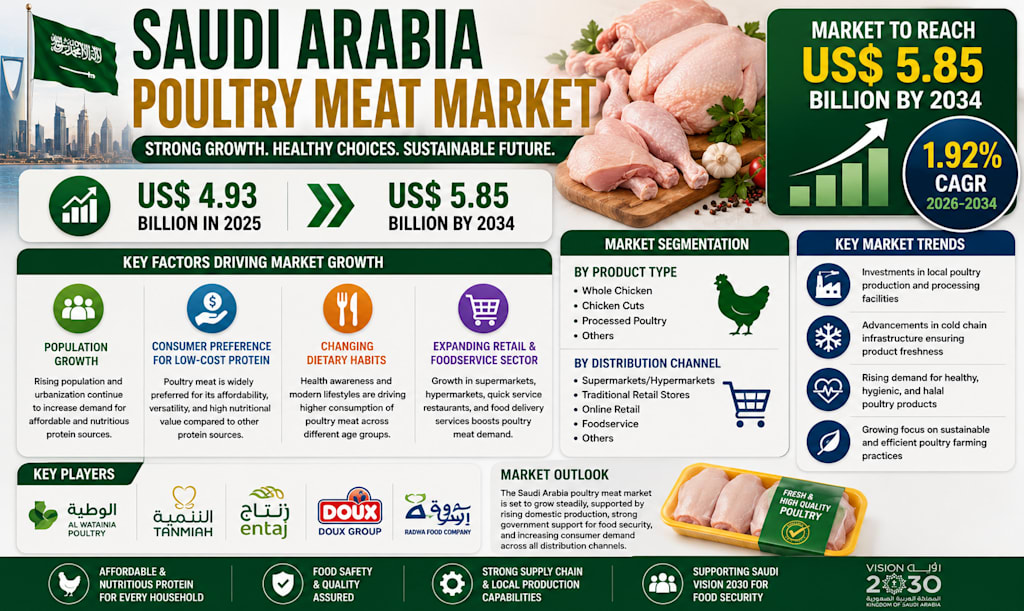
Saudi Arabia's food industry is undergoing significant transformation as the Kingdom seeks to strengthen domestic food production, improve food security, and meet the evolving dietary preferences of a growing population. Among the various protein categories available to consumers, poultry meat has emerged as the dominant choice due to its affordability, nutritional value, convenience, and compatibility with local dietary habits.
Chicken, in particular, has become a staple protein source across households, restaurants, hotels, and catering establishments throughout the country. Rising urbanization, increasing disposable incomes, changing lifestyles, and government-backed agricultural initiatives continue to reinforce poultry's position within Saudi Arabia's food ecosystem.
According to Renub Research, the Saudi Arabia Poultry Meat Market is projected to grow from US$ 4.93 billion in 2025 to US$ 5.85 billion by 2034, registering a CAGR of 1.92% between 2026 and 2034. Population expansion, rising protein consumption, growth in foodservice demand, and continued investment in domestic poultry production are expected to support market growth throughout the forecast period.
Understanding the Poultry Meat Industry
Poultry meat refers to the edible meat obtained from domesticated birds such as chicken, turkey, duck, quail, and other fowl species. Chicken remains the most widely consumed poultry product globally and dominates the Saudi Arabian market.
Poultry is valued for its nutritional profile, providing high-quality protein, essential amino acids, vitamins B6 and B12, and lower fat content compared to many red meat alternatives. It is highly versatile and can be prepared through grilling, roasting, frying, baking, steaming, and boiling.
In addition to fresh consumption, poultry is used extensively in processed products such as nuggets, sausages, meatballs, marinated cuts, deli meats, and ready-to-cook meals.
Its affordability, nutritional value, and culinary flexibility make poultry an essential component of modern diets throughout Saudi Arabia.
Population Growth Continues to Drive Demand
One of the most important factors supporting the poultry meat market is Saudi Arabia's growing population.
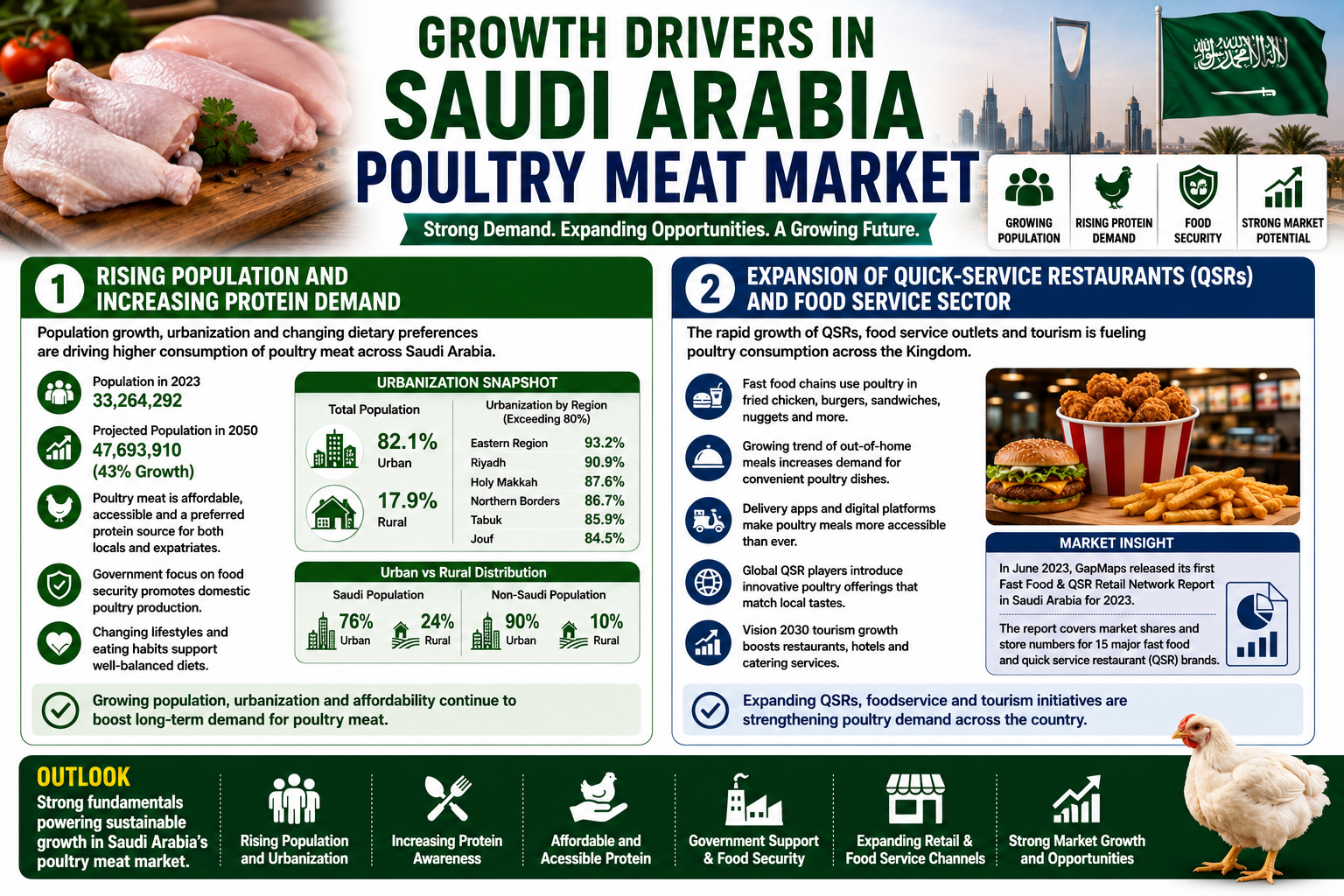
The Kingdom's population exceeded 33 million people in 2023 and is expected to continue expanding significantly over the coming decades. As population levels rise, demand for affordable and accessible protein sources naturally increases.
Poultry meat is particularly well-positioned to benefit from this trend because it offers a cost-effective alternative to many other protein categories. Families seeking nutritious meals often view chicken as an economical and practical option.
Population growth also creates greater demand from schools, hospitals, restaurants, hotels, and institutional foodservice providers, all of which rely heavily on poultry products.
As demographic expansion continues, poultry consumption is expected to remain on a long-term upward trajectory.
Urbanization Is Changing Dietary Habits
Saudi Arabia continues to experience rapid urbanization, which significantly influences food consumption patterns.
More than 80 percent of the population resides in urban areas, where modern lifestyles, busy schedules, and increased exposure to international cuisines encourage changes in dietary behavior.
Urban consumers increasingly seek convenient, affordable, and nutritious meal solutions. Poultry products fit these requirements exceptionally well due to their versatility and broad availability.
City residents frequently consume poultry through home-cooked meals, fast-food outlets, delivery services, supermarkets, and casual dining establishments.
Urbanization also contributes to growing demand for processed poultry products that save preparation time while maintaining nutritional value.
As urban centers continue expanding, poultry consumption is expected to rise alongside changing lifestyle preferences.
Poultry Remains the Most Affordable Protein Source
Affordability remains one of poultry's strongest competitive advantages.
Compared with beef, lamb, and many seafood products, chicken typically offers consumers a more economical source of protein. This price advantage is especially important for larger households and middle-income families seeking nutritious food options without significantly increasing grocery expenses.
In a market where consumers carefully balance quality and affordability, poultry consistently delivers strong value.
This affordability also makes poultry highly attractive to restaurants, catering services, educational institutions, and corporate dining facilities that must manage food costs efficiently.
The combination of nutritional benefits and cost-effectiveness continues to support poultry's dominant position within the Saudi food market.
Quick-Service Restaurants Fuel Consumption Growth
The rapid expansion of Saudi Arabia's quick-service restaurant sector is creating substantial demand for poultry products.
International fast-food chains, regional restaurant brands, and local foodservice operators all rely heavily on chicken as a core ingredient. Fried chicken, chicken burgers, sandwiches, wraps, nuggets, shawarma, and grilled poultry dishes are among the most popular menu items across the Kingdom.
The growing popularity of food delivery applications has further accelerated poultry consumption by increasing accessibility and convenience.
Consumers can now order poultry-based meals from a wide variety of restaurants through mobile platforms, encouraging more frequent purchases.
As Saudi Arabia's foodservice industry continues expanding under Vision 2030 initiatives, demand for poultry products is expected to remain strong.
Government Support Strengthens Domestic Production
The Saudi government plays a crucial role in developing the poultry industry.
Food security remains a national priority, and poultry production has become a key focus area within broader agricultural development strategies. Authorities have introduced numerous initiatives aimed at reducing reliance on imports and increasing self-sufficiency.
Subsidies, financing programs, infrastructure investments, and regulatory support have encouraged expansion across the domestic poultry sector.
Significant progress has already been achieved. National poultry self-sufficiency levels have increased substantially over recent years, reflecting the success of government-backed initiatives.
Authorities continue investing in modern farming technologies, feed efficiency improvements, production facilities, and supply-chain infrastructure designed to strengthen local production capacity.
These efforts are expected to support long-term industry growth and improve market stability.
Vision 2030 Creates New Opportunities
Saudi Arabia's Vision 2030 program is creating favorable conditions for the poultry meat industry.
Economic diversification initiatives encourage investment in agriculture, food production, logistics, and manufacturing sectors. These developments help strengthen the poultry value chain from farm production through processing, distribution, and retail sales.
Vision 2030 also supports tourism growth, hospitality development, and increased foodservice activity, all of which contribute to rising poultry demand.
As the Kingdom continues implementing long-term development plans, poultry producers are likely to benefit from expanding market opportunities and stronger infrastructure support.
Growth of Processed Poultry Products
Consumer demand for convenience foods is creating new opportunities within the processed poultry segment.
Busy lifestyles and changing household structures have increased interest in ready-to-cook and ready-to-eat products. Consumers increasingly seek solutions that reduce meal preparation time without sacrificing quality or nutrition.
Products such as nuggets, sausages, deli meats, poultry meatballs, marinated chicken, and pre-cooked meals are becoming increasingly popular.
Food manufacturers continue introducing innovative flavors, healthier formulations, and premium product offerings designed to appeal to modern consumers.
As convenience becomes a more important purchasing factor, processed poultry products are expected to experience sustained growth.
Fresh and Chilled Poultry Remains Highly Preferred
Fresh and chilled poultry continues to hold a dominant position within the Saudi market.
Many consumers associate fresh products with superior taste, quality, and nutritional value. Local poultry producers benefit from strong consumer trust and support from government initiatives aimed at increasing domestic production.
Advancements in cold-chain logistics, transportation systems, and retail refrigeration technologies have significantly improved product quality and availability.
Consumers can easily access fresh poultry through supermarkets, hypermarkets, specialty retailers, and online grocery platforms throughout the Kingdom.
Growing emphasis on food safety and quality assurance further supports demand for fresh and chilled poultry products.
Frozen Poultry Supports Supply Stability
Frozen poultry plays an essential role in maintaining stable supply levels across Saudi Arabia.
The country's climate conditions make frozen products particularly valuable because they offer extended shelf life and easier storage. Frozen poultry also helps meet demand during seasonal consumption peaks and supports foodservice operators seeking consistent supply.
Advancements in freezing technology have significantly improved product quality, helping overcome historical concerns regarding taste and texture.
Consumers appreciate the convenience of purchasing frozen poultry in bulk, while restaurants benefit from inventory management flexibility and reduced food waste.
As cold-chain infrastructure continues improving, frozen poultry is expected to remain a vital component of the market.
Challenges Facing the Saudi Arabia Poultry Meat Market
Despite strong growth prospects, several challenges continue to affect the industry.
Dependence on Imported Feed Ingredients
One of the most significant challenges facing poultry producers is reliance on imported feed ingredients such as corn and soybean meal.
Saudi Arabia's climate limits domestic cultivation of these crops, making imports necessary for poultry production. Fluctuations in international commodity prices, shipping costs, and currency exchange rates can significantly affect production expenses.
Smaller producers are often particularly vulnerable to feed-cost volatility due to limited financial resources.
Managing feed procurement efficiently remains a critical priority for industry participants.
Disease Risks and Biosecurity Concerns
The poultry industry remains vulnerable to disease outbreaks, including avian influenza and other infectious conditions.
Disease incidents can cause significant economic losses through reduced production, higher mortality rates, supply disruptions, and decreased consumer confidence.
Maintaining strict biosecurity measures is essential but can be costly and operationally demanding.
Continued investment in disease prevention, monitoring systems, and veterinary infrastructure is necessary to ensure industry stability.
Riyadh Poultry Meat Market
Riyadh represents the largest poultry market in Saudi Arabia due to its substantial population, strong purchasing power, and highly developed retail sector.
Consumers rely heavily on poultry as a primary protein source, while restaurants, hotels, and foodservice operators generate significant institutional demand.
The city's extensive supermarket networks, hypermarkets, and online grocery platforms ensure broad product availability.
Jeddah Poultry Meat Market
Jeddah's role as a major commercial center and international gateway makes it a key poultry market.
Strong tourism activity, diverse demographics, and an active hospitality sector contribute to substantial poultry consumption. Retailers and foodservice operators rely on both domestic and imported poultry products to meet demand.
Dhahran Poultry Meat Market
Dhahran's affluent consumer base supports demand for premium poultry products, including organic, fresh, and processed offerings.
The city's professional workforce and busy lifestyles also encourage adoption of convenient ready-to-cook and ready-to-eat poultry products.
Dammam Poultry Meat Market
Dammam benefits from strong industrial activity, population growth, and efficient logistics networks.
Consumers frequently purchase poultry because of its affordability and versatility, while restaurants and catering providers generate additional demand. Continued government support for domestic poultry production contributes to market stability.
Future Outlook
The future of Saudi Arabia's poultry meat market remains positive.
Population growth, urbanization, government support, foodservice expansion, and increasing consumer awareness of nutritional benefits are expected to sustain demand through 2034. Continued investments in domestic production capacity and food security initiatives will strengthen supply chains and improve market resilience.
Advancements in processing technologies, cold-chain infrastructure, and retail distribution are also likely to enhance product availability and quality.
Final Thoughts
The Saudi Arabia poultry meat market continues to play a critical role in the Kingdom's food system. As consumers increasingly seek affordable, nutritious, and versatile protein sources, poultry remains the preferred choice across households, restaurants, and institutional buyers.
With the market projected to grow from US$ 4.93 billion in 2025 to US$ 5.85 billion by 2034, opportunities remain strong for producers, processors, retailers, and foodservice operators. Companies that focus on efficiency, product innovation, food safety, and sustainable production practices will be best positioned to capitalize on the industry's long-term growth potential.
About the Creator
Enjoyed the story? Support the Creator.
Subscribe for free to receive all their stories in your feed.
Comments
There are no comments for this story
Be the first to respond and start the conversation.