
Saudi Arabia Pharmaceuticals Market: Healthcare Innovation, Local Manufacturing & Growth Outlook
How rising prevalence of chronic diseases, increasing healthcare expenditure under Vision 2030, and strong government support for local pharmaceutical manufacturing and innovation are driving demand for advanced therapeutics, generic medicines, biologics, and digital healthcare solutions across the Saudi Arabia Pharmaceuticals Market.
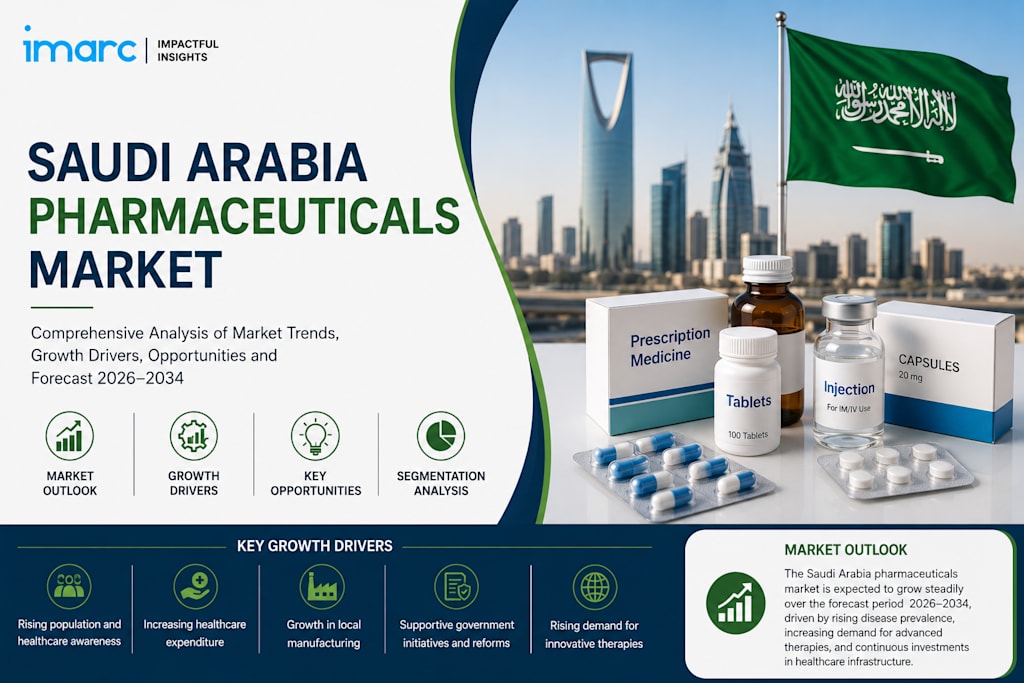
Rising chronic disease burden, Vision 2030-driven healthcare reforms, and expanding insurance coverage are powering growth in the Saudi Arabia pharmaceuticals market, supported by local manufacturing incentives, digital pharmacy adoption, and increasing access to advanced therapeutics. According to IMARC Group's latest data, The Saudi Arabia pharmaceuticals market size was valued at USD 9.60 Billion in 2025. Looking forward, IMARC Group estimates the market to reach USD 11.79 Billion by 2034, exhibiting a CAGR of 2.30% from 2026-2034. Prescription drugs currently dominate the market, holding a share of 64% in 2025.
Saudi Arabia's pharmaceutical sector sits at an important inflection point. The Kingdom is simultaneously managing a growing chronic disease burden with around 18.95% of adults reporting at least one chronic condition while aggressively pushing to build a world-class domestic pharmaceutical industry. The result is a market that's expanding on both the demand side and the supply side at the same time. With prescription drugs accounting for nearly two-thirds of all sales and cardiovascular treatments leading application demand at 30%, providers and investors alike are finding this one of the most structurally sound healthcare markets in the Middle East.
Saudi Arabia Pharmaceuticals Market Growth Drivers:
Rising Burden of Chronic Disease
Lifestyle changes and urbanization are pushing chronic disease rates steadily upward across Saudi Arabia. According to the National Health Survey released in 2024, about 18.95% of adults reported at least one chronic condition, with diabetes at 9.1% and hypertension at 7.9%. These conditions require long-term pharmaceutical management, creating a reliable and growing demand base for prescription medications. Wider screening programs and improved diagnostics are also bringing more patients into the treated population, which means higher prescription volumes and stronger adherence to sustained therapies across both public and private healthcare settings.
- Demographic Shifts and an Ageing Population
Saudi Arabia's improving healthcare outcomes are gradually extending life expectancy, creating a larger elderly population with sustained pharmaceutical needs. The Elderly Survey 2025 counted approximately 1.7 million people aged 60 and above, representing 4.8% of the total population. Age-related conditions cardiovascular disorders, metabolic diseases, arthritis, and neurological illnesses all require continuous medication. This demographic trend is reinforcing predictable prescription volumes for both public and private healthcare providers. Expanding geriatric care facilities and home healthcare services are further strengthening regular medicine use and supporting long-term demand stability across the Kingdom.
- Digital Commerce and Online Pharmacy Adoption
Rapid digital adoption is reshaping how Saudis access medicines. With internet users participating in e-commerce projected to reach 33.6 million, licensed online pharmacies and digital health platforms are seeing strong uptake. This shift supports home delivery of prescription refills, improves adherence among patients with chronic conditions, and opens pharmaceutical access for populations in remote areas. Digital channels complement traditional pharmacy networks rather than replacing them, and they're becoming an increasingly important driver of retail pharmaceutical sales. Convenience, speed, and integration with digital insurance systems are making online pharmacy a mainstream channel.
Saudi Arabia Pharmaceuticals Market Trends:
- Local Manufacturing and Vision 2030 Localization Push
National industrial policy under Vision 2030 is actively accelerating pharmaceutical manufacturing within the Kingdom. Procurement preference for locally made medicines and investment incentives for formulation, biotechnology, and vaccine production are making domestic manufacturing commercially attractive. In a clear signal of momentum, Pfizer Saudi Arabia and PIF-owned Lifera signed a Memorandum of Understanding in 2025 to explore local drug manufacturing, technology transfer, and workforce development. These partnerships reduce import dependency, improve supply security, and are steadily positioning Saudi Arabia as a regional pharmaceutical manufacturing and export hub with long-term competitive advantages.
- Expansion of Biologics Manufacturing Capacity
Investment in advanced biologics and biopharmaceutical production is gaining significant traction in Saudi Arabia. These high-value facilities strengthen domestic supply chains, support technology transfer from global partners, and expand the Kingdom's capabilities in complex therapies. A concrete example: MS Pharma launched a USD 50 million biologics manufacturing plant, serving both local and international markets while supporting workforce development in specialized manufacturing skills. Such investments align squarely with Vision 2030 objectives and are accelerating sector modernization, expanding export potential, and building a foundation for long-term pharmaceutical industry growth.
- Retail Pharmacy Network Expansion and Innovation
Retail pharmacies remain the dominant distribution channel, holding a 57% share of the market, and the sector is actively evolving. Organized pharmacy networks are expanding rapidly beyond major urban centers into suburban communities, improving medicine access across the Kingdom. Aster Pharmacy's launch of its flagship Trio store in Riyadh featuring drive-through pharmacy services and an integrated health and wellness model with plans for up to 180 outlets nationwide illustrates the ambition of players in this space. Better insurance integration, digital prescription systems, and improved supply chains are further boosting retail pharmaceutical utilization.
Recent News and Developments in Saudi Arabia Pharmaceuticals Market
- October 2025: Lifera, a PIF-owned biopharmaceutical company, announced a potential joint venture with Jamjoom Pharma at the Global Health Exhibition in Riyadh. The proposed JV aimed to develop, manufacture, and commercialize vaccines, biologics, and biosimilars within Saudi Arabia, supporting the National Biotechnology Strategy and Vision 2030 goals by strengthening local biopharma manufacturing and reducing reliance on imports.
- September 2025: Tabuk Pharmaceutical and Cumberland Pharmaceuticals launched Vibativ® (telavancin), an FDA-approved injectable antibiotic, in Saudi Arabia. The drug treats serious infections like hospital-acquired pneumonia and skin infections, including those caused by drug-resistant bacteria such as MRSA, expanding access to critical anti-infective treatments in the Kingdom.
- October 2025: The Saudi Ministry of Health launched biotech and pharma partnerships at the 8th Global Health Exhibition in Riyadh, showcasing deals in pharma localization, AI-driven health technology, and digital solutions. The event aimed to boost healthcare innovation and investment in line with Vision 2030's health transformation goals, signaling sustained government-led momentum in sector development.
- January 2025: MS Pharma launched a USD 50 million biologics manufacturing plant in Saudi Arabia, serving both local and international markets. The facility supports workforce development and strengthens the Kingdom's biopharmaceutical capabilities, aligning with Vision 2030 objectives and accelerating sector modernization with expanded export potential across the pharmaceutical value chain.
- November 2024: Eisai Co., Ltd. began full operations at its new Saudi Arabian subsidiary, Eisai Pharmaceuticals Single Person LLC in Riyadh. The subsidiary handles sales and marketing of key Eisai products including Methycobal, Fycompa, and Lenvima, strengthening the company's direct presence in Saudi Arabia's pharmaceutical market and expanding local access to specialized treatments.
Note: If you require specific details, data, or insights that are not currently included in the scope of this report, we are happy to accommodate your request. As part of our customization service, we will gather and provide the additional information you need, tailored to your specific requirements. Please let us know your exact needs, and we will ensure the report is updated accordingly to meet your expectations.
About the Creator
Shubham Sharma
Market research enthusiast sharing insights on global industries, emerging trends, growth opportunities, and data-driven analysis across diverse markets.
Enjoyed the story? Support the Creator.
Subscribe for free to receive all their stories in your feed.
Comments
There are no comments for this story
Be the first to respond and start the conversation.