
Saudi Arabia Logistics Market: Digital Transformation, Smart Warehousing & Vision 2030 Expansion
How digital infrastructure, e-commerce expansion, and Vision 2030 initiatives are driving smart logistics, efficient supply chains, and regional trade connectivity across Saudi Arabia’s logistics market.

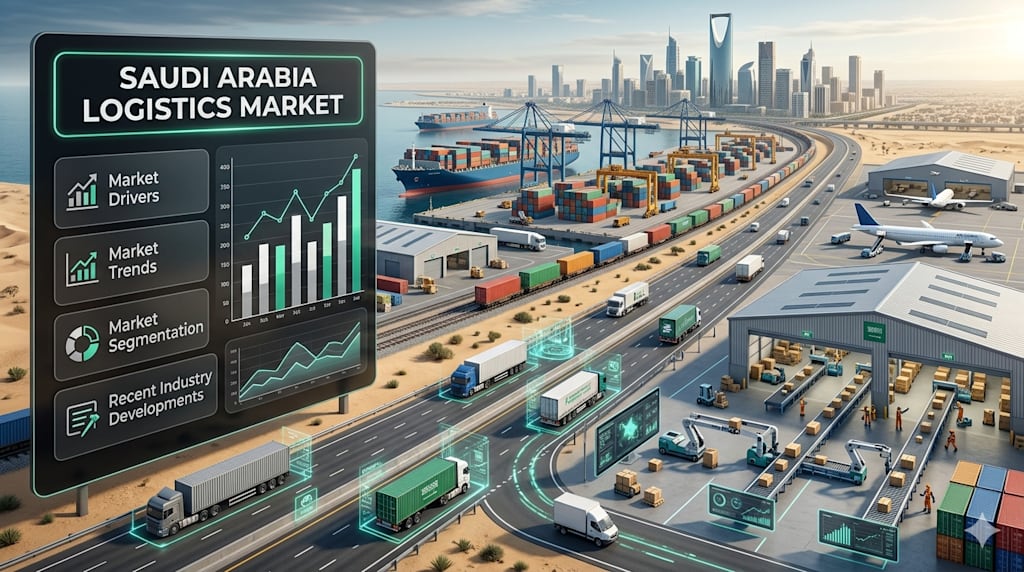
Rising infrastructure investment, e-commerce growth, and Saudi Arabia's Vision 2030 economic diversification agenda are collectively transforming the Kingdom's logistics landscape, supported by digital adoption, free zone expansion, and growing cross-border trade activity. According to IMARC Group's latest data, the Saudi Arabia logistics market size was valued at USD 55.29 Billion in 2025. Looking forward, IMARC Group estimates the market to reach USD 83.41 Billion by 2034, exhibiting a CAGR of 4.67% from 2026-2034. The Northern and Central Region currently dominates the market, holding a market share of over 38% in 2025.
The Saudi Arabia logistics market is emerging as one of the most strategically important supply chain ecosystems in the Middle East. The Kingdom's geographic position at the crossroads of Asia, Europe, and Africa, combined with aggressive government investment in ports, railways, airports, and road infrastructure, is turning it into a preferred regional distribution hub. Key demand drivers include rapid e-commerce adoption, industrial expansion across petrochemical and automotive sectors, and the rise of specialized logistics zones offering tax benefits and faster customs clearance. Third-party logistics (3PL) providers dominate service delivery, while road transport holds the largest share of freight movement across the country's 73,000-kilometer highway network.
Saudi Arabia Logistics Market Growth Drivers:
- Vision 2030 Infrastructure Push
Saudi Arabia's Vision 2030 is the single biggest catalyst reshaping its logistics sector. The government has committed billions to expanding ports, airports, and rail corridors, with Alstom's SAR 300 Million agreement signed with Saudi Railway Company to upgrade the east-west freight corridor being a recent standout example. These investments are cutting transit times, improving cargo handling capacity, and opening the Kingdom to greater multimodal freight movement. For logistics operators, this translates directly into more business, better infrastructure to work with, and a more competitive operating environment than existed just a few years ago.
- E-Commerce and Manufacturing Demand
Online retail in Saudi Arabia is growing fast, and that growth puts real pressure on warehousing, last-mile delivery, and fulfilment infrastructure. At the same time, the Kingdom's push to expand its manufacturing base, especially in petrochemicals, automotive parts, and electronics, means companies need more sophisticated inbound and outbound logistics support. The manufacturing segment currently holds an 18.07% share of the logistics market, reflecting how central industrial activity has become to freight demand. Together, e-commerce and manufacturing are creating a sustained need for faster, more reliable logistics solutions across every region of the Kingdom.
- Foreign Investment and Regulatory Liberalization
Saudi Arabia has made significant strides in opening its logistics sector to global operators by relaxing foreign ownership restrictions and streamlining licensing requirements. This policy shift is actively attracting multinational 3PL companies, which now account for 46.12% of the total market. International providers are entering through acquisitions, joint ventures, and greenfield investments, bringing advanced technology, automation expertise, and global network access. For businesses operating in Saudi Arabia, this means access to a wider, more capable pool of logistics partners and stronger service standards that continue to improve year on year.
Saudi Arabia Logistics Market Trends:
- Digital Technology and AI-Driven Operations
The Saudi Arabia logistics market is moving fast on digital transformation. Operators are deploying AI-based route optimization, IoT-enabled warehouse management, and blockchain-powered shipment tracking across their networks. The Saudi Arabia AI market itself was valued at USD 1,242.5 Million in 2025, and logistics is one of the clearest beneficiaries of that investment. Predictive analytics are helping companies reduce delivery delays, cut fuel costs, and improve inventory accuracy. For clients, this means more visibility over their supply chains and better overall service reliability from providers who are increasingly tech-forward in how they run their operations.
- Free Trade Zones and Special Logistics Areas
The development of specialized logistics zones is changing how companies structure their regional supply chains. The Special Integrated Logistics Zone (SILZ) near Riyadh's King Khalid International Airport is a strong example, offering a 50-year tax holiday and a customs clearance system built to process shipments in as little as four hours. These zones are designed specifically to attract multinational operators and large-volume shippers. By reducing import-export friction and lowering operational overhead, they make Saudi Arabia a genuinely competitive option for companies looking to set up regional distribution hubs rather than routing goods through traditional logistics centers elsewhere in the region.
- Green Logistics and Sustainability Commitments
Environmental expectations are reshaping procurement decisions in Saudi Arabia's logistics market. As the Kingdom works toward its net-zero emissions target, logistics operators are under growing pressure to demonstrate environmental responsibility. Companies are investing in electric delivery fleets, solar-powered warehouses, and low-emission freight operations. The Saudi Green Initiative is providing the regulatory and financial framework to support these transitions. For logistics buyers, sustainability credentials are increasingly a factor in vendor selection, which means providers that move early on green infrastructure are likely to hold a meaningful competitive edge as compliance requirements tighten across the industry.
Recent News and Developments in the Saudi Arabia Logistics Market
- April 2026: Saudi Arabia Railways launches five new multimodal logistics corridors linking Gulf ports to central and northern regions, reducing thousands of truck trips while improving road safety and cutting carbon emissions.
- March 2026: Saudi Transport Minister unveils GCC logistics initiatives, extending truck operational lifespan to 22 years and launching storage zones at King Abdulaziz Port in Dammam for enhanced regional supply chain integration.
- February 2026: MEDLOG inaugurates state-of-the-art integrated logistics park at King Abdulaziz Port in Dammam, advancing Vision 2030 goals through modern warehousing and multimodal connectivity.
- January 2026: Saudi Warehousing Expo expands to 20,000 sqm with 400 exhibitors; SAL Logistics showcases AI robotics and IoT delivering 25% efficiency gains in warehouse automation.
- December 2025: Mawani signs SAR 229 million agreements for logistics centers at Dammam and Yanbu ports, including 40,000 sqm food storage hub to boost capacity and food security.
Note: If you require specific details, data, or insights that are not currently included in the scope of this report, we are happy to accommodate your request. As part of our customization service, we will gather and provide the additional information you need, tailored to your specific requirements. Please let us know your exact needs, and we will ensure the report is updated accordingly to meet your expectations.
About the Creator
Kishan Kumar
My name is Kishan Roy and I am a market analyst having 5 years of experience and a skilled researcher with a keen eye for consumer trends and data-driven insights.
Enjoyed the story? Support the Creator.
Subscribe for free to receive all their stories in your feed.
Comments
There are no comments for this story
Be the first to respond and start the conversation.