
Saudi Arabia Home Textile Market: Interior Trends, Real Estate Growth & Expansion Outlook
How rapid urbanization, rising disposable incomes, and large-scale residential and hospitality developments under Vision 2030 are driving demand for premium bedding, décor-focused furnishings, and sustainable fabrics, while e-commerce expansion and evolving lifestyle preferences reshape consumer buying patterns across the Saudi Arabia Home Textile Market.
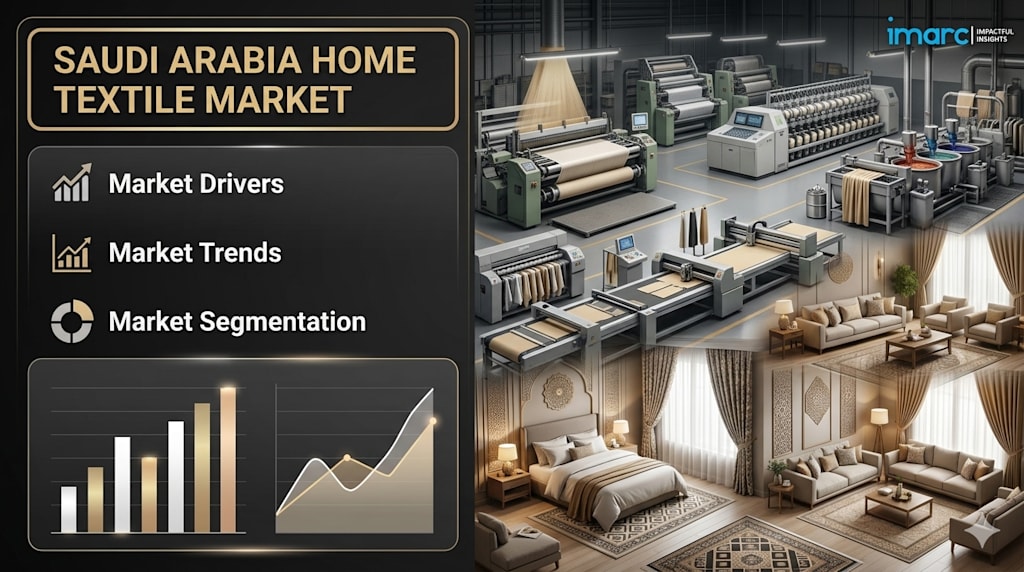
Rising disposable incomes, rapid urbanization, and large-scale residential and hospitality projects under Vision 2030 are reshaping the Saudi Arabia home textile market. According to IMARC Group’s latest data, the Saudi Arabia home textile market size was valued at USD 1,269.47 Million in 2025. Looking forward, IMARC Group estimates the market to reach USD 1,727.87 Million by 2034, exhibiting a CAGR of 3.48% from 2026-2034. Bed linen currently dominates the market, holding a product share of over 41% in 2025.
Saudi Arabia Home Textile Market Growth Drivers:
- Vision 2030 Housing Boom and Hospitality Expansion
Saudi Arabia’s real estate sector is one of the most direct engines of home textile demand right now. In November 2024, Saudi banks issued SR 10.06 billion in residential mortgages, a jump of over 50% compared to the previous year. The government’s housing programs are on track to deliver over 200,000 new units, while giga-projects like NEOM, Qiddiya, and the Red Sea development are adding thousands of hotel rooms. Every new apartment, villa, and hotel suite needs bedding, curtains, towels, and upholstery. That pipeline alone makes the case for sustained demand in home textiles across both residential and commercial channels.
- Rising Disposable Incomes and a Young, Brand-Aware Consumer Base
Saudi Arabia has one of the youngest populations in the region, and that demographic increasingly cares about how their homes look. Average per capita disposable income is projected to reach SAR 86,250, up roughly 5% from recent levels, giving households more room to spend on interior upgrades. Around 42% of purchase decisions are influenced by material quality and manufacturing standards, not just price. International brands like Ralph Lauren are competing alongside local players such as Bed Quarter and Satex because consumers actively seek out recognizable names. When income rises and tastes evolve simultaneously, premium home textile products are one of the first things people spend on.
- Hajj, Umrah, and Seasonal Demand Spikes
Saudi Arabia’s home textile market gets a structural demand boost that most markets don’t have: the annual Hajj and Umrah pilgrimage seasons. Hotels and accommodation facilities in Mecca and Medina serve millions of visitors each year, creating recurring bulk demand for towels, bed linens, and bath textiles. In June 2025, major hotel chains in Mecca and Medina upgraded to antimicrobial bedsheets with advanced fiber technology, improving guest satisfaction scores by 30% during peak Hajj accommodation periods. This commercial-sector demand, layered on top of residential growth, gives the market a consistent floor that cushions against consumer spending slowdowns.
Saudi Arabia Home Textile Market Trends:
- E-Commerce and Digital Retail Reshaping How Saudis Shop for Home Textiles
With internet penetration at 99% and over 35 million active social media users, Saudi Arabia is one of the most digitally connected markets in the Middle East. That connectivity is changing how people discover and buy home textiles. Online platforms let consumers compare thread counts, browse international collections, and take advantage of virtual room design tools, all without visiting a store. Specialty retailers are responding by integrating digital consultations alongside physical showrooms. The home decor market overall is expected to reach SAR 15 billion, and e-commerce is capturing a growing slice of that, particularly among younger buyers in Riyadh and Jeddah who prefer the convenience of online ordering.
- Sustainability and Eco-Friendly Textiles Moving from Niche to Mainstream
Environmental awareness is gaining real traction among Saudi consumers, and manufacturers are adjusting their product lines accordingly. In March 2025, local producer Satex launched Saudi Arabia’s first fully sustainable bedsheet line using organic cotton from the Al-Ahsa region, tied to Vision 2030’s circular economy goals with a target to reduce textile waste by 40%. Sedar Global, which operates eight stores in Saudi Arabia, has also expanded with a focus on sustainable designs in curtains, blinds, and upholstery fabrics. As Vision 2030’s sustainability targets become more embedded in procurement decisions, especially for commercial buyers, eco-certified textiles are becoming a practical requirement rather than just a marketing point.
- Premiumization and Smart Home Integration Driving Product Innovation
Saudi consumers are not just buying more home textiles, they are trading up. High-thread-count Egyptian cotton, jacquard weaves, and embroidered luxury linens are seeing growing demand as the middle class expands and aspirational spending rises. The innovation is not stopping at fabric quality either. In February 2025, NEOM’s luxury residential towers integrated smart bedding systems with temperature-controlled sheets featuring AI-powered comfort adjustment, attracting 25% more premium buyers. Bedding Industries of America also partnered with Saudi-based Bed Quarter in June 2024 to produce and distribute Eclipse mattresses across the region, reflecting how global brands see Saudi Arabia as a premium market worth investing in directly.
Recent News and Developments in Saudi Arabia Home Textile Market
- June 2025: Major hotel chains in Mecca and Medina upgraded their bedding to antimicrobial sheets with advanced fiber technology, reporting a 30% improvement in guest satisfaction scores during peak Hajj accommodation season, reflecting the growing role of technical textiles in Saudi Arabia’s hospitality sector.
- March 2025: Local manufacturer Satex launched Saudi Arabia’s first fully sustainable bedsheet line using organic cotton sourced from the Al-Ahsa region. The product line is linked to Vision 2030’s circular economy initiative and targets a 40% reduction in textile waste.
- February 2025: NEOM’s luxury residential towers integrated smart bedding systems featuring AI-powered, temperature-controlled sheets that adapt to residents’ sleep patterns. The premium bedding offering contributed to a 25% increase in premium buyer interest in the development.
Note: If you require specific details, data, or insights that are not currently included in the scope of this report, we are happy to accommodate your request. As part of our customization service, we will gather and provide the additional information you need, tailored to your specific requirements. Please let us know your exact needs, and we will ensure the report is updated accordingly to meet your expectations.
About the Creator
Shubham Sharma
Market research enthusiast sharing insights on global industries, emerging trends, growth opportunities, and data-driven analysis across diverse markets.
Enjoyed the story? Support the Creator.
Subscribe for free to receive all their stories in your feed.
Comments
There are no comments for this story
Be the first to respond and start the conversation.