
Saudi Arabia Generic Drug Market: Cost-Effective Healthcare, Patent Expiries & Rising Demand
How rising demand for cost-effective medications, government initiatives to reduce healthcare spending, and increasing prevalence of chronic diseases are driving adoption, local manufacturing, and market expansion in the Saudi Arabia generic drug market
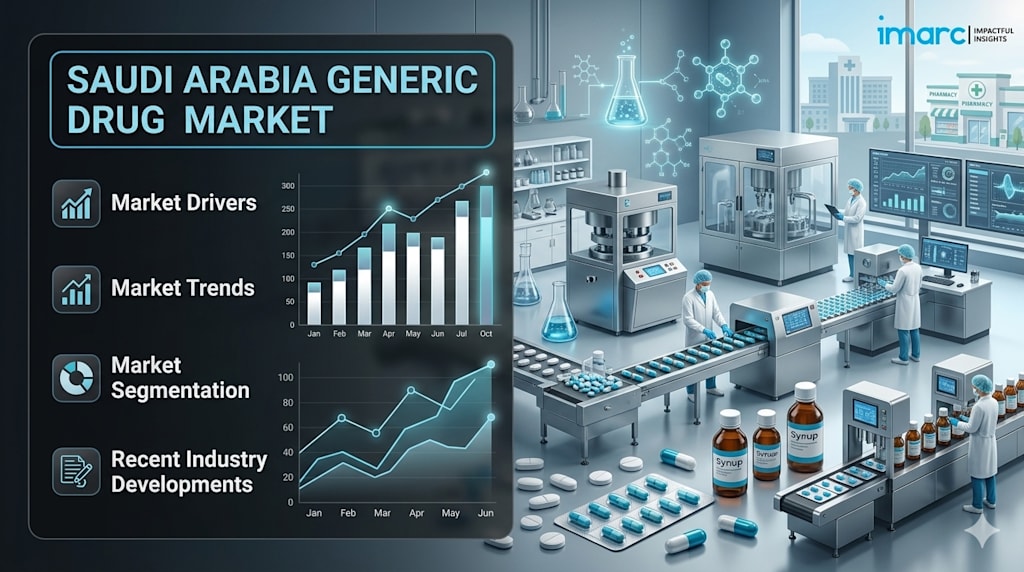
Rising healthcare costs, growing chronic disease burden, patent expirations on branded drugs, and strong government push toward affordable medicine are reshaping Saudi Arabia's pharmaceutical landscape. According to IMARC Group's latest data, the Saudi Arabia generic drug market size reached USD 4.1 Billion in 2025. Looking forward, IMARC Group expects the market to reach USD 8.1 Billion by 2034, exhibiting a CAGR of 7.88% during 2026-2034. The favorable government initiatives, rising healthcare costs, patent expirations, increasing prevalence of chronic diseases, growth of the pharmaceutical industry, rapid healthcare infrastructure development, and regulatory framework of SFDA in ensuring the safety, quality and efficacy of generic drugs represent some of the key factors driving the market.
Saudi Arabia's generic drug sector is quietly becoming one of the most strategically important pharmaceutical markets in the Middle East. The shift from expensive branded medications to equally effective, lower-cost generics is being driven by a combination of proactive government policy, rising chronic disease rates, and a healthcare system that's under pressure to deliver more for less. The Saudi Food and Drug Authority (SFDA) has worked to streamline approval pathways for generics, making it easier for both domestic and international manufacturers to enter the market.
Saudi Arabia Generic Drug Market Growth Drivers:
- Cost-Efficiency of Generic Drugs
Healthcare costs in Saudi Arabia have been climbing, and both patients and providers are feeling the pressure. Generic drugs offer a practical way out—they carry the same active ingredients and therapeutic value as branded medications but come at a fraction of the price. For patients managing long-term conditions like diabetes or hypertension, this cost difference is significant. Insurers are increasingly listing generics as preferred options, and hospitals are prioritizing them in procurement to control budgets. This financial logic is driving uptake across every therapy segment, making cost-efficiency the single most powerful growth lever in this market.
- Growing Local Manufacturing Capacity
Saudi Arabia is putting serious investment into building its own pharmaceutical manufacturing base. One concrete example: Apex Pharma launched its first facility in King Abdullah Economic City in early 2025, planning to roll out 10 to 14 pharmaceutical products within the year. This kind of domestic capacity expansion does two things—it reduces reliance on imports vulnerable to supply chain disruptions, and brings down the cost of generics by cutting logistics layers. The government's backing through Vision 2030 industrial incentives makes Saudi Arabia an increasingly attractive location for pharmaceutical investment, while also ensuring faster regulatory turnaround for domestically produced medicines.
- Rising Consumer Awareness
A few years ago, many Saudi patients were hesitant to switch from branded to generic medications—often due to misconceptions about quality. That's changing. Awareness campaigns run by healthcare providers, the Ministry of Health, and pharmaceutical companies have done real work in explaining that generics undergo the same rigorous safety and efficacy testing as their branded counterparts. Doctors are now actively recommending generics, particularly for chronic conditions requiring continuous treatment. The result is a measurable shift in consumer behavior, with more patients and families choosing the more affordable option without feeling like they're compromising on care quality.
Saudi Arabia Generic Drug Market Trends:
- Growing Healthcare Spending
Saudi Arabia's healthcare system is in the middle of a major expansion, and generic drugs are benefiting directly. The Saudi Health Ministry has been delivering measurable results—including reducing average hospital stays and freeing up around 13,000 hospital beds—while digital health tools are making patient management more efficient. With government healthcare expenditure rising steadily, there's a strong institutional push to stretch every riyal further. Generics, which deliver equivalent clinical outcomes at lower costs, are a natural fit for a system trying to serve a growing population without letting budgets spiral. Mobile health apps are now mainstream, enabling chronic disease management and appointment booking at scale.
- Government Initiatives and Regulations
The regulatory environment in Saudi Arabia is actively working in favor of generic drug adoption. The SFDA has streamlined approval processes, and the government has introduced price controls on branded drugs to level the playing field. Saudi Arabia is hosting the 8th Global Health Exhibition in Riyadh in October 2025—a major signal of the Kingdom's intent to position itself as a global health innovation hub under Vision 2030. Add to this the subsidies on essential generics and clear policy directives to boost local production, and you have a regulatory ecosystem that's genuinely accelerating market growth and attracting pharmaceutical investment from around the world.
- Increasing Occurrence of Chronic Diseases
Diabetes, cardiovascular disease, hypertension, and obesity are no longer fringe concerns in Saudi Arabia—they're mainstream public health challenges affecting millions. Lifestyle changes and a more sedentary population have driven this shift. These conditions require decades of consistent medication, making cost a central factor in long-term treatment adherence. A standout example: Bayer and Al-Dawaa Medical Services signed an MoU in 2025 to support the 'Protect Your Heart' national initiative backed by the Ministry of Health—underscoring the urgency of cardiovascular care. Generics are well-positioned to meet this sustained medication demand at scale and affordably.
Recent News and Developments in Saudi Arabia Generic Drug Market
- February 2025: Bio-Thera Solutions partnered with Tabuk Pharmaceutical Manufacturing for the exclusive manufacturing, distribution, and marketing of BAT2206—a biosimilar to Stelara (ustekinumab)—in Saudi Arabia, strengthening the Kingdom's biosimilar pipeline and access to cost-effective biological medicines.
- March 2025: Apex Pharma commenced operations at its first pharmaceutical facility in King Abdullah Economic City (KAEC), with plans to distribute products locally following the Hajj season and produce 10 to 14 pharmaceuticals within the year—a direct boost to Saudi Arabia's domestic generic manufacturing capacity.
Note: If you require specific details, data, or insights that are not currently included in the scope of this report, we are happy to accommodate your request. As part of our customization service, we will gather and provide the additional information you need, tailored to your specific requirements. Please let us know your exact needs, and we will ensure the report is updated accordingly to meet your expectations.
About the Creator
Shubham Sharma
Market research enthusiast sharing insights on global industries, emerging trends, growth opportunities, and data-driven analysis across diverse markets.
Enjoyed the story? Support the Creator.
Subscribe for free to receive all their stories in your feed.
Comments
There are no comments for this story
Be the first to respond and start the conversation.