
Saudi Arabia Foodservice Market: Dining Trends, QSR Expansion & Growth Outlook
How rapid urbanization, rising disposable incomes, and a booming tourism sector alongside the expansion of cloud kitchens, food delivery platforms, and experiential dining are transforming consumer preferences and accelerating digital innovation across the Saudi Arabia Foodservice Market.
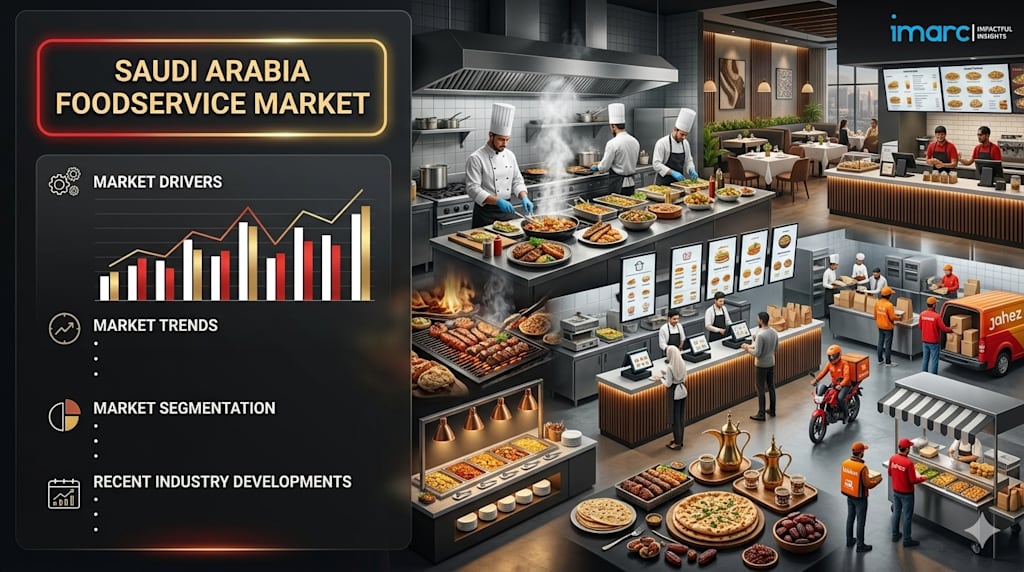
Saudi Arabia's foodservice sector is on a remarkable upward trajectory, fueled by rapid urbanization, a young and growing population, expanding tourism, and the Kingdom's sweeping Vision 2030 reforms. Rising incomes, a shift toward out-of-home dining, and a surge in digital food delivery are reshaping how Saudis eat and how businesses serve them. According to IMARC Group's latest data, the Saudi Arabia foodservice market size was valued at USD 31,022.6 Million in 2025. Looking forward, IMARC Group estimates the market to reach USD 62,678.5 Million by 2034, exhibiting a CAGR of 7.88% from 2026-2034.
The Saudi foodservice industry is fast becoming one of the most dynamic markets in the Middle East. With over 80% of the population expected to be urbanized by 2030, demand for diverse, convenient, and high-quality dining is surging across Riyadh, Jeddah, Dammam, and increasingly into tier-2 cities. Online food delivery revenues have grown nearly seven-fold from 2017 to 2024, reaching around USD 8.5 billion, while cloud kitchens are redefining how restaurants operate. International brands are entering at pace Pret A Manger launched its first Saudi outlet in Riyadh in April 2025, Gong Cha opened in Riyadh in July 2024, and Dunkin celebrated its 800th store in the Kingdom in October 2024. Key segments include quick-service restaurants (QSRs), full-service restaurants, cafes and bars, and cloud kitchens, with chained and independent outlets serving a diverse mix of locals, expatriates, and an increasingly significant tourist population.
Saudi Arabia Foodservice Market Growth Drivers:
- Urbanization and Rising Disposable Incomes
Saudi Arabia's rapid urbanization is one of the strongest catalysts for foodservice growth. With more than 80% of the population projected to live in cities by 2030, and a per-capita income of USD 35,127 in 2024, eating out has shifted from an occasional treat to a daily lifestyle. Saudis already allocate over 20% of their income to food, and per-capita restaurant spending hit around USD 1,000 per year. As dual-income households rise with female workforce participation jumping to 36% in 2024 from under 15% a decade ago — demand for quick, convenient, and quality dining options is growing faster than ever.
- Vision 2030 and Tourism-Led Expansion
The government's Vision 2030 program is directly reshaping Saudi Arabia's foodservice landscape. By targeting over 150 million annual tourist visits by 2030, it has created strong demand for diverse dining experiences. The Ministry of Tourism reported 4.2 million vacation and entertainment tourists in just the first seven months of 2024. Mega-projects like NEOM, the Red Sea Project, and Riyadh's Laysen Valley are generating sustained demand for foodservice infrastructure. Events like Riyadh Season and AlUla's Winter at Tantora Festival are drawing global food enthusiasts, while the FFCC targets raising cafes per million population from 258 to 1,000.
- Digital Food Delivery and Cloud Kitchen Growth
With 100% internet penetration reported by the ITU as of 2024, Saudi Arabia has the digital backbone to sustain a booming food delivery ecosystem. Platforms like HungerStation, Jahez, and UberEats have embedded themselves into daily routines, while online delivery revenues hit approximately USD 8.5 billion by 2024 a nearly seven-fold increase from 2017. Cloud kitchens are accelerating this shift, allowing operators to serve multiple cuisine brands from a single kitchen without dine-in overhead. Rebel Foods entered the Kingdom with two Riyadh cloud kitchens, marking the first Indian food-tech firm to establish operations in Saudi Arabia.
Saudi Arabia Foodservice Market Trends:
- Rising Demand for Health-Conscious and Wellness Dining
Health and wellness are going mainstream in Saudi Arabia's restaurants. Driven by growing awareness of lifestyle diseases and Vision 2030's national health initiatives, consumers are actively seeking nutritious, organic, and low-calorie options. Restaurants are responding with dedicated gluten-free, vegan, and keto-friendly menus. Epik Foods opened its first physical Healthy & Co restaurant in Riyadh's Al Sahafah neighborhood in July 2024, after successfully running 13 delivery-only kitchens, with expansion plans into Jeddah and Khobar. Juice bars, salad-focused eateries, and protein-forward menus are gaining strong traction, particularly among younger, urban consumers who see food choices as part of a broader wellness lifestyle.
- Premiumization and International Brand Entry
Saudi Arabia is experiencing a notable wave of premium international dining entries, fueled by a brand-conscious young population and the growing luxury tourism market. Zuma opened its Riyadh flagship at the King Abdullah Financial District in December 2024, featuring two floors of sushi and robata counters and private dining rooms. SUSHISAMBA announced its Riyadh entry at KAFD in August 2024 with Japanese-Peruvian-Brazilian fusion. Meanwhile, Pizza Inn signed a 50-location franchise deal with Blessings Basket Company in January 2024, with the first two outlets opening immediately. These moves signal a broader shift toward experiential dining in a market gaining international culinary prestige.
- Social Inclusivity and Sustainable Operations
Saudi Arabia's foodservice sector is also evolving in terms of social responsibility and sustainability partly driven by Vision 2030's cultural goals. Pizza Hut, in partnership with Americana Restaurants, launched the "Opportunity4All" program in September 2024, opening the Kingdom's first restaurant fully operated by people with special needs in Riyadh, backed by the Ministry of Human Resources. On the sustainability side, Tanmiah Food Company expanded its deal with McDonald's Saudi Arabia in July 2025 to boost locally sourced poultry supply, directly supporting Vision 2030's agricultural self-sufficiency targets and reducing import dependence across the supply chain.
Recent News and Developments in Saudi Arabia Foodservice Market
- April 2025: Pret A Manger launched its first outlet in Saudi Arabia, located in the Olaya Towers of Riyadh, marking a key milestone in the brand's broader expansion strategy across the GCC region.
- July 2025: Saudi-based Tanmiah Food Company expanded its partnership with McDonald's Saudi Arabia to increase the supply of locally sourced, larger-sized poultry, supporting Vision 2030's food security and agricultural self-sufficiency goals.
- December 2024: Zuma Riyadh officially launched within the King Abdullah Financial District, featuring two levels with interactive sushi and robata counters, private dining rooms, and a Riyadh-exclusive dessert, representing a landmark moment in the city's fine dining evolution.
Note: If you require specific details, data, or insights that are not currently included in the scope of this report, we are happy to accommodate your request. As part of our customization service, we will gather and provide the additional information you need, tailored to your specific requirements. Please let us know your exact needs, and we will ensure the report is updated accordingly to meet your expectations.
About the Creator
Shubham Sharma
Market research enthusiast sharing insights on global industries, emerging trends, growth opportunities, and data-driven analysis across diverse markets.
Enjoyed the story? Support the Creator.
Subscribe for free to receive all their stories in your feed.
Comments
There are no comments for this story
Be the first to respond and start the conversation.