
Saudi Arabia Extruded Snack Food Market to Reach USD 663.1 Million by 2034, Growing at 3.33% CAGR
Saudi Arabia’s extruded snack food market is growing steadily, driven by convenience demand, evolving tastes, urban lifestyles, and rising consumption of packaged snacks.

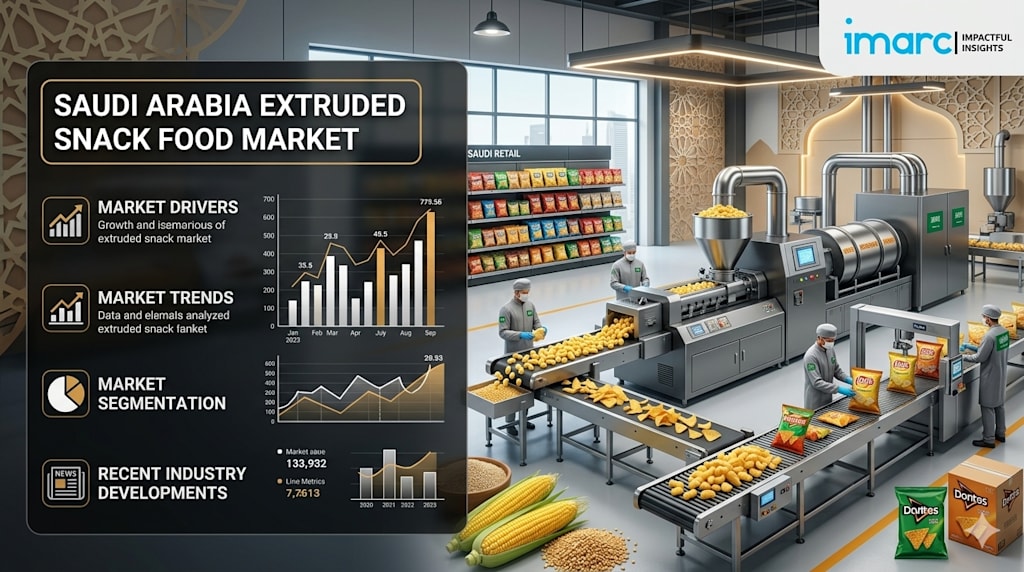
Market Overview:
Rising urbanization, a youthful population, and changing consumer lifestyles are supporting demand for convenient ready-to-eat food products across Saudi Arabia. Growth in the extruded snack food sector is also influenced by local flavor innovation, expansion of modern retail networks, and food manufacturing investments aligned with Vision 2030.
According to IMARC Group's latest data, the Saudi Arabia extruded snack food market size was valued at USD 493.7 Million in 2025 and is projected to reach USD 663.1 Million by 2034, growing at a CAGR of 3.33% during 2026–2034. The Northern and Central regions currently account for over 40% of the market share.
The market is expanding steadily, supported by a young demographic profile and increasing urbanization. Consumption patterns are shifting toward convenient snacking formats, while supermarkets and hypermarkets remain the primary distribution channels. At the same time, digital retail platforms are gradually strengthening their presence in urban areas.
Saudi Arabia Extruded Snack Food Market Growth Drivers
- Rapid Urbanization and Changing Consumption Patterns
Urban development across major cities is significantly reshaping dietary habits. With a growing proportion of the population living in urban areas, consumers are increasingly opting for quick, ready-to-eat snack options that fit into busy daily routines. Longer commuting hours, expansion of commercial hubs, and rising participation in the workforce are reducing time available for traditional meal preparation.
Additionally, the development of shopping malls, entertainment venues, and office clusters is creating multiple consumption occasions throughout the day. Snacking is becoming more frequent, not only at home but also in workplaces, educational institutions, and during travel. This shift in lifestyle continues to sustain demand for extruded snack products across various consumer segments.
- Young Consumer Base Driving Demand
Saudi Arabia’s demographic structure plays a central role in shaping snack consumption trends. A large share of the population consists of younger individuals who are more inclined toward packaged and flavored snack options. This group tends to experiment with new products, respond to evolving food trends, and engage actively with brands through digital platforms.
Younger consumers also show higher responsiveness to product variety, packaging innovation, and seasonal flavor launches. As a result, manufacturers are continuously introducing new variants to cater to this demand. Educational environments such as schools and universities further contribute to consistent product consumption, reinforcing long-term market growth.
- Expansion of Retail and Digital Infrastructure
The expansion of organized retail networks, including supermarkets, hypermarkets, and convenience stores, has improved accessibility to packaged snack products across urban and semi-urban areas. These outlets provide structured shelf displays, promotional offers, and a wide product range, encouraging impulse purchases and brand visibility.
At the same time, digital infrastructure is playing an increasing role in product distribution. The growth of e-commerce platforms, mobile payment systems, and quick-commerce services is making it easier for consumers to purchase snacks online. This trend is particularly strong among younger and digitally connected populations, supporting market expansion beyond traditional retail formats.
Saudi Arabia Extruded Snack Food Market Trends
- Localization of Flavors and Product Innovation
Manufacturers are increasingly focusing on incorporating regional taste preferences into product offerings. Traditional Middle Eastern flavors and seasonings are being adapted into modern snack formats, helping brands appeal to local consumers while maintaining product variety.
This trend reflects a broader shift toward culturally relevant food products that align with consumer expectations. At the same time, international brands are introducing region-specific variations to remain competitive in the market. Continuous innovation in flavor profiles is becoming an essential strategy for maintaining consumer interest and differentiation.
- Growing Focus on Health and Nutritional Awareness
Health and wellness awareness is gradually influencing purchasing decisions in the snack food category. Consumers are showing increasing interest in products that offer improved nutritional profiles, including reduced salt content, lower fat levels, and cleaner ingredient lists.
In response, manufacturers are introducing baked snack alternatives, whole-grain options, and portion-controlled packaging. Transparent labeling and nutritional information are also becoming more common, allowing consumers to make more informed choices. Although indulgence remains an important factor, the demand for balanced and better-for-you snack options is steadily rising.
- Strengthening Domestic Manufacturing and Policy Support
Government initiatives aimed at economic diversification are encouraging local food production and reducing reliance on imports. Investment in manufacturing infrastructure, logistics networks, and supply chain development is contributing to a more stable and self-sufficient snack food ecosystem.
Support for small and medium-sized enterprises is enabling new market entrants to introduce locally developed products. These developments are enhancing competition within the sector while also expanding product availability across different regions. Additionally, broader infrastructure growth and rising workforce participation are creating new consumption environments, further supporting long-term demand.
Recent News and Developments
- November 2025: AI-driven digitization accelerates extruded baked snack production, with firms adopting advanced systems for rapid flavor innovations and stronger export performance.
- October 2025: PIPA launches digital extruder platform, enabling Saudi makers to test over 100 formulations virtually and cutting product development time by 75%.
- September 2025: Advanced extrusion technology creates protein-rich, gluten-free snacks, capturing 30% more health-focused urban buyers through targeted innovations.
- July 2025: PepsiCo inaugurates SAR 300 million expanded Dammam facility, increasing capacity for baked and protein-enriched extruded snacks as a regional export hub.
- April 2025: PepsiCo opens SAR 30 million R&D hub in Riyadh, featuring culinary lab and immersive sensory studio for tailored snack product and packaging innovations.
Note: If you require specific details, data, or insights that are not currently included in the scope of this report, we are happy to accommodate your request. As part of our customization service, we will gather and provide the additional information you need, tailored to your specific requirements. Please let us know your exact needs, and we will ensure the report is updated accordingly to meet your expectations.
About the Creator
Kishan Kumar
My name is Kishan Roy and I am a market analyst having 5 years of experience and a skilled researcher with a keen eye for consumer trends and data-driven insights.
Enjoyed the story? Support the Creator.
Subscribe for free to receive all their stories in your feed.
Comments
There are no comments for this story
Be the first to respond and start the conversation.