
Saudi Arabia Energy Management Software Market: Smart Energy Optimization, AI Analytics & Growth Outlook
How rising focus on energy efficiency and sustainability under Vision 2030, increasing adoption of smart grids and IoT-enabled infrastructure, and growing demand for real-time energy monitoring and cost optimization are driving innovation and digital transformation across the Saudi Arabia Energy Management Software Market.

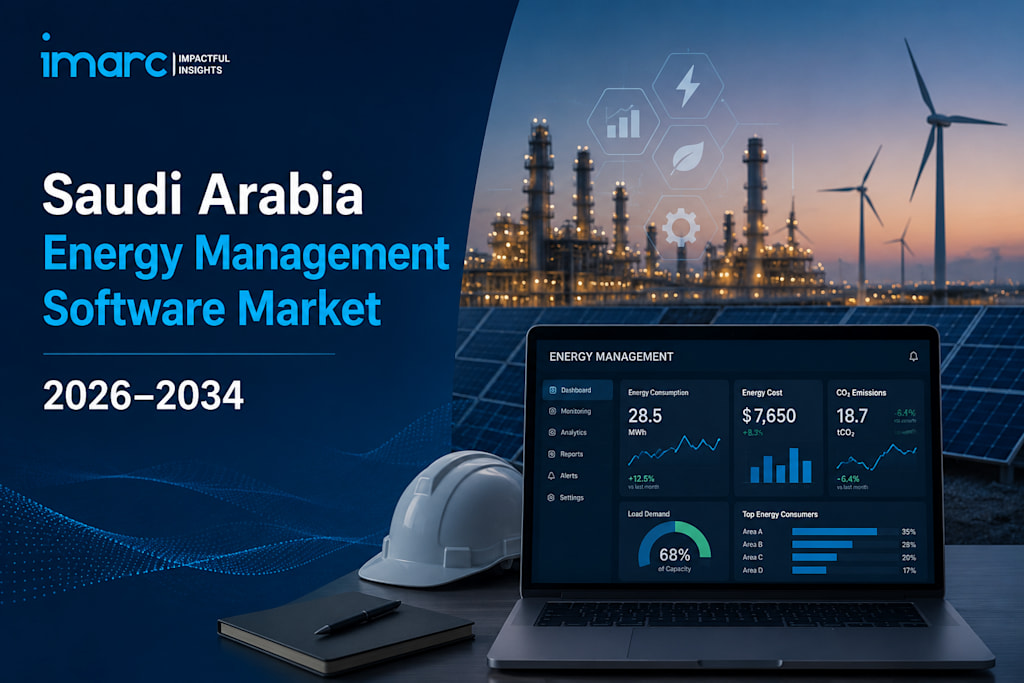
Saudi Arabia’s energy management software market is one of the most compelling technology investment stories in the Middle East right now. The Kingdom is simultaneously running the world’s most ambitious national transformation program and sitting on one of the most energy-intensive industrial bases on the planet making intelligent energy management not a nice-to-have, but an operational and regulatory necessity. According to IMARC Group’s latest data, The Saudi Arabia energy management software market size reached USD 508.7 Million in 2025. Looking forward, IMARC Group expects the market to reach USD 1,455.2 Million by 2034, exhibiting a growth rate (CAGR) of 12.39% during 2026-2034.
The scale of what’s happening on the ground makes this growth rate entirely believable. Saudi Arabia signed 15 power purchase agreements in a single year totaling 24.389 GW of new generation capacity projects of this scale simply cannot be managed without sophisticated energy software. The Kingdom also targeted automating 40% of its entire electricity distribution network, a transformation that requires robust demand response and real-time monitoring platforms across thousands of grid nodes. Cloud-based deployment already commands the majority of market share, supported by over 50 operational data centers in Saudi Arabia as of 2025. The market spans software types including cloud-based and on-premise platforms; solution categories covering carbon management systems, utility billing systems, customer information systems, demand response management, and others; end-use industries including power and utilities, public sectors, office and commercial buildings, industrial manufacturing, automotive, and oil and gas; and four key regions within the Kingdom.
Saudi Arabia Energy Management Software Market Growth Drivers:
- Vision 2030 Energy Efficiency Mandates Creating Compulsory Adoption
Saudi Arabia’s Vision 2030 program is doing something quite specific for the energy management software market it’s turning adoption from voluntary to essentially mandatory. The National Energy Efficiency Program (NEEP) sets binding energy reduction targets for government buildings, industrial facilities, and commercial properties alike. In 2024, the Kingdom targeted automating 40% of its electricity distribution network, a project that requires EMS platforms to manage demand response, load balancing, and grid monitoring at scale. With the government offering financial incentives to businesses that implement certified energy-saving technologies, the regulatory and commercial case for EMS deployment has never been stronger across both public and private sectors.
- Industrial Energy Cost Pressures Driving ROI-Focused Software Adoption
Manufacturing, petrochemicals, oil and gas, and construction are among the most energy-intensive sectors globally, and Saudi Arabia has all of them operating at significant scale. Sahara International Petrochemical Company (Sipchem) completed full implementation of an industrial energy management system in 2024, achieving measurable cuts in consumption and operational overhead a real-world example other industrial players are watching closely. With energy costs rising and sustainability reporting becoming a boardroom issue, EMS platforms that deliver predictive analytics, automated system control, and real-time consumption dashboards are generating clear and defensible return on investment, making the procurement case straightforward for operations and finance teams alike.
- Massive Renewable Energy Expansion Requiring Smart Grid Software
Saudi Arabia is not just consuming energy more efficiently it’s fundamentally reshaping its generation mix. The Saudi Power Procurement Company signed power purchase agreements for 24.389 GW of new capacity in a single year, spanning solar, wind, and gas-fired projects. Sungrow connected 7.8 GWh of battery energy storage to the Kingdom’s grid across three sites in Najran, Khamis Mushait, and Madaya. Each of these assets requires sophisticated energy management software to integrate into the existing grid, balance intermittent renewable output, and optimize dispatch decisions in real time creating a structural, long-term demand signal for EMS solutions that scales directly with the Kingdom’s clean energy buildout.
Saudi Arabia Energy Management Software Market Trends:
- AI and Machine Learning Transforming EMS from Reporting to Prediction
The generation of energy management software that simply records consumption data is giving way to AI-powered platforms that predict demand, automate optimization, and flag anomalies before they become costly incidents. Schneider Electric launched an AI-powered home energy management system through its Wiser Home application in Saudi Arabia in 2024, targeting smart energy optimization at the residential and commercial building level. Quantum Technologies, a Saudi-based company, secured approximately USD 7 million in funding to scale its AI-integrated energy management devices. With Saudi Arabia’s AI spending projected to reach USD 4,374.5 million, EMS vendors embedding machine learning and IoT capabilities are rapidly displacing legacy monitoring-only platforms across the market.
- Cloud-Based Deployment Becoming the Dominant Architecture
Cloud-based EMS platforms already command over 55% of the Saudi Arabia energy management market and that share is still growing. The appeal is straightforward: cloud deployment eliminates the need for costly on-premise hardware infrastructure, enables remote monitoring of distributed facilities, and scales instantly as organizations add more assets or sites. Saudi Arabia’s data center infrastructure has expanded to over 50 operational facilities as of 2025, supported by major investments including Amazon’s USD 5.3 billion deal with the Ministry of Communications and IT to build AI-ready data centers in Riyadh. This expanding cloud backbone is giving energy software vendors a reliable, scalable foundation to serve enterprise clients across industrial, commercial, and public sectors.
- Carbon Management Systems Gaining Priority as ESG Reporting Rises
Carbon management is transitioning from a voluntary reporting exercise to a structured operational priority in Saudi Arabia. Large corporates with international investors, export-facing industrial operations, and publicly listed entities are under growing pressure to quantify and reduce their emissions and carbon management software is the tool they need to do it credibly. Saudi Arabia’s commitment to reaching net zero by 2060 and its target to generate 50% of electricity from renewables by 2030 are driving regulatory frameworks that will require granular carbon tracking. Saudi Electricity Company’s Q1 revenue grew 23% to SAR 19.5 billion, with digital transformation initiatives including real-time emissions monitoring cited as key contributors to operational efficiency gains.
Recent News and Developments in Saudi Arabia Energy Management Software Market
- 2024: Saudi Electricity Company launched its “Al Kahraba” digital platform at a ceremony in Riyadh, designed to enhance customer experience, boost operational efficiency, and ensure reliable performance. The advanced app provides unified features for seamless account management and real-time energy monitoring, serving as a practical example of how national utilities are embedding energy management software into their core customer-facing and operational infrastructure.
- 2025: Quantum Technologies, a Saudi-based company, secured approximately USD 7 million in funding to expand production of its AI-integrated energy management devices. The investment underscores growing domestic investor confidence in homegrown EMS technology providers and reflects the broader national push to develop local capability in clean technology and smart energy solutions as part of Vision 2030’s industrial diversification goals.
- November 2025: Amazon secured a USD 5.3 billion agreement with Saudi Arabia’s Ministry of Communications and Information Technology to build AI-ready data centers in Riyadh. The deal dramatically expands the Kingdom’s cloud infrastructure capacity directly supporting the scalability requirements of cloud-based energy management software deployments and reinforcing Saudi Arabia’s position as a regional hub for advanced digital energy solutions.
Note: If you require specific details, data, or insights that are not currently included in the scope of this report, we are happy to accommodate your request. As part of our customization service, we will gather and provide the additional information you need, tailored to your specific requirements. Please let us know your exact needs, and we will ensure the report is updated accordingly to meet your expectations.
About the Creator
Shubham Sharma
Market research enthusiast sharing insights on global industries, emerging trends, growth opportunities, and data-driven analysis across diverse markets.
Enjoyed the story? Support the Creator.
Subscribe for free to receive all their stories in your feed.
Comments
There are no comments for this story
Be the first to respond and start the conversation.