
Saudi Arabia Coffee Market Brews Strong Growth as Café Culture and Specialty Coffee Trends Surge
Rising youth population, booming café culture, and government-backed coffee initiatives are driving Saudi Arabia’s coffee industry toward US$ 2.35 billion by 2034.

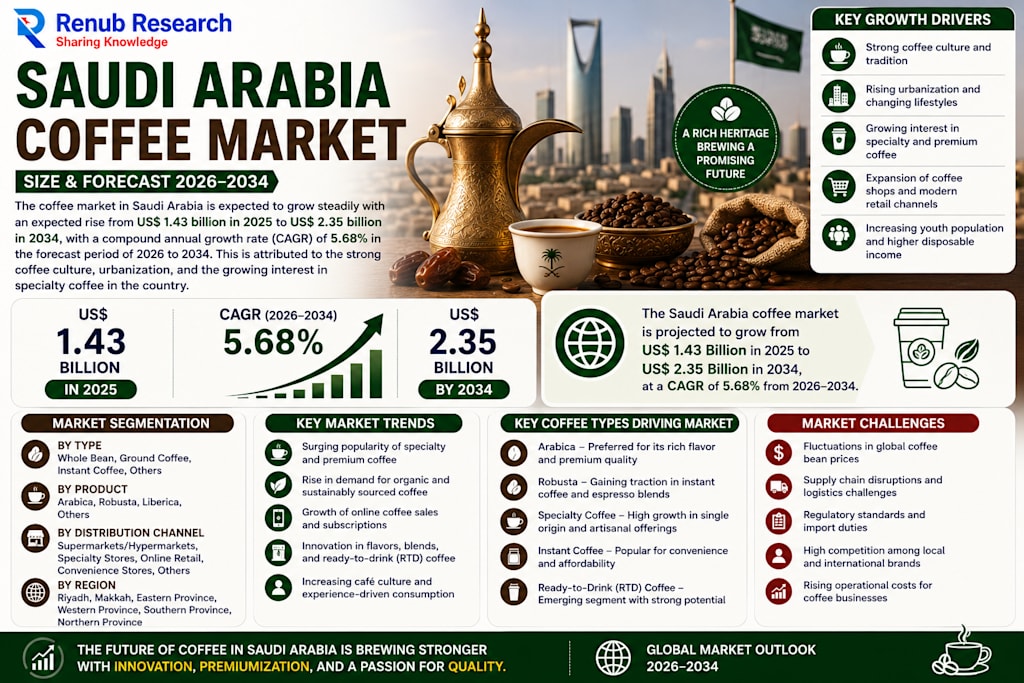
Saudi Arabia’s Coffee Industry Enters a New Growth Era
Saudi Arabia’s coffee market is experiencing steady and dynamic growth as traditional coffee culture blends with modern café lifestyles and premium specialty coffee trends. Once centered mainly around traditional Arabic coffee rituals, the Saudi coffee industry is now rapidly expanding through specialty cafés, international coffee chains, online retail platforms, and growing demand for premium coffee experiences.
According to Renub Research, the Saudi Arabia coffee market is projected to grow from US$ 1.43 billion in 2025 to US$ 2.35 billion by 2034, expanding at a compound annual growth rate (CAGR) of 5.68% between 2026 and 2034. Strong cultural attachment to coffee, rapid urbanization, rising disposable incomes, and increasing interest in specialty coffee are among the major drivers fueling this growth.
Coffee in Saudi Arabia is far more than just a beverage. It represents hospitality, tradition, social interaction, and daily lifestyle. Arabic coffee, commonly known as Gahwa, remains deeply embedded in Saudi culture and continues to play an essential role in family gatherings, celebrations, business meetings, and formal occasions.
At the same time, changing consumer habits and international coffee influences are reshaping the market, creating new opportunities for both local and global coffee brands.
Coffee Holds Deep Cultural Importance in Saudi Arabia
One of the strongest foundations of the Saudi coffee market is the country’s deep-rooted coffee culture. Unlike some global markets where coffee consumption is driven mainly by trends, coffee in Saudi Arabia has long-standing cultural and social significance.
Arabic coffee is traditionally lightly roasted and flavored with spices such as cardamom, creating a unique taste profile closely associated with Saudi hospitality and generosity. Serving coffee to guests is considered a symbol of respect and tradition across Saudi society.
The report highlights that Saudis consume approximately 36 million cups of coffee every day, according to the Saudi Restaurants and Cafés Association. This extraordinary consumption level demonstrates how deeply coffee is integrated into everyday life across all age groups.
The country’s youthful population is also helping sustain long-term demand. Nearly 70% of Saudi Arabia’s population is under the age of 35, and younger consumers are increasingly combining traditional coffee habits with modern specialty café experiences.
Café Culture and Specialty Coffee Are Reshaping Consumption
One of the biggest transformations within the Saudi coffee industry is the rapid rise of café culture. Coffee shops are no longer viewed simply as places to drink coffee; they have evolved into social, cultural, and lifestyle hubs where people gather for meetings, work, relaxation, and entertainment.
Urbanization, rising disposable incomes, and exposure to international lifestyle trends are fueling strong demand for espresso-based beverages, specialty coffee, cold brews, and single-origin coffee beans. International coffee chains and local specialty cafés are expanding rapidly across major Saudi cities such as Riyadh, Jeddah, and Dammam.
Social media has also become a major influence on café culture, particularly among younger consumers who value premium experiences, visually appealing café environments, and personalized beverages. Coffee shops increasingly compete on ambiance, design, quality, and customer experience rather than simply beverage pricing.
The report references the launch of JAZEAN by the Saudi Coffee Company, owned by the Public Investment Fund (PIF). The brand focuses on premium Coffea Arabica beans inspired by Saudi Arabia’s southern coffee-growing regions, highlighting the growing emphasis on local identity and specialty quality.
Government Initiatives Are Strengthening the Industry
Government support has become an important growth driver for the Saudi coffee market. As part of Vision 2030 economic diversification efforts, Saudi Arabia is actively promoting local coffee cultivation, coffee tourism, roasting industries, and specialty coffee development.
Particular attention is being given to the Jazan region, one of Saudi Arabia’s oldest coffee-producing areas. Government-backed agricultural and sustainability programs aim to increase local coffee production and reduce reliance on imported beans.
The report notes an initiative led by Saudi Reef and Estidamah that aims to plant 50,000 coffee seedlings and improve coffee tree productivity by 30% before the end of 2025. These efforts demonstrate the kingdom’s ambition to strengthen domestic coffee production and develop a globally recognized Saudi coffee industry.
Training programs for baristas, coffee roasters, and small business owners are also helping build local expertise and expand entrepreneurial opportunities within the coffee sector.
Specialty Coffee Demand Continues Rising
Specialty coffee is becoming one of the fastest-growing categories within Saudi Arabia’s coffee market. Consumers are increasingly interested in high-quality beans, unique brewing methods, and premium café experiences.
Single-origin coffee, light roasts, pour-over brewing, cold brew, and artisanal espresso beverages are becoming especially popular among younger urban consumers. Specialty coffee shops are differentiating themselves through bean sourcing, roasting techniques, brewing precision, and customer education.
As coffee knowledge and appreciation continue growing, specialty coffee is expected to remain one of the most influential trends shaping the future Saudi market.
Heavy Reliance on Imports Remains a Key Challenge
Despite its strong growth outlook, the Saudi coffee market still faces several important challenges. One of the biggest issues is the country’s heavy dependence on imported coffee beans. Most coffee consumed in Saudi Arabia is sourced from producing countries in Africa, Latin America, and Asia.
This dependence exposes the market to global supply chain disruptions, climate-related production fluctuations, currency exchange risks, and rising raw material prices. Climate change is increasingly affecting coffee-growing regions worldwide, creating uncertainty regarding bean availability and quality.
Although domestic coffee farming initiatives are expanding gradually, local production still satisfies only a small portion of overall market demand.
Competition and Pricing Pressure Intensify
The Saudi coffee market is becoming increasingly competitive due to the rapid growth of international coffee chains, local cafés, and specialty coffee startups. While competition encourages innovation and product variety, it also creates pricing pressure across retail and café segments.
Consumers now have access to a wide range of coffee options, making brand loyalty more difficult to maintain. Operational costs such as rent, labor, logistics, and premium ingredient sourcing continue rising, particularly in major urban centers.
Smaller coffee businesses often struggle to compete against larger international brands with stronger marketing resources and economies of scale.
Instant Coffee Market Maintains Strong Demand
The instant coffee segment continues growing steadily in Saudi Arabia because of rising demand for convenient beverage options. Working professionals, students, and travelers increasingly prefer instant coffee for its quick preparation and portability.
Manufacturers are also improving product quality by introducing premium instant coffee blends and flavored variants that better match consumer taste expectations. Urban lifestyles and increasing exposure to international coffee trends continue supporting demand for instant coffee products.
Ground Coffee Benefits from Fresh Brewing Trends
Ground coffee remains highly popular due to growing consumer preference for freshly brewed coffee at home, cafés, hotels, and offices. The rising specialty coffee movement is especially benefiting this segment because consumers increasingly seek premium beans and customized brewing experiences.
Coffee enthusiasts are becoming more knowledgeable about brewing techniques, bean origins, and roast profiles, strengthening long-term demand for premium ground coffee products.
Online Coffee Retail Is Expanding Rapidly
The online coffee market in Saudi Arabia is growing rapidly as digital commerce becomes more integrated into consumer lifestyles. E-commerce platforms offer consumers access to international brands, specialty coffee products, subscription services, and home delivery convenience.
Younger consumers and tech-savvy shoppers increasingly prefer purchasing coffee online due to broader product variety, competitive pricing, and convenience. Digital retail is expected to remain a major growth channel for the coffee industry moving forward.
Riyadh Leads the National Coffee Market
Riyadh represents the largest and most influential coffee market in Saudi Arabia due to its young population, rapid urbanization, and strong purchasing power. The city has become a major hub for specialty coffee innovation, café culture, and premium coffee experiences.
Consumers in Riyadh show strong interest in single-origin beans, cold beverages, espresso drinks, and specialty brewing methods. The city’s café ecosystem includes international chains, independent roasters, drive-through concepts, and luxury coffee experiences.
Online ordering and delivery services are also highly developed in Riyadh, further supporting coffee consumption growth.
Jeddah and Eastern Province Markets Continue Growing
Jeddah’s coffee market is strongly influenced by tourism, coastal lifestyle, and social café culture. Consumers in the city show growing interest in cold coffee drinks, flavored beverages, and aesthetically designed café spaces.
Dhahran and Dammam markets are more premium-focused due to strong professional populations and corporate culture. Specialty coffee, light roasts, and business-oriented café environments are especially popular in these regions.
Drive-through coffee shops and convenience-focused formats are also gaining traction across the Eastern Province.
Competitive Landscape
The Saudi Arabia coffee market includes major international and regional players such as Nestlé SA, Starbucks Coffee Company, Luigi Lavazza, Tata Global Beverages, The Coca-Cola Company, Kraft Heinz, and The J.M. Smucker Company.
Competition is increasingly centered around specialty coffee quality, café experiences, sustainability, digital convenience, and localized product offerings. Companies investing in premium experiences, strong branding, and innovative retail strategies are expected to lead future market growth.
Final Thoughts
Saudi Arabia’s coffee market is evolving rapidly as traditional coffee heritage blends with modern café culture, specialty brewing trends, and digital retail innovation. Strong cultural attachment to coffee, rising youth consumption, and government-backed industry development are creating a highly dynamic and competitive market environment.
With the market projected to grow from US$ 1.43 billion in 2025 to US$ 2.35 billion by 2034, the future of Saudi Arabia’s coffee industry appears exceptionally promising. Brands that successfully combine authenticity, quality, innovation, and premium consumer experiences will likely shape the next generation of coffee culture across the kingdom.
About the Creator
Enjoyed the story? Support the Creator.
Subscribe for free to receive all their stories in your feed.
Comments
There are no comments for this story
Be the first to respond and start the conversation.