
Saudi Arabia Chocolate Market Expands as Premium Gifting and Modern Retail Drive Demand
Rising disposable income, luxury gifting culture, dark chocolate trends, and e-commerce growth are reshaping Saudi Arabia’s chocolate industry.

Chocolate is becoming a lifestyle and gifting staple in Saudi Arabia
Chocolate consumption in Saudi Arabia has evolved far beyond casual snacking. Today, chocolate plays an important role in celebrations, hospitality, gifting traditions, social gatherings, and premium lifestyle experiences across the Kingdom.
Consumers are increasingly drawn toward luxury chocolates, imported brands, artisanal products, and premium packaging. At the same time, changing lifestyles, urbanization, and higher disposable income levels are encouraging more frequent chocolate consumption among younger consumers and working professionals.
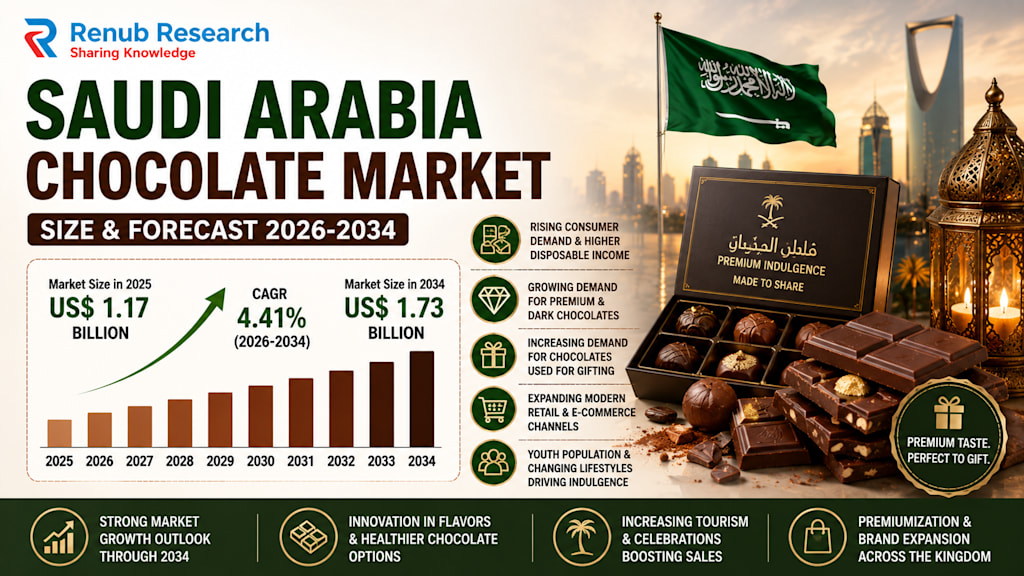
This shift is helping fuel steady market growth. The Saudi Arabia Chocolate Market is projected to increase from US$ 1.17 Billion in 2025 to US$ 1.73 Billion in 2034, registering a compound annual growth rate (CAGR) of 4.41% during 2026–2034.
Chocolate consumption is deeply connected to social traditions
Chocolate has become strongly integrated into Saudi Arabia’s cultural and social landscape.
Consumers purchase chocolates for personal enjoyment, but gifting remains one of the most powerful drivers of demand. Chocolates are commonly exchanged during Ramadan, Eid celebrations, weddings, family gatherings, corporate events, and religious occasions. Premium chocolate boxes are often viewed as elegant and socially appropriate gifts.
This gifting culture has helped elevate chocolate from a simple confectionery item into a premium lifestyle product.
Luxury packaging, customized assortments, imported products, and festive collections are becoming increasingly important in attracting consumers during major celebrations.
The emotional and social value associated with chocolate continues to support long-term demand across multiple customer segments.
Rising disposable income is boosting premium purchases
One of the strongest growth drivers in Saudi Arabia’s chocolate market is the rise in disposable income and improved living standards.
As the country continues diversifying its economy and expanding employment opportunities, consumers are becoming more willing to spend on indulgent and premium food products. According to the source, the average monthly disposable household income in Saudi Arabia reached SAR 11,839 in 2023.
Urbanization and modern lifestyles are also encouraging greater demand for convenient snack products, with chocolate remaining a preferred option due to its accessibility, taste, and premium appeal.
Middle- and high-income consumers are increasingly purchasing imported and specialty chocolates that offer unique flavors, luxury branding, and attractive packaging.
Exposure to global food trends and international brands has further influenced consumer behavior, especially among younger generations seeking premium experiences.
Ramadan and Eid continue driving seasonal demand
Seasonal and religious celebrations remain crucial for chocolate sales across Saudi Arabia.
Ramadan and Eid significantly increase chocolate demand as families purchase chocolates for gifting, hospitality, and festive gatherings. Premium chocolate boxes are particularly popular during these occasions because they symbolize generosity and celebration.
The Hajj season also creates additional demand. Millions of pilgrims visiting the Kingdom often purchase chocolates as gifts and souvenirs for friends and family members.
According to the source, Saudi Arabia welcomed more than 1.67 million Hajj pilgrims in 2025, contributing to increased seasonal chocolate purchases.
Corporate gifting is another growing segment. Businesses increasingly use luxury chocolates as appreciation gifts for employees, customers, and partners during festive seasons and formal events.
These cultural and religious traditions create predictable seasonal spikes that provide strong sales opportunities for manufacturers and retailers.
Premium and imported chocolates are gaining popularity
Consumer preference is increasingly shifting toward premium and imported chocolate products.
Saudi consumers are becoming more selective about quality, flavor, ingredients, and presentation. Luxury chocolates with elegant packaging and unique flavor profiles are particularly popular among affluent consumers and gift buyers.
International brands continue expanding their presence in the market as consumers become more exposed to global confectionery trends.
Artisanal products, gourmet fillings, and innovative flavor combinations are also becoming more common in the Kingdom’s premium chocolate segment.
Retailers are responding by offering larger selections of imported and specialty products across malls, supermarkets, airports, and online platforms.
Dark chocolate is benefiting from health awareness
Dark chocolate is becoming one of the fastest-growing categories within the Saudi chocolate market.
Health-conscious consumers are increasingly choosing dark chocolate because it contains higher cocoa content and lower sugar levels compared to milk chocolate. Dark chocolate is commonly associated with antioxidants, heart health benefits, and stress reduction.
This shift reflects broader wellness trends across Saudi Arabia, where consumers are becoming more aware of nutrition, sugar intake, and healthier lifestyle choices.
Premium dark chocolate products are also benefiting from their luxury image. Many consumers view dark chocolate as both a sophisticated and healthier indulgence.
Manufacturers are introducing sugar-free and organic chocolate options to meet changing consumer preferences.
Modern retail infrastructure is strengthening accessibility
The expansion of Saudi Arabia’s retail infrastructure has significantly improved product availability across the country.
Supermarkets, hypermarkets, convenience stores, specialty confectionery outlets, and airport retail locations now offer consumers access to a wide range of local and international chocolate brands.
Retail modernization has helped premium and imported products become more visible and accessible to consumers across multiple income groups.
Convenience stores also play an important role in impulse purchases. Their strategic locations in residential areas, fuel stations, and business districts make chocolates easy to access for immediate consumption.
Modern retail environments further support premium branding through attractive product displays and promotional campaigns.
Online chocolate sales are growing rapidly
E-commerce is becoming an increasingly important sales channel for chocolates in Saudi Arabia.
Consumers appreciate the convenience of online shopping, home delivery, price comparison tools, and access to premium imported products that may not be widely available in physical stores.
Online sales become especially strong during festivals and gifting seasons when consumers prefer quick and convenient delivery solutions.
Younger consumers are driving much of this growth due to their comfort with digital shopping platforms and social media-driven purchasing behavior.
The expansion of logistics networks and digital payment systems is also strengthening consumer confidence in online chocolate retail.
Health concerns remain a challenge for manufacturers
Despite strong market growth, the industry faces increasing pressure from health-conscious consumers.
Traditional chocolate products are often associated with high sugar, calorie, and fat content, which has raised concerns around obesity, diabetes, and overall nutrition.
As awareness about healthy eating rises, some consumers are shifting toward alternative snack categories such as protein bars, natural foods, and organic products.
Chocolate manufacturers are responding by introducing healthier product variants including sugar-free chocolates, dark chocolates, and reduced-calorie formulations.
However, changing long-term consumer perceptions about confectionery products remains a major challenge for the industry.
Dependence on imports creates market risks
Saudi Arabia’s chocolate industry remains heavily dependent on imported cocoa and chocolate products.
Because cocoa production within the country is extremely limited due to climatic conditions, manufacturers rely on global supply chains for raw materials such as cocoa beans and cocoa butter.
This dependence exposes the market to fluctuations in cocoa prices, exchange rates, transportation costs, and international supply chain disruptions.
Price increases in imported raw materials can eventually affect retail prices, potentially impacting demand among price-sensitive consumers.
Manufacturers are increasingly exploring strategies to improve supply chain stability and maintain competitive pricing.
Cocoa butter demand is expanding beyond food products
The cocoa butter market in Saudi Arabia is growing steadily due to rising demand from both the chocolate and cosmetics industries.
Cocoa butter is essential in chocolate manufacturing because it provides smooth texture, shine, and consistency. As chocolate production increases, demand for cocoa butter also rises.
Beyond confectionery, cocoa butter is increasingly used in skincare and personal care products such as creams, lotions, and lip balms due to its moisturizing properties.
The growing beauty and wellness sector in Saudi Arabia is therefore creating additional demand for cocoa butter products.
Riyadh remains the largest chocolate market
Riyadh represents one of the strongest chocolate markets in the Kingdom due to its large population, high disposable income, and modern retail infrastructure.
Consumers in Riyadh frequently purchase chocolates for gifting, festivals, and personal consumption. Luxury and premium products are particularly popular in the city.
Shopping malls, supermarkets, and specialty chocolate boutiques contribute to strong product visibility and accessibility.
Nestlé’s long-term investment plans in Saudi Arabia also highlight the market’s growth potential. In 2022, the company announced plans to invest SAR 7 billion in the Kingdom over the following decade, including a major manufacturing facility.
Jeddah, Dammam, and Mecca are also seeing strong growth
Jeddah’s chocolate market is expanding due to tourism, urbanization, café culture, and rising demand for premium gift products.
Consumers in the city increasingly prefer imported chocolates, luxury packaging, and customized gift boxes. Social media trends and international influences are also shaping purchasing behavior.
Dammam is witnessing growth because of rising disposable income and expanding retail infrastructure. Consumers are showing increasing interest in imported and specialty chocolates.
Mecca’s chocolate market benefits heavily from religious tourism. Pilgrims frequently purchase chocolates as souvenirs and gifts during Hajj and Ramadan seasons, creating strong seasonal demand for packaged and premium products.
Competition is increasingly focused on premiumization
Key companies operating in Saudi Arabia’s chocolate market include Aani & Dani, Artisan du Chocolat, Bateel, Al Nassama, and Bostani Chocolate.
Competition is increasingly centered around premium positioning, luxury gifting, innovative flavors, and visually appealing packaging.
Manufacturers are also focusing on healthier formulations, sustainable sourcing, and exclusive seasonal collections to attract evolving consumer preferences.
As consumer sophistication increases, brands that combine indulgence, quality, and cultural relevance are likely to gain stronger market positioning.
Final thoughts
Saudi Arabia’s chocolate market is evolving into a premium and lifestyle-driven industry shaped by gifting traditions, rising disposable income, and changing consumer preferences.
Luxury chocolates, dark chocolate products, imported brands, and online retail channels are transforming the market beyond traditional confectionery consumption.
At the same time, health awareness and import dependency continue presenting important challenges that manufacturers must address through innovation and supply chain management.
As the Kingdom’s retail sector modernizes and consumers increasingly seek premium experiences, the Saudi Arabia chocolate market is expected to continue its steady expansion over the coming years.
About the Creator
Enjoyed the story? Support the Creator.
Subscribe for free to receive all their stories in your feed.
Comments
There are no comments for this story
Be the first to respond and start the conversation.