
Saudi Arabia Cement Market to Reach USD 6,167.46 Million by 2034, Driven by 4.99% CAGR Growth
Saudi Arabia’s cement market is driven by strong infrastructure development, urbanization, and rising construction activities across residential and commercial sectors.

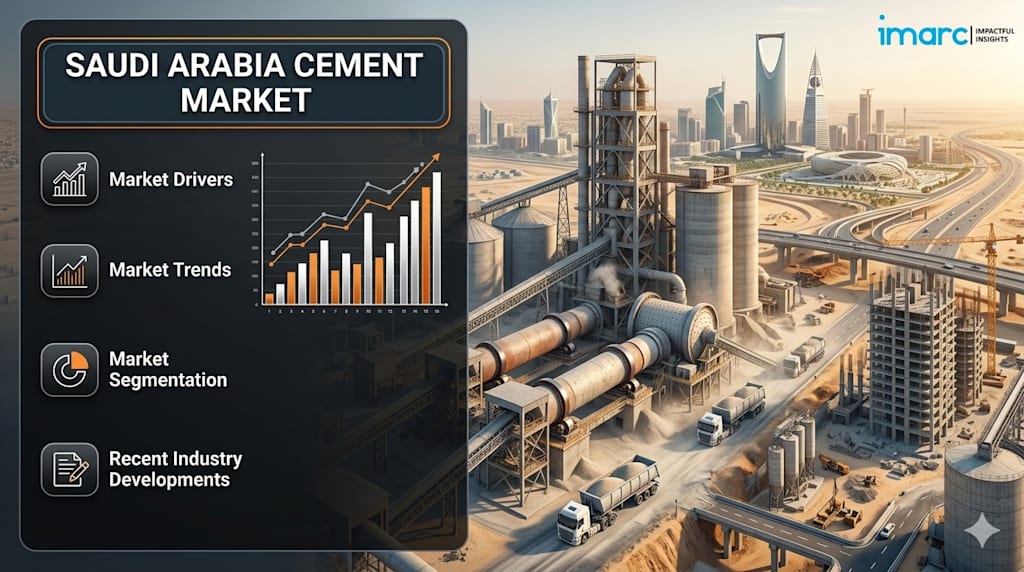
Market Overview:
Rising infrastructure investments under Vision 2030, increasing residential construction demand, and a growing focus on sustainable building practices are contributing to the expansion of the Saudi Arabia cement market. These factors are supported by ongoing mega-project developments, regulatory emphasis on low-carbon construction materials, and steady domestic consumption.
According to IMARC Group, the Saudi Arabia cement market size was valued at USD 3,979.86 Million in 2025 and is projected to reach USD 6,167.46 Million by 2034, exhibiting a CAGR of 4.99% during 2026–2034. The Northern and Central region currently accounts for the largest share of the market.
The Saudi Arabia cement market is evolving as the country advances its Vision 2030 development strategy. Domestic production capacity exceeds 80 million tons annually across multiple integrated plants. Large-scale infrastructure and urban development projects are generating consistent demand for various cement types across residential, commercial, and industrial applications.
Saudi Arabia Cement Market Growth Drivers:
- Vision 2030 Infrastructure Development Initiatives
Infrastructure development under Vision 2030 continues to be a key growth driver. The Kingdom is investing in transportation networks, tourism infrastructure, and industrial expansion projects, all of which require significant cement consumption. Major developments such as NEOM, Red Sea Project, Qiddiya, and Diriyah Gate are contributing to long-term demand across the construction sector.
- Expanding Residential Construction and Housing Programs
Residential construction remains a significant contributor to cement demand. Government-supported housing initiatives are increasing homeownership rates and encouraging large-scale development of residential units. Urban population growth in cities such as Riyadh and Jeddah is driving demand for housing infrastructure, including apartments, villas, and integrated communities.
- Sustainability Regulations and Green Building Standards
Environmental policies are influencing cement production and consumption patterns. The Saudi Green Initiative promotes reduced carbon emissions and adoption of eco-friendly construction materials. As a result, manufacturers are focusing on lower-emission cement products and improving production efficiency to align with sustainability targets.
Saudi Arabia Cement Market Trends:
- Increasing Adoption of Blended Cement
Blended cement is gaining wider adoption due to its environmental and performance benefits. It incorporates supplementary materials such as fly ash and slag, which reduce clinker content and emissions. This trend aligns with sustainability objectives and evolving construction standards in the Kingdom.
- Digital Transformation in Cement Manufacturing
Cement producers are increasingly adopting digital technologies to improve operational efficiency. Tools such as predictive maintenance systems, automation, and process optimization are helping manufacturers enhance productivity, reduce costs, and maintain compliance with environmental regulations.
- Strategic Partnerships and Capacity Optimization
The market is moderately consolidated, with domestic players focusing on capacity optimization, logistics improvements, and strategic collaborations. Companies are also investing in alternative fuels, emission reduction technologies, and operational upgrades to remain competitive in a changing regulatory and demand environment.
Recent News and Developments:
- March 2026: Al Jouf Cement expanded eco-certified cement formulations for large infrastructure projects, focusing on reducing emissions and material usage.
- February 2026: Riyadh Cement introduced a pilot waste heat recovery system to improve energy efficiency and reduce operational costs.
- January 2026: King Abdullah University of Science and Technology (KAUST) advanced research on sustainable cement materials using AI-based modeling techniques.
- December 2025: City Cement partnered with a materials technology provider to develop low-carbon supplementary cement materials.
- October 2025: Riyadh Cement implemented digital twin technology to improve plant performance and optimize production processes.
Note: If you require specific details, data, or insights that are not currently included in the scope of this report, we are happy to accommodate your request. As part of our customization service, we will gather and provide the additional information you need, tailored to your specific requirements. Please let us know your exact needs, and we will ensure the report is updated accordingly to meet your expectations.
About the Creator
Kishan Kumar
My name is Kishan Roy and I am a market analyst having 5 years of experience and a skilled researcher with a keen eye for consumer trends and data-driven insights.
Enjoyed the story? Support the Creator.
Subscribe for free to receive all their stories in your feed.
Comments
There are no comments for this story
Be the first to respond and start the conversation.