
Saudi Arabia Biosimilar Market: Cost-Effective Biologics, Healthcare Access & Growth Outlook
How rising demand for temperature-sensitive goods, expanding pharmaceutical and food sectors, and increasing investments in logistics infrastructure are driving capacity expansion, technological advancements, and supply chain efficiency in the Saudi Arabia cold chain market
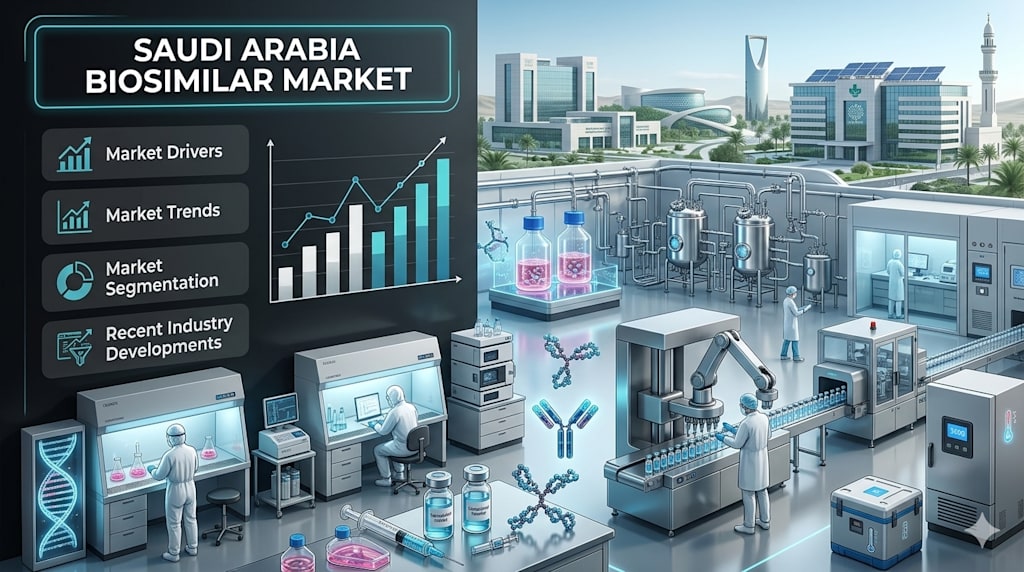
Rising healthcare costs, increasing prevalence of chronic diseases, and Saudi Arabia's strong push toward affordable biologics are accelerating demand for biosimilars, supported by government-led Vision 2030 reforms, regulatory modernization, and expanding pharmaceutical manufacturing capacity. According to IMARC Group's latest data, The Saudi Arabia biosimilar market size reached USD 664.2 Million in 2025. Looking forward, IMARC Group expects the market to reach USD 1,990.5 Million by 2034, exhibiting a CAGR of 12.97% from 2026-2034.
Saudi Arabia's biosimilar sector has moved well beyond early-stage discussions and into a genuinely competitive pharmaceutical landscape. Biosimilars biologic drugs designed to closely match already-approved reference products in terms of safety, purity, and potency are gaining rapid ground across therapeutic areas including oncology, autoimmune diseases, and diabetes. Their appeal is straightforward: they offer clinically equivalent outcomes at significantly lower price points, making them a natural fit for a country determined to build a more cost-efficient, patient-friendly healthcare system.
Download the Sample Report to Understand Market Trends and Outlook
Saudi Arabia Biosimilar Market Growth Drivers:
- Vision 2030 Healthcare Reforms and Government Procurement Push
Saudi Arabia's Vision 2030 blueprint has placed healthcare modernization at the center of national planning, with the government actively promoting biosimilar adoption as a way to cut public spending on high-cost biologics. The Ministry of Health has made biosimilar-first prescribing a policy priority in public hospitals, and national formulary listings increasingly favor biosimilar alternatives. With the government accounting for a major share of pharmaceutical procurement, this institutional backing creates a reliable, large-scale demand pipeline that private-sector players simply can't ignore making policy momentum one of the most powerful forces driving market expansion.
- Soaring Burden of Chronic and Non-Communicable Diseases
Saudi Arabia carries one of the highest rates of diabetes and autoimmune conditions in the region, with diabetes prevalence estimated at roughly 18% of the adult population well above global averages. Oncology case volumes are also climbing steadily. These disease dynamics create sustained, long-term demand for the very molecules where biosimilars are most commercially active insulin glargine, adalimumab, trastuzumab, and rituximab, among others. As patient populations requiring biologic therapies expand, biosimilars serve as the most practical route to keeping those treatments accessible and financially viable for both payers and patients.
- Affordability Imperative and Cost Containment Pressures
High-cost reference biologics place enormous strain on hospital budgets and out-of-pocket expenses for patients managing long-term conditions. Biosimilars typically enter the market at price discounts ranging from 20% to 40% compared to originator products, offering meaningful savings without meaningful clinical trade-offs. For Saudi Arabia's public health system, which absorbs the cost of care for a large proportion of the population, the financial case for biosimilar adoption is compelling. This cost-efficiency rationale backed by rigorous regulatory equivalence standards enforced by the Saudi Food and Drug Authority (SFDA) is one of the most durable structural drivers in the market.
Saudi Arabia Biosimilar Market Trends:
- SFDA Regulatory Modernization and Faster Approval Pathways
The Saudi Food and Drug Authority has been steadily tightening and streamlining its biosimilar approval framework, aligning local standards more closely with EMA and FDA guidance. This reduces uncertainty for manufacturers and shortens the timeline between product development and market entry. Global biosimilar developers increasingly view Saudi Arabia as a strategically accessible market precisely because regulatory pathways have become more predictable. The SFDA's transparent comparability and extrapolation standards also build confidence among prescribers and patients, helping overcome lingering hesitancy and accelerating the clinical uptake of newly approved biosimilar products across hospitals and specialty clinics.
- Local Manufacturing Ambitions and Pharma Localization Goals
Saudi Arabia's National Industrial Development and Logistics Program explicitly targets a significant increase in locally manufactured pharmaceutical products, with biosimilars earmarked as a priority category. Contract manufacturing arrangements between international biosimilar developers and local facilities are becoming more common, while the government offers incentives including reduced import duties and preferential procurement terms for locally produced medicines. This localization wave is reshaping the market's competitive structure not just opening doors for global players, but gradually building domestic biomanufacturing capability that could eventually support regional export ambitions.
- Rising Oncology and Autoimmune Biosimilar Penetration
Oncology and autoimmune diseases represent the highest-value biosimilar opportunities in Saudi Arabia, given the widespread clinical need and the high unit costs of originator biologics like trastuzumab, bevacizumab, and adalimumab. Hospital formularies across major healthcare networks including those operated under the Ministry of National Guard Health Affairs and King Faisal Specialist Hospital have been expanding their biosimilar listings in these categories. As oncologists and rheumatologists accumulate real-world evidence supporting biosimilar safety and effectiveness, prescriber comfort grows, driving a gradual but meaningful shift in treatment protocols toward these more affordable biologic alternatives.
Recent News and Developments in Saudi Arabia Biosimilar Market
- March 2025: Samsung Bioepis announced expanded distribution partnerships in the GCC region, with Saudi Arabia identified as a priority market for its adalimumab and trastuzumab biosimilars, citing strong regulatory alignment with SFDA standards and growing hospital demand for cost-effective oncology and autoimmune therapies.
- January 2025: Sandoz confirmed regulatory submission progress for multiple biosimilar molecules targeting the Saudi market, with the company emphasizing that the SFDA's updated biosimilar guidelines have significantly streamlined its regional approval strategy, enabling faster planned launches across oncology and immunology segments.
Note: If you require specific details, data, or insights that are not currently included in the scope of this report, we are happy to accommodate your request. As part of our customization service, we will gather and provide the additional information you need, tailored to your specific requirements. Please let us know your exact needs, and we will ensure the report is updated accordingly to meet your expectations.
About the Creator
Shubham Sharma
Market research enthusiast sharing insights on global industries, emerging trends, growth opportunities, and data-driven analysis across diverse markets.
Enjoyed the story? Support the Creator.
Subscribe for free to receive all their stories in your feed.
Comments
There are no comments for this story
Be the first to respond and start the conversation.