
Russia Tequila Market Expands as Premium Spirits and Cocktail Culture Gain Popularity
Rising interest in imported luxury spirits, urban nightlife, and Western drinking trends is helping tequila carve out a growing place in Russia’s alcohol market.

Russia’s alcoholic beverage industry is evolving rapidly as consumers increasingly move beyond traditional spirits and explore premium international drinks. Among the categories gaining significant momentum is tequila — a spirit once considered niche but now becoming increasingly fashionable among urban Russian consumers.
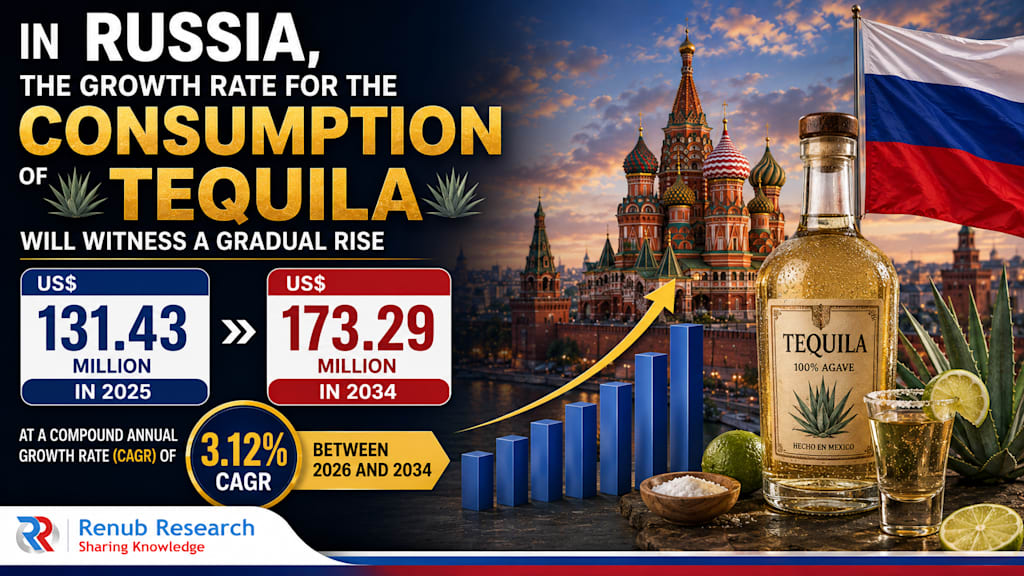
According to Renub Research, the Russia tequila market is expected to grow from US$ 131.43 million in 2025 to US$ 173.29 million by 2034, expanding at a compound annual growth rate (CAGR) of 3.12% between 2026 and 2034.
The market’s growth is being fueled by several important trends including rising demand for premium imported spirits, the rapid expansion of cocktail culture, growing urban nightlife, and increasing exposure to Western lifestyle influences.
While vodka still dominates Russia’s alcoholic beverage landscape, tequila is gradually building a loyal customer base, especially among younger consumers, affluent urban professionals, and nightlife enthusiasts.
As Russia’s hospitality and entertainment sectors continue modernizing, tequila is increasingly viewed as a stylish, premium, and internationally inspired spirit.
Tequila Is Becoming More Popular in Russia
Tequila is a distilled alcoholic beverage produced from the blue agave plant, primarily in Mexico. The spirit is widely recognized for its distinctive flavor profile and premium image.
Several types of tequila are available globally, including:
- Blanco tequila
- Reposado tequila
- Añejo tequila
- Extra Añejo tequila
Tequila can be consumed in multiple ways:
- As straight shots
- With salt and lemon
- As a cocktail ingredient
- In luxury tasting experiences
Globally famous cocktails such as Margaritas, Palomas, and Tequila Sunrises have helped tequila achieve widespread international popularity.
In Russia, tequila consumption has increased steadily due to changing drinking habits and evolving consumer preferences.
Younger consumers especially are embracing tequila because they associate it with:
- Modern nightlife culture
- International lifestyle trends
- Premium social experiences
- Cocktail experimentation
- Luxury entertainment venues
Large cities such as Moscow and Saint Petersburg have become important centers for tequila demand due to their vibrant hospitality industries and expanding cocktail scenes.
Premium Imported Spirits Are Driving Market Growth
One of the biggest growth drivers behind Russia’s tequila market is the increasing demand for premium imported alcoholic beverages.
Urban consumers with rising disposable incomes are becoming more interested in sophisticated foreign spirits that reflect international tastes and luxury lifestyles.
Tequila is benefiting strongly from this premiumization trend.
Consumers are increasingly willing to spend more on high-quality imported products, particularly in categories associated with exclusivity and status.
Premium tequila varieties such as:
- Reposado
- Añejo
- 100% agave tequila
- Ultra-premium tequila
are becoming especially popular among affluent Russian consumers.
Imported tequila is often viewed as:
- Exotic
- Stylish
- Sophisticated
- Modern
- High-end
International travel, social media exposure, and digital entertainment platforms have further strengthened consumer awareness of tequila brands and cocktail culture.
Importers are responding by expanding tequila portfolios and introducing more premium products into the Russian market.

Cocktail Culture Is Transforming Consumer Preferences
The rapid rise of cocktail culture across Russia’s major cities is playing a major role in tequila’s growing popularity.
Over the past decade, urban nightlife has evolved significantly, particularly in Moscow, Saint Petersburg, Yekaterinburg, and Kazan.
Modern bars, lounges, restaurants, and clubs increasingly emphasize mixology and creative cocktail experiences.
Tequila is especially popular within cocktail culture because of its versatility.
Bartenders commonly use tequila in internationally recognized cocktails such as:
- Margaritas
- Palomas
- Tequila Sunrises
- Mexican Mule variations
- Contemporary fusion cocktails
Russian consumers, particularly Millennials and Generation Z, are increasingly seeking unique social experiences tied to premium drinks and nightlife culture.
Cocktail-focused venues are helping educate consumers about different tequila styles, flavor profiles, and premium categories.
The rise of social media has further accelerated this trend.
Cocktail photography, luxury nightlife branding, and influencer marketing have helped position tequila as a fashionable and celebratory beverage among younger audiences.
Western Lifestyle Influence Is Reshaping Alcohol Consumption
Globalization has had a major impact on Russia’s beverage market.
Russian consumers are increasingly exposed to Western entertainment, dining habits, and international drinking cultures through travel, digital platforms, and social media.
This exposure has encouraged experimentation with imported spirits beyond traditional vodka consumption.
Tequila particularly benefits from its association with:
- Mexican cuisine
- International parties and celebrations
- Luxury social events
- Trendy nightlife experiences
Younger urban consumers are more willing to explore global flavors and premium imported drinks that reflect modern lifestyle aspirations.
International restaurant chains, Mexican dining concepts, music festivals, and themed nightlife events have also helped increase tequila visibility within Russia.
Hospitality partnerships and aggressive marketing campaigns by global tequila brands continue strengthening market awareness.
Blanco Tequila Remains the Most Accessible Segment
Among the various tequila categories, Blanco tequila remains one of the most widely consumed segments in Russia.
Also known as silver tequila, Blanco tequila is either unaged or aged for a very short period, allowing the natural blue agave flavors to remain highly prominent.
Consumers appreciate Blanco tequila because it offers:
- Fresh flavor profiles
- Versatility in cocktails
- Affordability
- Easy accessibility
Blanco tequila is especially popular among younger consumers and casual cocktail drinkers.
Its widespread use in bars and restaurants throughout Moscow and Saint Petersburg continues supporting strong demand.
As cocktail culture expands further, Blanco tequila is expected to remain an important entry-level category for new consumers.
Añejo Tequila Is Attracting Premium Consumers
At the premium end of the market, Añejo tequila is gaining increasing attention among sophisticated Russian consumers.
Añejo tequila is aged in oak barrels for at least one year, giving it:
- Rich amber color
- Smooth texture
- Complex flavors
- Notes of vanilla, caramel, and spice
Many consumers compare Añejo tequila to premium whiskey or cognac because of its depth and refinement.
Luxury bars, premium restaurants, and tasting events are helping introduce consumers to high-end tequila experiences.
The broader premiumization trend within Russia’s alcohol market is strongly benefiting this segment.
Consumers seeking exclusive and luxury drinking experiences are increasingly willing to pay higher prices for premium aged tequila products.
100% Agave Tequila Gains Recognition
Another rapidly growing segment is 100% agave tequila.
Unlike lower-cost mixto varieties, 100% agave tequila contains only blue agave without added sugars.
Consumers increasingly prefer these products because they are associated with:
- Authenticity
- Purity
- Higher quality
- Smoother flavor
- Premium craftsmanship
Educational campaigns, product labeling, and tequila tasting events are helping consumers better understand the differences between tequila categories.
Specialty liquor stores and premium hospitality venues are actively promoting 100% agave products to affluent customers.
Although higher prices limit mass-market penetration, the category continues growing steadily among premium consumers.
Liquor Stores Remain Key Distribution Channels
Traditional retail continues playing a central role in Russia’s tequila market.
Liquor stores, supermarkets, and specialty alcohol retailers provide consumers with access to imported tequila brands and premium product varieties.
Specialty liquor stores are particularly important because they:
- Educate consumers
- Offer premium selections
- Conduct tasting sessions
- Promote new product categories
Modern retail formats in urban areas are expanding tequila visibility significantly.
Promotional activities such as:
- Product displays
- Sampling events
- Discounts
- Cocktail demonstrations
encourage consumers to experiment with tequila products.
Although e-commerce is growing rapidly in Russia, regulations surrounding online alcohol sales continue limiting digital distribution opportunities.
As consumer interest rises, physical retail stores remain highly influential in shaping purchasing behavior.
Moscow and Major Urban Centers Lead Consumption
Russia’s tequila market remains heavily concentrated in major metropolitan regions.
Central District and Moscow
Moscow serves as the country’s largest tequila market due to its:
- Large affluent population
- Luxury nightlife sector
- International hospitality industry
- Strong cocktail culture
Bars, restaurants, clubs, and premium lounges throughout Moscow actively promote tequila-based drinks and imported spirits.
Urban professionals and younger consumers represent the strongest customer base.
Volga District
Cities such as Kazan and Nizhny Novgorod are witnessing rising tequila demand as urbanization and modern nightlife culture continue expanding.
Although vodka remains dominant, consumers are increasingly experimenting with imported beverages and cocktails.
Urals District
Yekaterinburg and Chelyabinsk are also emerging as growing tequila markets.
New bars, international restaurants, and modern entertainment venues are helping increase exposure to tequila products among urban consumers.
Major Challenges Continue Limiting Market Growth
Despite positive growth projections, Russia’s tequila market faces several important challenges.
One of the biggest barriers is the country’s strict alcohol regulation system.
Imported spirits such as tequila are subject to:
- High customs duties
- Licensing requirements
- Certification processes
- Advertising restrictions
- Operational limitations
These regulations increase product prices and complicate market expansion.
Economic volatility also creates uncertainty.
Currency fluctuations, inflation, and import costs can make tequila significantly more expensive compared to locally produced alcoholic beverages.
Competition from vodka remains especially intense.
Vodka continues dominating Russian alcohol consumption because of its cultural importance, affordability, and widespread availability.
For tequila to grow further, brands must continue educating consumers and positioning tequila as a premium lifestyle product rather than simply an imported novelty.
The Future of Russia’s Tequila Market
The long-term outlook for Russia’s tequila market remains positive despite regulatory and economic challenges.
Future growth will likely be driven by:
- Premiumization trends
- Expansion of cocktail culture
- Luxury nightlife development
- Increasing tequila awareness
- Hospitality industry modernization
- Growth of international cuisine and dining experiences
Consumers are becoming increasingly interested in authentic and premium imported spirits that offer distinctive flavor experiences.
Global tequila brands are expected to continue investing in:
- Brand education
- Luxury positioning
- Cocktail partnerships
- Hospitality collaborations
- Premium product expansion
As younger consumers continue embracing international drinking trends, tequila is expected to strengthen its position within Russia’s evolving spirits industry.
Final Thoughts
Russia’s tequila market reflects the broader transformation happening across the country’s alcoholic beverage industry.
Consumers are gradually moving beyond traditional spirits and embracing premium imported drinks associated with global lifestyle trends, nightlife culture, and sophisticated social experiences.
According to Renub Research, the market’s projected growth from US$ 131.43 million in 2025 to US$ 173.29 million by 2034 highlights tequila’s increasing importance within Russia’s premium spirits segment.
While challenges such as regulations, import costs, and competition from vodka remain significant, tequila’s growing popularity among younger urban consumers continues creating new opportunities for international brands and hospitality operators.
As cocktail culture, premiumization, and global dining trends continue shaping consumer preferences, tequila is expected to remain one of Russia’s most interesting and steadily growing imported spirit categories.
About the Creator
Enjoyed the story? Support the Creator.
Subscribe for free to receive all their stories in your feed.
Comments
There are no comments for this story
Be the first to respond and start the conversation.