
Russia Spices and Seasonings Market Expands as Global Flavors and Convenience Foods Transform Consumer Tastes
Rising demand for international cuisines, processed foods, and natural ingredients is driving steady growth in Russia’s spices and seasonings industry.

Russia’s food industry is undergoing a major transformation as consumers increasingly explore international cuisines, experiment with bold flavors, and embrace convenient cooking solutions. At the center of this shift is the country’s growing spices and seasonings market.
Traditionally, Russian cuisine relied heavily on classic ingredients such as black pepper, dill, garlic, mustard, and bay leaves. Today, however, globalization, changing consumer lifestyles, and expanding foodservice industries are introducing Russians to a much broader world of flavors.
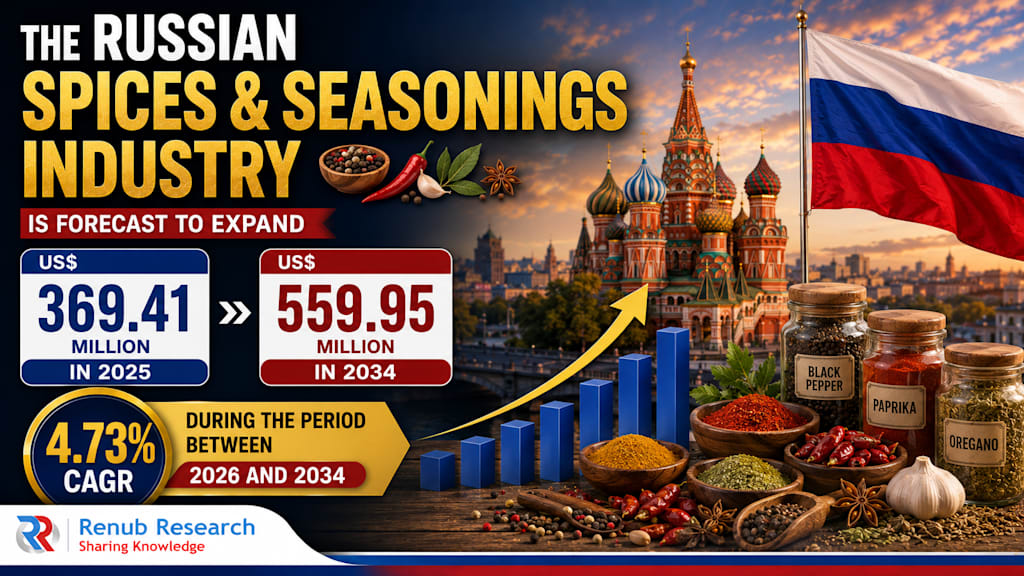
According to Renub Research, the Russia spices and seasonings market is expected to grow from US$ 369.41 million in 2025 to US$ 559.95 million by 2034, registering a compound annual growth rate (CAGR) of 4.73% during the forecast period between 2026 and 2034.
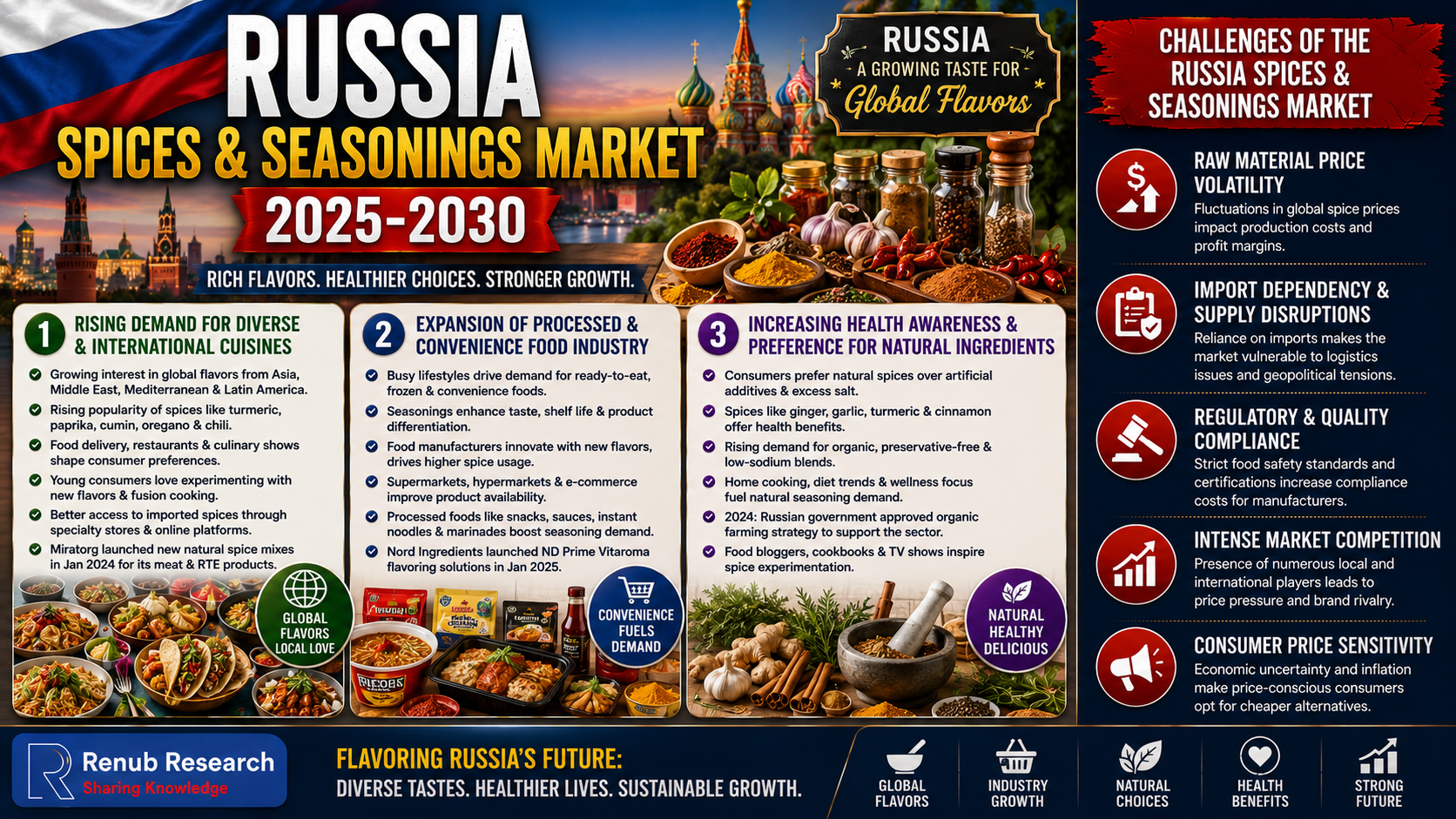
The market’s growth is being driven by increasing urbanization, rising demand for processed and ready-to-eat foods, growing interest in ethnic cuisines, and rising consumer preference for natural ingredients and healthier food choices.
As Russian consumers continue experimenting with global flavors and modern cooking trends, spices and seasonings are becoming an increasingly important part of everyday food culture.
Global Cuisine Trends Are Reshaping Consumer Preferences
One of the biggest factors fueling growth in Russia’s spices and seasonings market is the rising popularity of international cuisines.
Over the past decade, globalization, international travel, food delivery services, and social media exposure have significantly influenced Russian eating habits. Consumers are now far more willing to experiment with flavors inspired by:
- Asian cuisine
- Mediterranean dishes
- Middle Eastern foods
- Latin American recipes
- Italian cooking
- Mexican flavors
This growing curiosity has increased demand for spices such as:
- Paprika
- Cumin
- Chili
- Oregano
- Turmeric
- Cinnamon
- Cardamom
Younger consumers, in particular, are leading this trend.
Urban Millennials and Generation Z consumers increasingly view cooking as both a lifestyle activity and a creative experience. Social media platforms, cooking shows, food bloggers, and online recipes continue encouraging experimentation with exotic seasonings and fusion cuisine.
Restaurants and food delivery services are also accelerating exposure to global flavors.
As multiethnic dining becomes more popular across Russia’s major cities, spices and seasonings once considered unfamiliar are now becoming mainstream pantry staples.
Convenience Foods Are Increasing Demand for Seasoning Blends
Russia’s expanding processed and convenience food sector is another major driver of spices and seasonings demand.
Busy lifestyles, urbanization, and increasing workforce participation are pushing consumers toward:
- Ready-to-eat meals
- Frozen foods
- Instant noodles
- Snack products
- Sauces and marinades
- Ready-to-cook meal kits
These products rely heavily on seasoning blends to deliver flavor, consistency, and shelf stability.
Food manufacturers are continuously developing new spice combinations and flavor profiles in order to satisfy changing consumer preferences.
As supermarkets and hypermarkets expand throughout Russia, consumers now have easier access to a wide variety of packaged seasonings and convenience foods.
Processed meat products, frozen foods, and snack items especially contribute to growing spice demand.
In January 2025, Nord Ingredients introduced the ND Prime Vitaroma line of flavoring solutions aimed at enhancing the taste profiles of different food categories, highlighting the increasing innovation happening within Russia’s flavor industry.
Health Awareness Is Encouraging Natural Ingredients
Health-conscious eating trends are becoming increasingly important within Russia’s food market.
Consumers are now paying greater attention to ingredient quality, nutritional value, and food additives. As a result, natural spices and herbs are increasingly preferred over artificial flavor enhancers and excessive salt usage.
Spices such as:
- Ginger
- Garlic
- Turmeric
- Cinnamon
- Oregano
are gaining popularity because they are associated with potential health benefits including:
- Antioxidant properties
- Anti-inflammatory effects
- Digestive support
- Immune system support
Consumers interested in wellness and healthier eating habits are driving demand for:
- Organic seasonings
- Preservative-free spice blends
- Low-sodium flavoring products
- Natural herbs and spices
Russia’s government has also shown increasing interest in supporting organic agriculture and natural food production.
In 2024, Russia endorsed a national strategy for organic farming focused on promoting sustainable agricultural practices and natural food production systems.
This shift toward wellness and natural products is expected to continue influencing consumer purchasing decisions across the spices market.
Herbs Are Becoming More Popular in Everyday Cooking
The herbs category represents one of the most important segments within Russia’s spices and seasonings market.
Traditional Russian cooking already relies heavily on herbs such as:
- Dill
- Parsley
- Thyme
- Bay leaves
These herbs are commonly used in soups, seafood dishes, stews, marinades, and meat-based recipes.
However, changing culinary trends are expanding interest in additional herb varieties inspired by global cuisines.
Consumers increasingly appreciate herbs not only for flavor but also for their perceived health benefits and natural properties.
The rise of home cooking has further accelerated herb consumption.
Cooking tutorials, recipe videos, and food influencers continue encouraging Russians to experiment with fresh and dried herbs in homemade meals.
Retailers are responding by expanding product selections and introducing more premium and organic herb products.
Pepper Remains a Core Ingredient in Russian Cuisine
Pepper continues to dominate Russia’s spice market as one of the country’s most widely used seasonings.
Black pepper remains a staple ingredient in both household kitchens and professional foodservice operations.
Consumers use pepper extensively in:
- Soups
- Meat dishes
- Sauces
- Marinades
- Processed foods
At the same time, other pepper varieties such as white pepper and red pepper are becoming increasingly popular as consumers explore international recipes and spicier flavor profiles.
The growth of restaurants, fast-food chains, and food delivery services has also increased demand for premium pepper products.
Urban consumers increasingly seek freshly ground and high-quality pepper products associated with premium culinary experiences.
Packaged seasoning blends that include pepper are expected to continue growing strongly in popularity.
Oregano Is Benefiting from Mediterranean and Italian Food Trends
Oregano has become one of the fastest-growing herbs within the Russian market.
The popularity of Italian and Mediterranean cuisines has significantly increased oregano consumption, particularly in dishes such as:
- Pizza
- Pasta sauces
- Salads
- Grilled meats
- Marinades
Dried oregano is especially popular because of its affordability, convenience, and long shelf life.
The expansion of international restaurant chains and food delivery services has further strengthened oregano demand.
Home cooks increasingly use oregano in homemade versions of global recipes inspired by restaurant dining and social media content.
As interest in Mediterranean cuisine continues growing, oregano is expected to remain an important high-growth segment.
Cardamom Is Emerging as a Premium Spice
Cardamom is gaining recognition in Russia as a premium and luxury spice category.
Known for its distinctive aroma and flavor, cardamom is widely used in:
- Desserts
- Bakery products
- Specialty teas
- Coffee beverages
- Middle Eastern dishes
Consumers increasingly appreciate cardamom because of its perceived digestive and wellness benefits.
The expansion of cafés and specialty beverage shops offering exotic tea and coffee experiences is also contributing to market growth.
Despite strong interest, cardamom remains relatively expensive due to its imported nature, making it more popular among affluent consumers and gourmet food enthusiasts.
Nevertheless, demand continues increasing steadily within premium culinary and hospitality segments.
Meat and Poultry Seasonings Represent a Major Market Segment
Russia’s strong preference for protein-rich diets makes meat and poultry seasonings one of the most important categories within the market.
Common seasonings used for meat products include:
- Garlic
- Paprika
- Black pepper
- Coriander
- Mustard
- Cumin
These spices are essential for enhancing grilled, smoked, roasted, and processed meat products.
The growing popularity of barbecue culture and ready-to-cook meat products is driving demand for convenient seasoning blends.
Consumers increasingly prefer ready-to-use spice mixes because they offer:
- Convenience
- Consistency
- Professional-style flavors
- Time savings
Foodservice operators and supermarkets are also expanding premium seasoning selections to meet rising demand for gourmet and international flavor experiences.
Frozen Herbs and Seasonings Are Gaining Momentum
Frozen spices and seasonings are emerging as another growing segment within Russia’s food industry.
Consumers increasingly prefer frozen herbs and garlic products because they help preserve:
- Freshness
- Aroma
- Flavor
- Nutritional value
Products such as frozen garlic cubes, basil, parsley, and herb blends are becoming more common in supermarkets and meal kits.
The growth of ready-to-cook meals and home cooking trends is helping drive this category forward.
Advancements in freezing technology and packaging have improved product quality significantly.
In October 2024, Dorot Gardens introduced an expanded range of fresh-frozen herbs and garlic products in global markets including Russia, highlighting growing interest in frozen seasoning solutions.
Central Russia Leads the Market
Central Russia remains the country’s largest spices and seasonings market.
Moscow and surrounding urban areas account for significant demand due to:
- Large populations
- Higher disposable incomes
- Diverse culinary preferences
- Expanding restaurant industries
International restaurants, hotels, cafés, and gourmet food retailers continue introducing consumers to new flavor experiences.
Consumers in urban areas increasingly seek:
- Organic seasonings
- Premium imported spices
- International spice blends
- Gourmet cooking ingredients
Food delivery growth and modern retail infrastructure are also helping expand market access.
Volga District Continues Expanding
The Volga District is another important regional market for spices and seasonings.
Cities such as Kazan and Nizhny Novgorod have strong culinary traditions that rely heavily on spices for both flavor and food preservation.
Urbanization, rising incomes, and expanding supermarkets are encouraging consumers to explore more international flavors and premium products.
The growth of the foodservice and processed food industries in the region is also increasing demand for packaged seasonings and spice blends.
Major Challenges Still Affect the Industry
Despite strong growth potential, Russia’s spices and seasonings market faces several challenges.
One major issue is dependence on imports.
Many widely consumed spices including:
- Black pepper
- Turmeric
- Cinnamon
- Cloves
- Cardamom
must be imported from Asia, Africa, and Latin America.
As a result, geopolitical tensions, supply chain disruptions, shipping costs, and currency fluctuations can significantly impact market stability and pricing.
Price sensitivity also remains a challenge.
Inflation and economic uncertainty often encourage consumers to choose lower-cost products over premium branded seasonings.
Counterfeit and unbranded products further complicate competition within the market.
Companies must therefore balance affordability with quality and innovation.
The Future of Russia’s Spices and Seasonings Market
The future of Russia’s spices and seasonings market appears highly promising.
Consumer interest in global cuisine, healthier eating habits, convenience foods, and home cooking is expected to continue driving long-term demand.
Future market growth will likely focus on:
- Organic spices
- Natural seasoning blends
- International flavor innovations
- Premium herbs
- Convenient packaging formats
- Frozen herbs and spices
- Functional and wellness-oriented products
Manufacturers investing in quality, authenticity, and innovative flavor solutions are expected to gain strong competitive advantages.
Final Thoughts
Russia’s spices and seasonings market is evolving rapidly as consumers embrace more adventurous cooking habits, healthier ingredients, and international culinary experiences.
According to Renub Research, the market’s projected growth from US$ 369.41 million in 2025 to US$ 559.95 million by 2034 reflects the increasing importance of flavor innovation within Russia’s food industry.
From oregano and cardamom to pepper blends and frozen herbs, spices are becoming central to modern Russian cooking and food manufacturing.
As globalization, convenience foods, and health-conscious lifestyles continue reshaping consumer behavior, Russia’s spices and seasonings industry is expected to remain on a strong growth trajectory for years to come.
About the Creator
Enjoyed the story? Support the Creator.
Subscribe for free to receive all their stories in your feed.
Comments
There are no comments for this story
Be the first to respond and start the conversation.