
Rodenticides Market: Precision Pest Management, Sustainable Practices & Market Trends
How advancements in precision pest control, enhanced bait delivery systems, and improved monitoring technologies are redefining market competitiveness

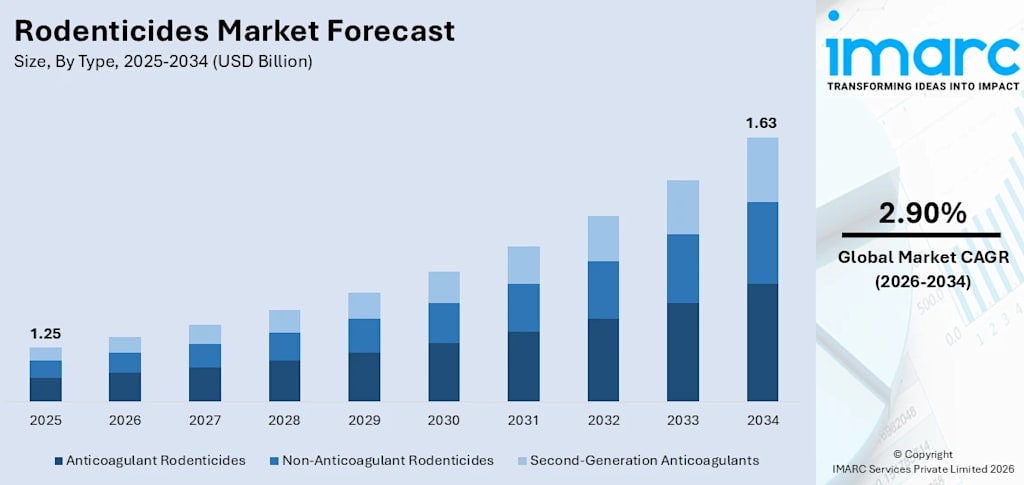
The rising public health concern due to increasing vector-borne diseases, widespread product utilization across the agricultural sector, and severe infrastructure damages caused by rodent infestations are driving the global demand for effective pest control. According to IMARC Group’s latest data, The global rodenticides market size reached USD 1.25 Billion in 2025. Looking forward, IMARC Group expects the market to reach USD 1.63 Billion by 2034, exhibiting a growth rate (CAGR) of 2.90% during 2026-2034.
Rodenticides represent a vital component of the global chemical and agricultural pest management sector, ensuring food safety and structural integrity across urban and rural environments. Driven by shrinking arable land, strict commercial hygiene mandates, and expanding grain storage infrastructure, these products are continuously being upgraded to minimize ecological footprints. The industry is currently seeing a pronounced shift toward advanced bait formulations, weather-resistant block matrices, and highly targeted active ingredients that combat growing rodent resistance while protecting non-target wildlife species.
Rodenticides Market Growth Drivers:
- Escalating Public Health Risks and Vector-Borne Disease Control
The relentless expansion of urban centers and warming global climates have created highly favorable breeding conditions for commensal rodents, drastically amplifying public health risks. Rats and mice act as primary vectors for debilitating diseases such as Hantavirus, leptospirosis, salmonellosis, and murine typhus. To curb these severe health hazards, municipalities and private pest control agencies are enforcing aggressive vector-control protocols. This continuous, systematic intervention ensures a steady industrial demand for high-potency chemical formulations capable of suppressing rodent populations in high-density residential and commercial sectors before outbreaks can materialize.
- Substantial Crop Losses and Agricultural Security Mandates
Rodent infestations present a catastrophic threat to global food security by ravaging standing crops and attacking stored agricultural commodities. Field data indicates that rodents contaminate and consume vast amounts of grains, seeds, corn, and soybeans annually, translating into billions of dollars in lost farm revenues. Government programs designed to optimize agricultural output and safeguard national grain reserves heavily subsidize structural pest control measures. This systemic reliance on protective chemicals ensures robust application across farming belts, where specialized formulations like mechanical pellets are widely deployed to secure crop yields and sustain global food supply chains
- Expansion of Commercial Logistical Warehouses and Cold Storage Facilities
The global boom in e-commerce, combined with an ever-growing network of third-party logistics and sophisticated food processing facilities, has placed warehouse protection under intense scrutiny. Rodents pose severe operational risks by chewing through electrical wiring, destroying fiberglass insulation, and ruining palletized inventory. To comply with stringent international hygiene and quality control standards, corporate facility managers mandate regular, preventative baiting procedures. The rapid proliferation of these modern logistical distribution centers serves as a powerful market driver, pushing the continuous adoption of tamper-resistant chemical baiting systems to maintain pristine industrial supply chains.
Rodenticides Market Trends:
- Rising Adoption of Highly Targeted Non-Anticoagulant Alternatives
Heightened awareness regarding secondary poisoning risks in birds of prey and domestic animals is driving a profound shift away from traditional chemical agents. Regulatory bodies are tightening restrictions on conventional formulations, clearing the path for highly targeted, fast-acting non-anticoagulant solutions like cholecalciferol and zinc phosphide hybrids. These advanced alternatives deliver rapid single-dose lethality without creating long-term environmental persistence. The accelerated commercial adoption of these active ingredients reflects a broader industry movement toward eco-conscious chemical design, maximizing target mortality while substantially mitigating environmental liabilities across sensitive rural and suburban landscapes.
- Product Innovation in Weather-Resistant Blocks and Secure Baiting Stations
Field longevity and structural stability represent critical performance requirements for modern chemical pest control products. Heavy investments in research and development have catalyzed the deployment of advanced paraffinized block formulations capable of maintaining complete active-ingredient recovery under extreme outdoor weather conditions, including torrential rain and high humidity. These durable blocks are engineered to fit precisely into mandated tamper-proof baiting stations. This design innovation prevents scattering by non-target species and reduces the operational need for frequent manual replenishment, delivering a highly cost-effective and low-maintenance tool for professional pest control operators globally.
- Surge in Bio-Based Formulations and Clean-Label Pest Control Systems
Consumer preferences for organic farming and green commercial spaces are shifting corporate priorities toward sustainable, bio-based rodenticides. Manufacturers are actively patenting innovative formulations that utilize natural plant extracts, safe bacterial strains, and targeted peptides to compromise rodent biological pathways naturally. These clean-label solutions bypass the stringent regulatory hurdles imposed on traditional heavy synthetic chemicals, allowing smoother distribution in residential spaces and premium organic food manufacturing facilities. This trend aligns seamlessly with the circular economy goals of modern enterprises, appealing directly to eco-conscious commercial property and farmland managers.
Recent News and Developments in Rodenticides Market
- July 2021: Bayer officially introduced its high-performance Harmonix Rodent Paste to the market. Formulated with cholecalciferol as its primary active ingredient, this innovative solution offers exceptional control over resistant rodent populations while significantly reducing environmental persistence, making it highly effective for both indoor and outdoor professional pest management programs.
- January 2022: Syngenta Crop Protection completed a strategic acquisition of prominent bioprotection technologies from UK-based Bio精华 Limited. This tactical acquisition substantially expands Syngenta’s product pipeline under its dedicated professional pest management vertical, accelerating the commercialization of bio-based pest control methods.
- August 2025: BASF SE announced a strategic expansion of its eco-friendly product lines, rolling out optimized packaging solutions and specialized, low-dose chemical blends designed to adhere strictly to emerging global environmental standards while maintaining high efficacy against urban pest populations.
Note: If you require specific details, data, or insights that are not currently included in the scope of this report, we are happy to accommodate your request. As part of our customization service, we will gather and provide the additional information you need, tailored to your specific requirements. Please let us know your exact needs, and we will ensure the report is updated accordingly to meet your expectations.
About the Creator
Andrew Sullivan
Hello, I’m Andrew Sullivan. I have over 9+ years of experience as a market research specialist.
Enjoyed the story? Support the Creator.
Subscribe for free to receive all their stories in your feed.
Comments
There are no comments for this story
Be the first to respond and start the conversation.