
Recursive Superintelligence Startup Raises 650 Million Dollars to Automate AI Self Improvement
Former Google Meta and OpenAI researchers launch six month old company valued at 4 billion dollars to pursue recursive self improvement in AI development

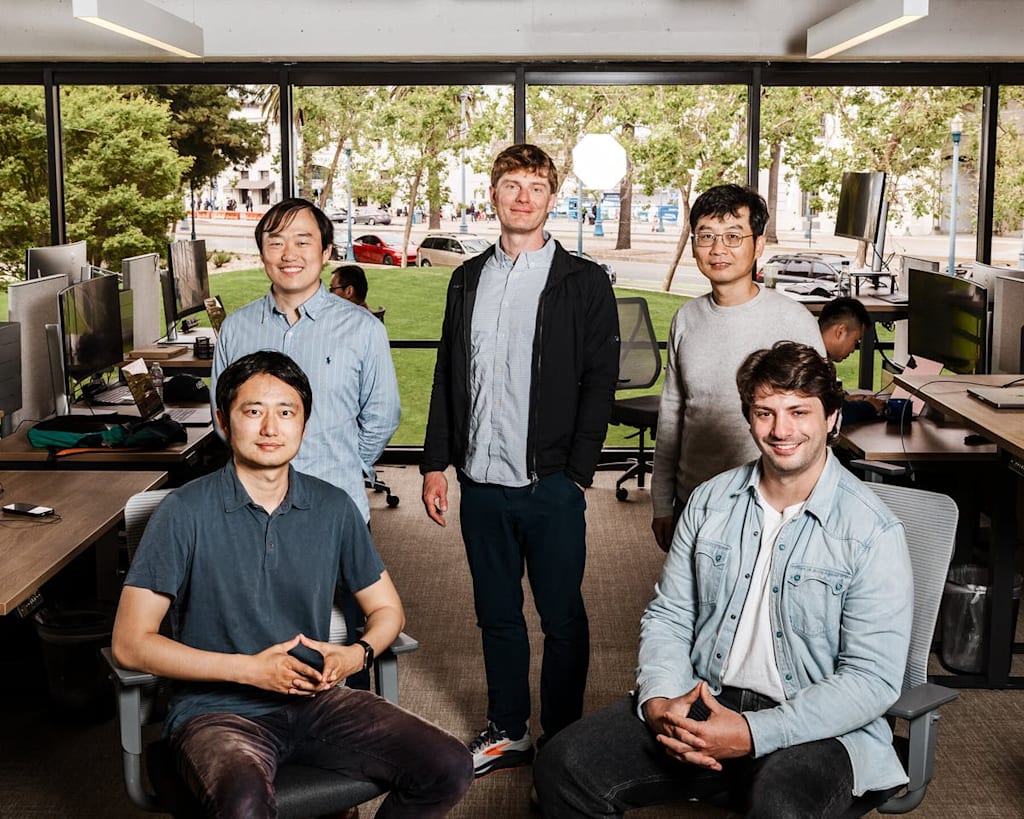
Read Time 6 minutes Tags AI Research Recursive Self Improvement AI Startups Autonomous AI Safety Notable researchers from Google Meta and OpenAI have launched a six month old company called Recursive Superintelligence to pursue the goal of building AI systems that can improve themselves with little or no human help The company has raised more than 650 million dollars from venture capital firms including GV Greycroft Nvidia and AMD and is now valued at more than 4 billion dollars despite having fewer than 30 employees The founders include Richard Socher who is also chief executive of You com and previously head of AI research at Salesforce and co founders Josh Tobin Jeff Clune and Tim Shi from OpenAI and Yuandong Tian from Meta The team also hired Peter Norvig who spent 25 years as director of research at Google and co wrote the standard AI textbook Artificial Intelligence A Modern Approach What recursive self improvement means One Definition and technical basis Recursion in computer science refers to a function that feeds itself After a recursive procedure generates information it uses that information to generate something else and so on In AI this means an AI system writes code that improves its own architecture training process or data pipeline without direct human engineering A veteran researcher Richard Socher said AI is code And now AI can code The ingredients are there The idea is to push more and more work onto machines including the generation of new ideas that drive AI development forward Two Current state of capability Companies like Anthropic and OpenAI released new AI systems late last year that were particularly good at writing computer code In recent months the technology has rapidly remade the way Silicon Valley engineers build test and modify new software applications If an artificial intelligence system can write code it can help accelerate the development of things as varied as word processors and social media apps OpenAI has said it is now building an automated AI researcher By the fall the company hopes to have a system that can do the work of a less experienced researcher said Sam Altman Similar efforts are underway at other leading companies Three Research focus on open endedness Many of the Recursive Superintelligence founders specialize in a kind of AI development called open endedness This involves building software systems that can run for days months or even years in pursuit of goals set by the researchers The aim is to create systems that explore large solution spaces without constant human guidance Company structure and challenges One Talent and funding density Recursive Superintelligence has fewer than 30 employees but is valued at more than 4 billion dollars The high valuation reflects both the seniority of the founders and investor belief that automating AI research could unlock compounding returns in capability The company operates offices in San Francisco and London Two Timeline and scope Dr Socher said his start up would need years to build the kind of technology that he and his co founders envisioned The company hopes to eventually apply the technology to other fields such as drug discovery and other kinds of biological research The founders acknowledge that current technology is a long way from the point where humans can be removed from the loop Humans must still generate the new ideas that drive AI development forward Three Competitive landscape Recursive Superintelligence is not alone in this pursuit The company should not be confused with Ricursive Intelligence which is pursuing a similar goal and is also valued at 4 billion dollars The prominent AI start ups Anthropic and OpenAI are also chasing recursive self improvement which has been an obsession among Silicon Valley technologists for decades Technical and safety considerations One Potential for capability acceleration If self improvement loops work even partially they could accelerate AI capability faster than linear scaling of compute and data This would shorten timelines to advanced systems and increase pressure on evaluation and safety processes Two Alignment and control risk Automated AI research raises the question of how to ensure that self modifying systems remain aligned with human intent A system that can rewrite its own training objective or architecture introduces new failure modes that are hard to audit or contain Three Evaluation bottleneck Current evaluation methods rely on human designed benchmarks and red teaming If AI begins to generate its own research agenda it may outpace human ability to assess risk This is why many researchers argue that interpretability and monitoring infrastructure must advance in parallel with capability Market and industry implications One Talent consolidation The involvement of researchers from OpenAI Meta and Google shows continued movement of senior talent into well funded startups focused on frontier research This concentrates expertise but also accelerates knowledge transfer outside large labs Two Investment thesis Investors are betting that the first group to automate AI research will gain a compounding advantage in both capability and cost The 650 million dollar raise signals confidence that the problem is now tractable with current models and tooling Three Application expansion The founders plan to apply the technology beyond code generation to fields like drug discovery and biological research If the approach works it could shorten development cycles in domains where experimentation is expensive and slow What to watch next One Benchmarks for autonomous research The field needs clear benchmarks for what counts as an autonomous AI researcher OpenAI target of a system that can do the work of a less experienced researcher by fall 2026 will be a test case Two Safety protocols As capability increases the need for secure model storage controlled access and robust monitoring becomes more urgent Any recursive system that modifies itself must have guardrails that cannot be easily removed by the system itself Three Regulatory response Governments are watching this area closely because recursive self improvement could change the pace of technological change faster than existing policy cycles The US China protocol discussed earlier this week is an early signal that states see AI autonomy as a diplomatic issue For researchers the challenge is to prove that recursive loops can produce real gains without losing control For investors the bet is that this is the next step after code generation models For the rest of the field it raises the question of how fast capability can move once humans are partially out of the loop Do you think recursive self improvement is closer than most people expect and should safety research get more funding than capability right now Share your view in the comments
About the Creator
Enjoyed the story? Support the Creator.
Subscribe for free to receive all their stories in your feed.
Comments
There are no comments for this story
Be the first to respond and start the conversation.