
Protein Ingredients Market to Surpass $45 Billion by 2034 as Health-Conscious Consumers Fuel Global Demand
Rising interest in high-protein diets, plant-based nutrition, and functional foods is transforming the future of the protein ingredients industry.

The global obsession with protein is no longer limited to athletes and bodybuilders. Today, protein has become one of the most sought-after nutrients among everyday consumers looking to improve their health, manage weight, build muscle, and maintain overall wellness.
From protein-packed breakfast bars and ready-to-drink shakes to dairy alternatives and plant-based snacks, consumers are actively seeking foods that deliver more nutritional value. This growing demand is reshaping the global food and beverage industry and creating significant opportunities for manufacturers of protein ingredients.
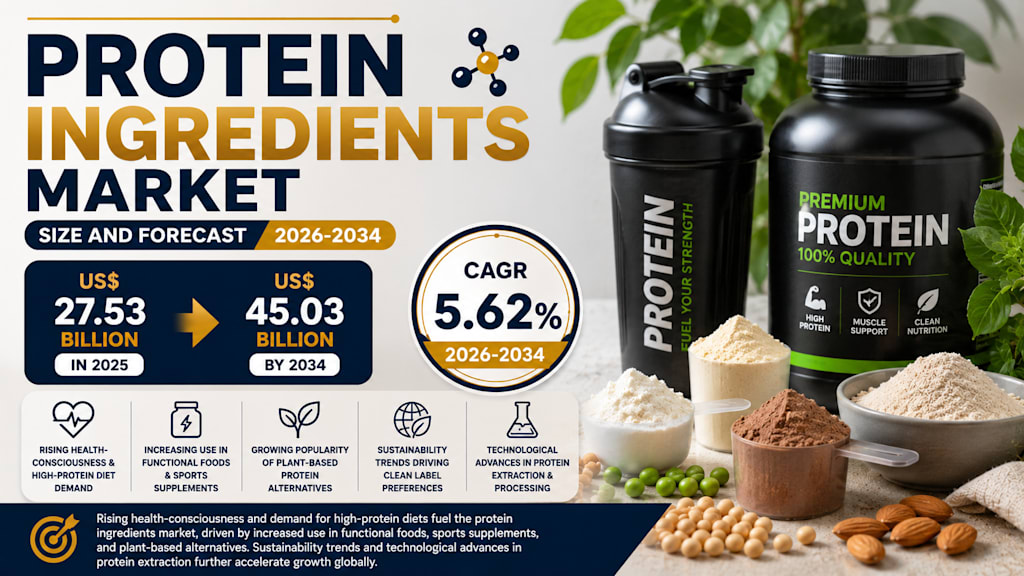
According to Renub Research, the global protein ingredients market is projected to grow from US$27.53 billion in 2025 to US$45.03 billion by 2034, registering a compound annual growth rate (CAGR) of 5.62% between 2026 and 2034. The market's expansion is being driven by increasing health awareness, rising demand for functional foods, advancements in protein technology, and the rapid adoption of plant-based nutrition worldwide.
As consumers become more focused on nutrition than ever before, protein ingredients are emerging as one of the most important building blocks of the modern food industry.
Why Protein Has Become a Global Nutrition Priority
Protein has always been an essential nutrient, but its importance has grown dramatically in recent years.
Modern consumers are increasingly aware of protein's role in supporting muscle maintenance, weight management, satiety, recovery, and overall health. As a result, many people are actively monitoring their protein intake and seeking convenient ways to incorporate more protein into their daily diets.
This trend extends far beyond fitness enthusiasts. Busy professionals, aging populations, health-conscious families, and wellness-focused consumers are all contributing to rising demand for protein-rich products.
Food manufacturers have responded by introducing protein-enriched versions of everyday products, including beverages, cereals, baked goods, yogurts, snacks, and meal replacements. What was once a niche category has become mainstream.
Consumers now expect foods not only to satisfy hunger but also to deliver measurable nutritional benefits.
Functional Foods Are Driving Market Growth
One of the strongest drivers behind the protein ingredients market is the rapid rise of functional foods.
Functional foods are products designed to provide health benefits beyond basic nutrition. They often include added vitamins, minerals, probiotics, or proteins that support specific wellness goals.
Protein ingredients play a central role in this category. Manufacturers increasingly use protein concentrates and isolates to enhance nutritional profiles while maintaining appealing taste and texture.
Protein-fortified beverages, meal replacement products, protein bars, and healthy snacks have become staples in supermarkets worldwide. Consumers appreciate the convenience of obtaining nutritional benefits without making significant lifestyle changes.
The demand for functional foods is particularly strong among younger consumers who value convenience, wellness, and preventive health measures.
As a result, protein enrichment has become a major product development strategy across multiple food categories.
Plant-Based Proteins Continue Their Rise
Perhaps the most significant transformation within the protein ingredients market is the growing popularity of plant-based proteins.
Environmental concerns, ethical considerations, food allergies, and changing dietary preferences have encouraged millions of consumers to explore alternatives to animal-derived proteins.
Pea protein, soy protein, rice protein, fava bean protein, and other plant-based ingredients are rapidly gaining acceptance across global markets.
Manufacturers have invested heavily in improving the taste, texture, and functionality of these ingredients, making them increasingly competitive with traditional protein sources.
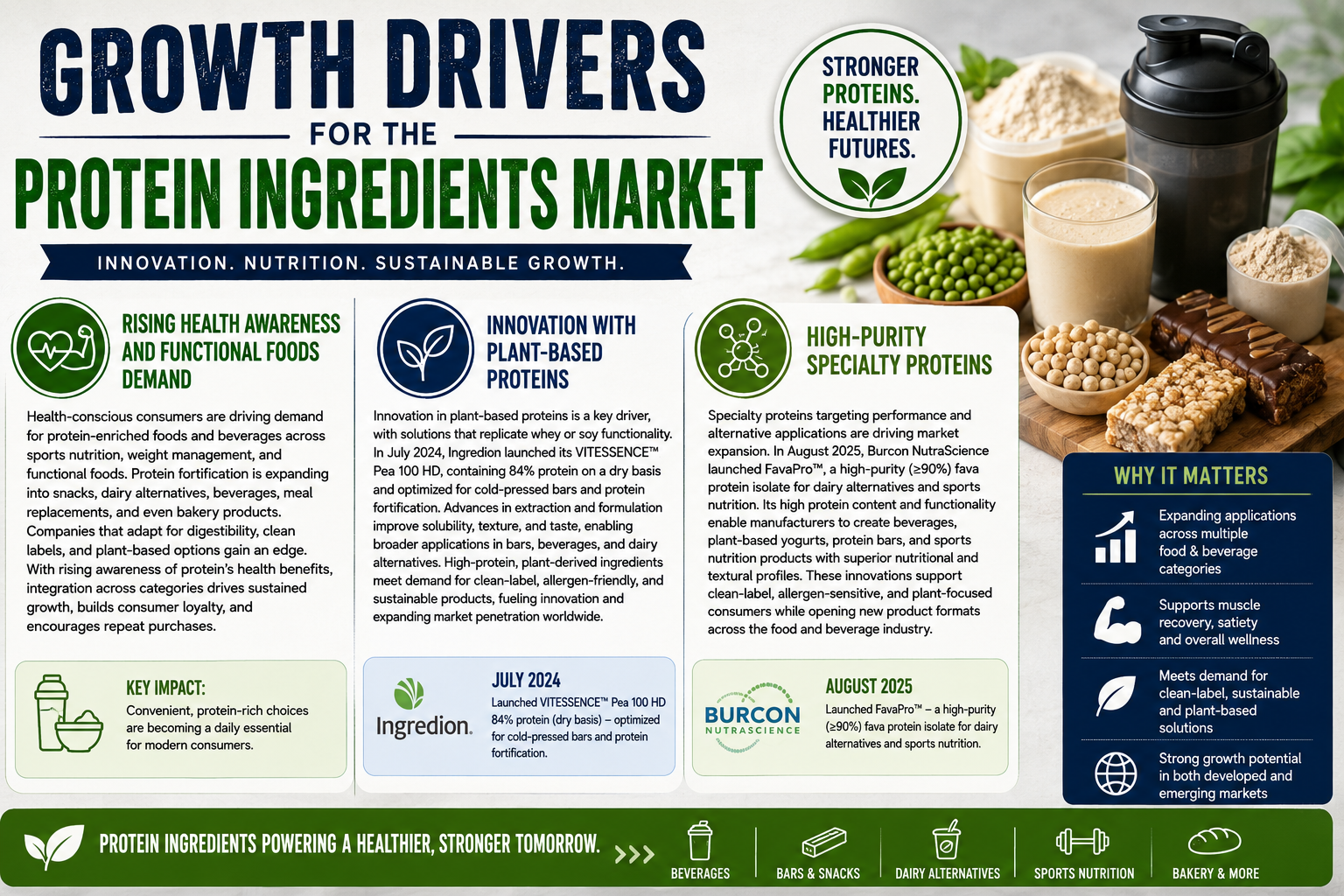
A notable example came in July 2024 when Ingredion introduced VITESSENCE Pea 100 HD, a high-protein pea ingredient containing approximately 84% protein. Designed for protein bars and nutritional products, the innovation demonstrates how companies are responding to demand for clean-label, plant-based nutrition solutions.
Consumers no longer view plant-based proteins as substitutes. Instead, many see them as preferred nutritional choices that align with personal health and sustainability goals.
Sustainability Is Reshaping Consumer Choices
Sustainability has become one of the most influential factors affecting food purchasing decisions worldwide.
Consumers increasingly want to know where ingredients come from, how they are produced, and what environmental impact they create. This shift has elevated plant-based proteins, which generally require fewer natural resources compared to many animal-based protein sources.
Food companies are embracing sustainable sourcing strategies and investing in alternative protein technologies to meet evolving expectations.
Plant proteins derived from peas, soybeans, sunflower seeds, and fava beans are benefiting significantly from this trend. These ingredients offer manufacturers opportunities to reduce environmental footprints while appealing to eco-conscious consumers.
As sustainability becomes a long-term priority rather than a temporary trend, demand for environmentally responsible protein solutions is expected to accelerate further.
Innovation Is Expanding Protein Applications
Technological advances are creating exciting opportunities for protein ingredient manufacturers.
Modern extraction and processing techniques have significantly improved protein quality, functionality, and versatility. These innovations enable proteins to be incorporated into a wider variety of products without compromising taste or texture.
Today's protein ingredients are found in products ranging from dairy alternatives and baked goods to sports nutrition supplements and ready-to-drink beverages.
Manufacturers are also developing highly specialized proteins designed for specific applications.
For example, in August 2025, Burcon NutraScience introduced FavaPro, a high-purity fava bean protein isolate containing more than 90% protein. The ingredient was developed for applications including dairy alternatives, sports nutrition products, and protein-enriched foods.
Such innovations demonstrate how the industry continues to evolve beyond traditional protein applications and into increasingly specialized nutritional solutions.
Sports Nutrition Remains a Major Growth Engine
Sports nutrition continues to be one of the most important segments within the protein ingredients market.
Athletes, fitness enthusiasts, and active consumers regularly use protein supplements to support recovery, muscle development, and performance goals. This demand has created substantial opportunities for protein ingredient suppliers.
Protein powders, ready-to-drink shakes, nutrition bars, and recovery beverages remain among the fastest-growing product categories globally.
However, sports nutrition is no longer confined to elite athletes. Many consumers now incorporate protein products into their everyday wellness routines, further expanding the market.
As fitness culture becomes more mainstream and preventive health gains importance, demand for sports nutrition ingredients is expected to remain strong for years to come.
Challenges Facing the Protein Ingredients Industry
Despite its positive outlook, the protein ingredients market faces several significant challenges.
One major concern is the availability and cost of raw materials. Protein ingredients often rely on agricultural commodities such as soybeans, peas, and fava beans, which are vulnerable to weather disruptions, supply chain challenges, and geopolitical uncertainty.
Price volatility can increase manufacturing costs and place pressure on profit margins. In some cases, higher production expenses may be passed on to consumers, potentially affecting demand.
The industry also faces regulatory complexities. Different countries maintain varying requirements regarding food safety, labeling, nutritional claims, and ingredient approvals.
Companies must navigate these regulations carefully while maintaining transparency and building consumer trust.
Additionally, some consumers remain skeptical of highly processed protein ingredients or unfamiliar plant-based sources. Education and clear communication will play a critical role in overcoming these barriers.
Regional Markets Show Strong Growth Potential
Demand for protein ingredients is rising across virtually every major region, although growth drivers vary by market.
The United States remains one of the largest and most mature markets, fueled by strong interest in sports nutrition, functional foods, and plant-based alternatives. Protein-fortified products have become mainstream across retail channels.
Germany is experiencing growth driven by sustainability concerns, fitness trends, and demand for clean-label foods. Plant-based protein innovation is particularly strong within the European market.
China represents a major growth opportunity due to increasing urbanization, rising incomes, and growing awareness of nutrition and wellness. Protein-enriched foods and beverages are gaining popularity among younger consumers.
Saudi Arabia is also witnessing growing demand as consumers increasingly prioritize health and wellness while seeking convenient, nutrient-rich food options.
These regional developments highlight the global nature of the protein boom and the widespread opportunities available to industry participants.
Recent Innovations Signal a Dynamic Future
The pace of innovation within the protein ingredients sector continues to accelerate.
Recent launches illustrate how manufacturers are expanding beyond traditional applications and addressing increasingly specialized nutritional needs.
Arla Foods Ingredients introduced Lacprodan CGMP-30, a specialized ingredient designed for individuals with phenylketonuria (PKU), while also showcasing advanced whey and milk protein solutions for health-conscious consumers. Meanwhile, Tetra Pak launched a sunflower protein ingredient containing approximately 50% protein, offering formulators another versatile plant-based option for functional foods and beverages.
These developments demonstrate the industry's commitment to innovation, personalization, and improved nutritional outcomes.
Final Thoughts
The global protein ingredients market is entering a period of sustained expansion fueled by powerful consumer trends.
As health awareness rises, functional foods gain popularity, and sustainability becomes increasingly important, protein ingredients are becoming central to food innovation worldwide. Consumers are no longer satisfied with products that simply taste good—they want foods that actively support their health and lifestyle goals.
With the market expected to exceed US$45 billion by 2034, companies that invest in plant-based innovation, advanced protein technologies, sustainable sourcing, and consumer education will be best positioned for success.
The future of food is becoming increasingly protein-focused, and the protein ingredients industry is at the heart of that transformation.
About the Creator
Enjoyed the story? Support the Creator.
Subscribe for free to receive all their stories in your feed.
Comments
There are no comments for this story
Be the first to respond and start the conversation.