
Protein Hydrolysate Market: Transforming Nutrition Through Science
Advanced protein processing is reshaping how we fuel health, performance, and recovery

Introduction: A New Era of Functional Nutrition
Protein has long been a cornerstone of human nutrition, but not all proteins are created equal. In recent years, a more refined form—protein hydrolysates—has emerged as a powerful ingredient across industries. These are proteins broken down into smaller components called peptides, making them easier to absorb and more effective in targeted applications.
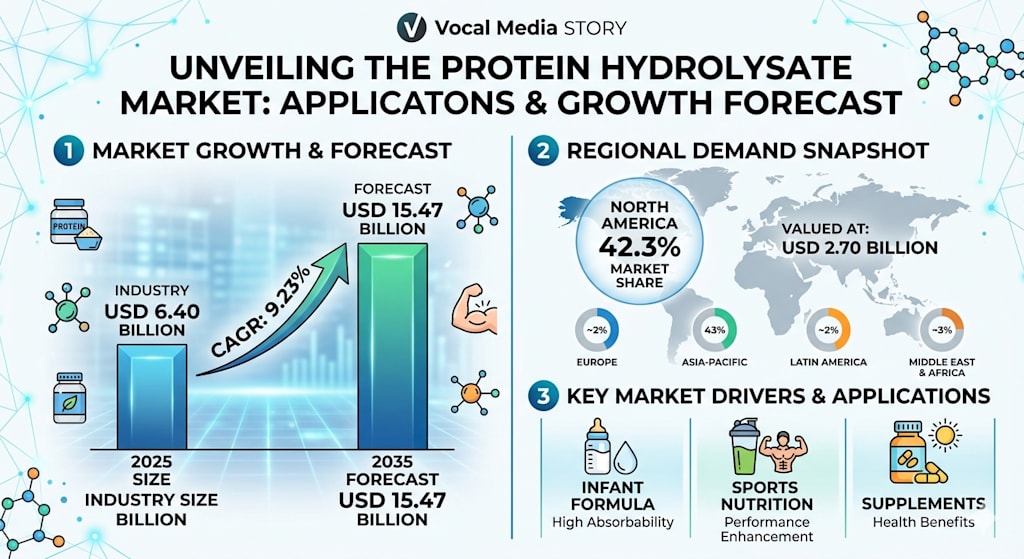
The Protein Hydrolysate Market is projected to grow from USD 6.40 billion in 2025 to around USD 15.47 billion by 2035, expanding at a healthy annual rate of 9.23%. This growth reflects a broader shift in consumer and industry priorities. From infant nutrition to sports supplements, there is increasing demand for products that deliver faster results, better digestion, and improved safety.
What was once a niche ingredient is now becoming a mainstream solution, driven by advances in science and evolving expectations around health and wellness.
Market Highlights
- North America leads regional demand with a 42.3% market share, valued at USD 2.70 Billion.
- Powder form dominates the By Form Type segment with a 76.2% share.
- Dairy source leads the By Source segment with a 43.6% share.
- Food and Beverages leads the By Application segment with a 38.1% share.
- Enzymatic production method holds the largest By Production Method share at 45.3%.
- Direct Sales leads the By Distribution Channel segment with a 47.2% share.
- B2B Food and Beverage Manufacturers dominate the By End Use segment with a 34.6% share.
What Makes Protein Hydrolysates Different?
At a basic level, protein hydrolysates are produced by breaking down whole proteins into smaller chains using enzymes, acids, or fermentation processes. This “pre-digestion” allows the body to absorb amino acids more quickly and efficiently. For people with sensitive digestive systems—or those needing rapid nutrient delivery—this can make a meaningful difference.
One of the key advantages is reduced allergenicity. In products like infant formula, hydrolysates are often used to minimize allergic reactions while still delivering essential nutrition. This makes them particularly valuable in early-life nutrition and clinical settings.
Another important benefit is functionality. These ingredients can improve taste, texture, and solubility in food products. As a result, they are widely used in beverages, supplements, and even personal care items where performance and user experience matter.
Market Growth Fueled by Health and Performance Trends
The rising popularity of health-focused lifestyles is a major driver behind market expansion. Consumers are increasingly seeking products that support fitness, recovery, and overall well-being. Hydrolyzed proteins, with their fast absorption rates, are a natural fit for sports nutrition and active lifestyles.
Clinical and medical nutrition is another high-growth area. Patients recovering from illness or surgery often require easily digestible, nutrient-dense foods. Hydrolysates meet this need by delivering protein in a form that the body can quickly utilize, improving nutritional outcomes.
Infant nutrition also plays a central role. Regulatory approvals in recent years have expanded the use of specific hydrolysates in baby formula, reinforcing their safety and effectiveness. This has opened new commercial opportunities while raising the bar for quality and compliance.
Key Segments Driving Demand
The market is shaped by several important segments, each contributing to overall growth in different ways.
Powdered forms dominate due to their convenience and stability. They are easy to transport, store, and incorporate into a wide range of products, from protein shakes to fortified foods. This versatility makes them the preferred choice for manufacturers.
When it comes to sources, dairy-based hydrolysates lead the market. Whey and casein, derived from milk, benefit from well-established processing systems and strong consumer trust. These proteins are widely used in both sports nutrition and medical applications.
In terms of applications, the food and beverage sector holds the largest share. Hydrolysates are used in everything from high-protein drinks to baked goods, enhancing both nutritional value and product performance. Meanwhile, specialized uses in pharmaceuticals, cosmetics, and animal nutrition continue to expand.
Production methods also play a crucial role. Enzymatic processing, which uses natural enzymes to break down proteins, is the most widely used approach. It allows for precise control over the final product, making it ideal for applications that require consistency and safety.
Regional Insights: Where Growth Is Happening
Geographically, North America leads the market, supported by advanced food manufacturing infrastructure and strong demand for health-focused products. The region also benefits from clear regulatory frameworks, which help companies bring new ingredients to market with confidence
Europe follows closely, with a strong emphasis on safety, quality, and sustainability. Strict regulations ensure high standards, particularly in sensitive areas like infant and clinical nutrition. This creates a competitive environment where only the most reliable suppliers thrive.
Asia-Pacific is the fastest-growing region, driven by rising incomes and changing dietary habits. Countries such as China and India are seeing increased demand for sports supplements and infant nutrition products. As awareness grows, so does the adoption of hydrolysate-based ingredients.
Emerging markets in Latin America and the Middle East are also gaining momentum. While still developing, these regions show strong potential as health-conscious consumers seek higher-quality nutrition options.
Challenges That Could Limit Expansion
Despite its strong growth outlook, the market faces several challenges. One of the most significant is cost. Producing protein hydrolysates—especially through enzymatic methods—requires specialized equipment and high-quality inputs. This makes them more expensive than traditional protein sources.
For smaller manufacturers, these costs can be a barrier to entry. Even larger companies must carefully balance pricing with profitability, particularly in competitive markets where consumers are price-sensitive.
Regulatory complexity is another hurdle. Different regions have varying standards for safety, labeling, and usage. Navigating these requirements can be time-consuming and expensive, especially for companies operating globally.
Finally, taste remains a technical challenge. Highly hydrolyzed proteins can develop a bitter flavor, which can affect consumer acceptance. While progress is being made, improving taste without compromising functionality continues to be a key area of innovation.
Emerging Trends Shaping the Future
Several trends are likely to define the next phase of growth. One of the most notable is the rise of plant-based hydrolysates. Derived from sources like peas and rice, these alternatives cater to consumers seeking vegan or allergen-free options. As plant-based diets gain popularity, this segment is expected to expand rapidly.
Sustainability is another major focus. Companies are exploring ways to use by-products from food processing—such as fish or agricultural waste—to create hydrolysates. This not only reduces waste but also lowers production costs, creating a win-win scenario.
Convenience is also driving innovation. Ready-to-drink beverages and easy-to-mix powders are becoming more popular, especially among busy consumers. These formats require advanced formulation techniques to maintain stability and taste, pushing suppliers to innovate further.
Finally, there is a growing emphasis on personalization. As nutrition becomes more tailored to individual needs, hydrolysates offer a flexible platform for developing targeted solutions, from gut health to muscle recovery.
Conclusion: A Market Built on Precision and Possibility
The evolution of protein hydrolysates reflects a broader shift toward smarter, more effective nutrition. As science advances and consumer expectations rise, these ingredients are moving from the margins to the mainstream.
The Protein Hydrolysate Market is not just growing—it is transforming how industries approach product development and health outcomes. Companies that invest in innovation, quality, and sustainability will be best positioned to succeed in this dynamic landscape.
Ultimately, the future of nutrition may depend less on how much protein we consume, and more on how well our bodies can use it. Protein hydrolysates, with their unique advantages, are helping to lead that change.
About the Creator
Yash Mule
SEO Specialist with 10+ years of experience at Evolvance Market Research. Expert in technical SEO, content strategy, and data-driven optimization, with a proven track record of significantly increasing organic traffic and search rankings.
Enjoyed the story? Support the Creator.
Subscribe for free to receive all their stories in your feed.
Comments
There are no comments for this story
Be the first to respond and start the conversation.