
Protein Bar Market Expands as Health, Convenience, and Innovation Redefine Snacking
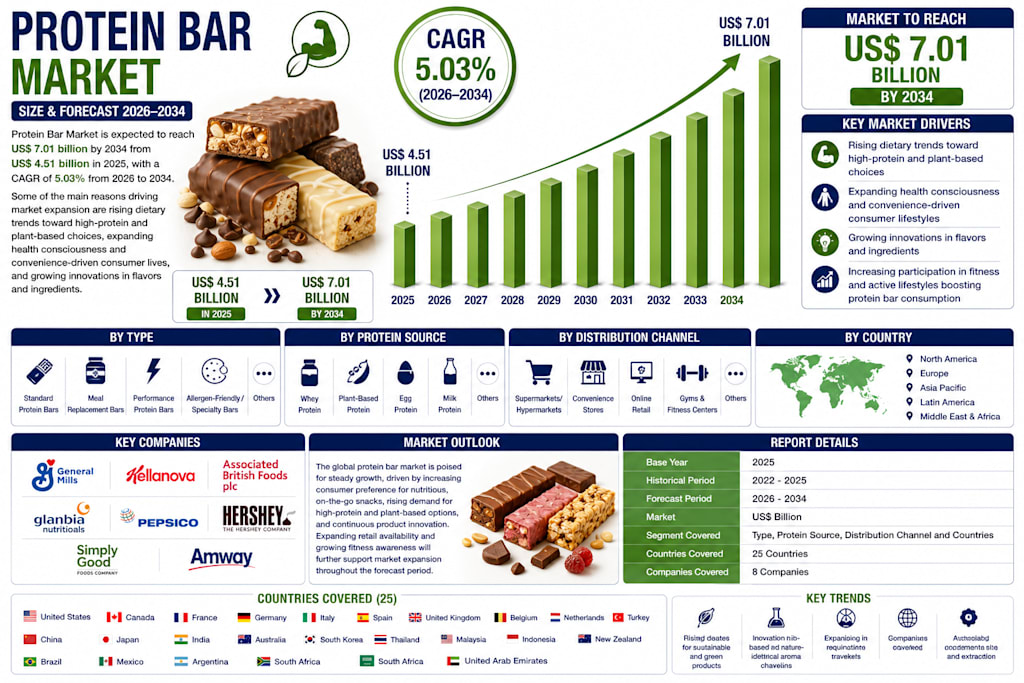
Driven by rising fitness awareness, demand for on-the-go nutrition, and product innovation, the global protein bar market is projected to grow from US$ 4.51 billion in 2025 to US$ 7.01 billion by 2034, at a CAGR of 5.03% from 2026 to 2034.

The global protein bar market is evolving rapidly as consumers increasingly prioritize health, convenience, and functional nutrition. Once limited to athletes and bodybuilders, protein bars have transitioned into mainstream snack options, appealing to a wide audience including busy professionals, students, and health-conscious individuals.
According to Renub Research, the market is expected to grow from US$ 4.51 billion in 2025 to US$ 7.01 billion by 2034, reflecting a compound annual growth rate (CAGR) of 5.03% during the forecast period. This steady growth highlights the expanding role of protein bars in modern diets.
Protein bars are designed to provide a convenient source of protein along with other nutrients, making them suitable for meal replacement, post-workout recovery, or healthy snacking. Their portability, long shelf life, and ability to deliver balanced nutrition have made them a popular choice in today’s fast-paced lifestyles.
Rising Health and Fitness Consciousness
One of the primary drivers of the protein bar market is the growing awareness of health and fitness. Consumers are increasingly adopting active lifestyles, focusing on weight management, muscle development, and overall wellness.
Protein plays a crucial role in muscle repair, satiety, and metabolic health, making protein bars an attractive option for individuals seeking convenient nutrition. Fitness enthusiasts, gym-goers, and athletes frequently use protein bars as pre- or post-workout snacks.
Beyond traditional fitness users, the popularity of activities such as yoga, running, and outdoor sports has expanded the consumer base. Preventive healthcare trends and the desire for healthier eating habits are further driving demand for protein-rich snacks.
As consumers continue to prioritize health and wellness, protein bars are becoming an integral part of everyday nutrition.
Demand for Convenient and On-the-Go Nutrition
Modern lifestyles characterized by busy schedules and urbanization have increased the demand for convenient food options. Protein bars offer a practical solution, providing ready-to-eat nutrition without the need for preparation or refrigeration.
They are particularly popular among professionals, students, and travelers who need quick and portable snacks. The trend toward frequent snacking rather than traditional meals has also contributed to the growth of the protein bar market.
Manufacturers are responding by developing products tailored for specific occasions, such as breakfast bars, energy bars, and recovery bars. This diversification is expanding the role of protein bars in daily diets.
The combination of convenience, nutrition, and improved taste is making protein bars a preferred choice for modern consumers.
Product Innovation and Ingredient Diversification
Innovation is a key factor driving the protein bar market. Manufacturers are continuously introducing new flavors, textures, and formulations to meet evolving consumer preferences.
The use of diverse protein sources, including whey, soy, and plant-based proteins, is enabling brands to cater to a broader audience, including vegetarians and vegans. Clean-label ingredients, reduced sugar content, and natural sweeteners are becoming increasingly important.
Functional ingredients such as fiber, probiotics, vitamins, and superfoods are also being incorporated to enhance nutritional value. These innovations are transforming protein bars from purely functional products into indulgent yet healthy snacks.
Attractive packaging and lifestyle-focused branding further enhance consumer appeal, helping brands stand out in a competitive market.
Challenges: Competition and Cost Pressures
Despite its growth potential, the protein bar market faces several challenges. One of the most significant is intense competition, with numerous global and regional players offering similar products.
Market saturation makes it difficult for brands to differentiate themselves, leading to price competition and pressure on profit margins. Private-label products and low-cost alternatives further intensify competition.
Another challenge is balancing taste, nutrition, and cost. Consumers expect high protein content, clean ingredients, and enjoyable flavors, but achieving this balance can be expensive.
Fluctuations in raw material prices, such as whey protein, nuts, and specialty ingredients, can impact production costs. Manufacturers must carefully manage formulation and sourcing to maintain quality and affordability.
Addressing these challenges is essential for sustaining growth and building consumer loyalty.
Regional Insights Highlight Market Growth
The United States remains one of the largest markets for protein bars, driven by strong health awareness and a well-developed distribution network. Consumers demand innovative, clean-label products with diverse flavors and ingredients.
Germany is a key European market, supported by a health-conscious population and increasing interest in functional foods. Sustainability and natural ingredients are important factors influencing consumer choices.
India is emerging as a high-growth market, driven by urbanization, rising disposable incomes, and increasing participation in fitness activities. Protein bars are gaining popularity among young professionals and students.
The United Arab Emirates is also witnessing growth, supported by a fitness-oriented lifestyle and strong retail infrastructure. Premium and plant-based products are gaining traction in the region.
These regional trends highlight the global appeal of protein bars and their adaptability to diverse consumer preferences.
Competitive Landscape and Industry Developments
The protein bar market is highly competitive, with major companies focusing on innovation, partnerships, and expansion to strengthen their positions. Key players include General Mills, PepsiCo, Glanbia, The Hershey Company, and Simply Good Foods.
Recent developments highlight the dynamic nature of the market. Companies are launching new products with improved nutritional profiles, such as high-protein, low-sugar bars and plant-based options.
Collaborations and investments are also driving growth. For example, partnerships between food companies and protein brands are enabling the development of innovative products that cater to evolving consumer preferences.
These developments reflect the industry’s focus on innovation, differentiation, and meeting the growing demand for functional nutrition.
Market Segmentation Reflects Diverse Applications
The protein bar market is segmented by type, protein source, and distribution channel. Types include sports nutrition bars, meal replacement bars, and other specialized products.
Protein sources include animal-based and plant-based options, catering to different dietary preferences. Distribution channels include supermarkets, convenience stores, online platforms, and specialty stores.
This segmentation highlights the versatility of protein bars and their ability to meet diverse consumer needs across different markets.
Final Thoughts
The protein bar market is evolving into a key segment of the global health and nutrition industry. With increasing focus on wellness, convenience, and functional foods, protein bars are becoming a staple in modern diets.
Renub Research’s forecast of US$ 7.01 billion by 2034 reflects the market’s steady growth and long-term potential.
While challenges such as competition and cost pressures remain, ongoing innovation and changing consumer preferences are expected to drive future expansion.
About the Creator
Enjoyed the story? Support the Creator.
Subscribe for free to receive all their stories in your feed.
Comments
There are no comments for this story
Be the first to respond and start the conversation.