
Programmatic Advertising Market Explodes as AI and Digital Media Transform Global Marketing
Automated ad buying, AI-driven targeting, and omnichannel campaigns are reshaping the future of digital advertising worldwide.

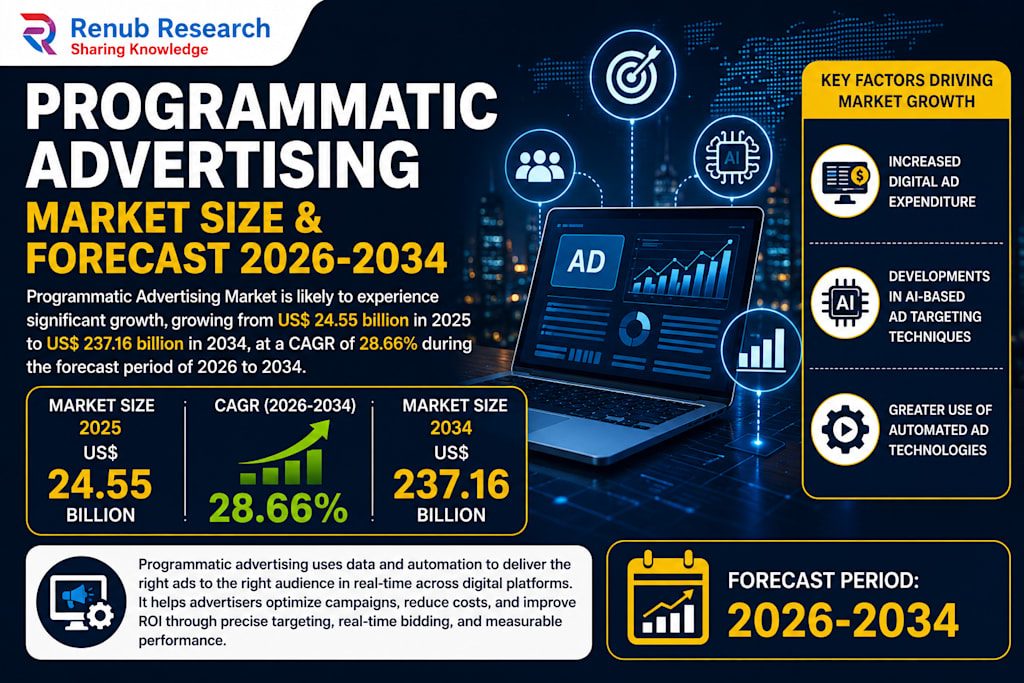
The global advertising industry is undergoing a massive transformation as brands increasingly move away from traditional media buying and embrace automated, data-driven digital marketing solutions. At the center of this shift is programmatic advertising, a technology-powered system that automates the buying and selling of online ad space using artificial intelligence, machine learning, and real-time bidding systems. According to Renub Research, the global programmatic advertising market is projected to grow dramatically from US$ 24.55 billion in 2025 to US$ 237.16 billion by 2034, expanding at an impressive compound annual growth rate (CAGR) of 28.66% during 2026–2034. The market’s extraordinary growth is being driven by rising digital ad spending, advances in AI-powered targeting technologies, and the rapid expansion of digital media consumption worldwide.
Programmatic Advertising Is Reshaping Digital Marketing
Programmatic advertising refers to the automated process of purchasing and selling online advertising space using sophisticated technologies such as artificial intelligence, machine learning, and real-time bidding (RTB). Unlike traditional advertising methods that require manual negotiations and insertion orders, programmatic systems use data-driven algorithms to deliver advertisements to the right audience at the right moment.
This technology has become increasingly important as digital media consumption continues expanding globally. Consumers now spend enormous amounts of time browsing websites, using mobile apps, streaming video content, and interacting with social media platforms. In response, advertisers are redirecting larger portions of marketing budgets toward digital channels that offer better targeting, measurement, and return on investment.
Programmatic advertising also provides advertisers with greater transparency and real-time campaign monitoring capabilities. Marketers can analyze performance instantly, optimize spending, and adjust campaigns dynamically based on user behavior and engagement.
As digital transformation accelerates across industries, automated advertising technologies are becoming essential tools for modern marketing strategies.
Explosive Growth in Digital Media Consumption Is Fueling Demand
One of the strongest drivers behind the programmatic advertising market is the rapid expansion of digital media consumption worldwide. Increasing internet access, smartphone adoption, and mobile connectivity have fundamentally changed how people consume information and entertainment. Consumers now spend significant portions of their daily lives online, engaging with websites, social media platforms, video-streaming services, gaming applications, and digital content ecosystems.
This shift is forcing advertisers to allocate larger budgets toward digital advertising channels capable of reaching audiences across multiple devices and platforms simultaneously. Programmatic technologies allow brands to target users based on behavioral data, interests, demographics, browsing patterns, and engagement history, improving campaign effectiveness and reducing wasted advertising spend.
The growth of online video consumption is particularly important. According to the November 2024 Ericsson Mobility Report referenced in the market analysis, global data consumption is projected to rise by approximately 21% year over year because of growing demand for video content.
The constant connectivity enabled by smartphones and mobile internet access means consumers can now interact with digital content anytime and anywhere, creating enormous opportunities for advertisers using automated targeting systems.
Artificial Intelligence Is Revolutionizing Ad Targeting
Advancements in artificial intelligence and data analytics are dramatically improving the effectiveness of programmatic advertising systems. AI-powered platforms can process massive volumes of user data in real time, enabling highly personalized advertising experiences tailored to individual preferences and behaviors.
Machine-learning algorithms continuously analyze campaign performance and user interactions, optimizing ad placement and targeting automatically. This allows advertisers to improve engagement rates, increase conversions, and maximize return on investment more efficiently than traditional advertising methods.
The growing importance of first-party data is also reshaping the industry. As privacy regulations limit the use of third-party cookies, advertisers are increasingly relying on customer data platforms (CDPs) and data management platforms (DMPs) to develop more accurate audience insights while maintaining compliance with data-protection laws.
Innovation in AI-powered advertising technology continues accelerating. In February 2026, PubMatic introduced “AI Insights,” a new AI-driven solution designed to help publishers analyze demand dynamics and improve revenue opportunities.
These technological improvements are making programmatic advertising more precise, efficient, and scalable across industries.
Omnichannel Marketing Strategies Are Driving Market Expansion
The growing adoption of omnichannel advertising strategies is another major factor contributing to programmatic market growth. Modern consumers interact with brands across multiple platforms including desktop websites, mobile applications, connected televisions, social media, digital billboards, and streaming services.
Programmatic technology enables advertisers to manage campaigns centrally across all these channels while maintaining consistent messaging and brand experiences. Marketers can monitor campaign performance in real time and quickly adjust strategies based on audience behavior and engagement metrics.
Cross-channel data integration also allows brands to understand customer journeys more accurately, improving audience targeting and personalization capabilities.
In October 2025, more than 20 organizations including Yahoo, PubMatic, Optable, Scope3, and Triton Digital launched the Ad Context Protocol (AdCP), a system designed to standardize AI-based programmatic trading and improve transparency across fragmented publisher ecosystems.
The continued rise of omnichannel consumer behavior is expected to keep programmatic advertising at the center of modern digital marketing strategies.
Privacy Regulations Are Creating New Challenges
Despite rapid growth, the programmatic advertising industry faces significant challenges related to data privacy and regulatory compliance. Laws such as the European Union’s General Data Protection Regulation (GDPR) and California Consumer Privacy Act (CCPA) have introduced strict limitations on how companies collect, store, and use consumer data.
Restrictions on third-party cookies and tracking technologies are forcing advertisers to rethink traditional targeting approaches. Compliance with privacy regulations often increases operational complexity and costs for companies operating within the digital advertising ecosystem.
In response, businesses are increasingly investing in first-party data strategies, building direct customer relationships and developing proprietary data ecosystems. However, creating reliable first-party data infrastructure requires time, resources, and technological expertise.
Balancing personalization with privacy protection is becoming one of the most important strategic issues facing the future of programmatic advertising.
Ad Fraud and Transparency Issues Continue to Concern Advertisers
Ad fraud remains another major concern within the programmatic advertising industry. Fraudulent activities such as bot traffic, click fraud, fake impressions, and domain spoofing can result in substantial financial losses for advertisers.
The highly automated nature of programmatic advertising sometimes makes it difficult to detect fraudulent activity within complex supply chains involving multiple intermediaries. Limited transparency regarding ad placement and budget allocation can also create trust issues between advertisers, publishers, and technology providers.
To address these problems, companies are investing heavily in advanced fraud-detection algorithms, blockchain technologies, verification tools, and supply-chain transparency initiatives.
Improving accountability and transparency will remain critical for sustaining long-term confidence in automated advertising systems.
Movement-Based Advertising Is Creating Hyper-Targeted Campaigns
Programmatic movement-based advertising is emerging as one of the more innovative segments of the market. This approach uses location data, GPS systems, geofencing, and mobile-device tracking to deliver advertisements based on consumer movement patterns and physical proximity to specific locations.
Retailers, travel companies, hospitality brands, and event organizers are increasingly using movement-based advertising to target users in shopping malls, airports, entertainment venues, and urban centers.
The rapid growth of smartphones and location-aware devices is making this form of highly contextual advertising more effective and scalable.
Real-Time Bidding Remains the Core of Programmatic Advertising
Real-time bidding (RTB) remains one of the foundational technologies within the programmatic advertising ecosystem. RTB enables advertisers to bid for ad impressions in milliseconds through automated auctions, ensuring ads are shown to highly relevant audiences at optimal moments.
These systems use data such as demographics, browsing history, device information, and behavioral patterns to determine the value of individual impressions instantly.
Compared to traditional advertising negotiations, RTB offers greater efficiency, reduced waste, and more precise targeting, making it one of the most widely adopted programmatic advertising models globally.
Mobile Advertising Is Becoming the Dominant Segment
The rapid expansion of smartphones and mobile internet usage is driving explosive growth in programmatic mobile advertising. Mobile devices have become the primary platform through which consumers access digital content, social media, streaming services, and online shopping experiences.
Programmatic platforms allow advertisers to purchase mobile ad inventory across applications, websites, and in-app environments while leveraging advanced targeting capabilities based on location, app usage, and device data.
The continued rollout of 5G technology is expected to further accelerate mobile programmatic advertising by improving connectivity speeds and supporting richer ad formats such as interactive video and augmented reality experiences.
Display Advertising Still Holds Strong Value
Display advertising continues to play a major role within the programmatic ecosystem. Banner ads, image ads, and rich media formats remain highly effective for building brand awareness and customer acquisition campaigns.
Dynamic creative optimization technologies now allow advertisers to personalize display ads based on individual user preferences and browsing behaviors, increasing engagement and relevance.
Retargeting strategies enabled through display advertising also remain highly valuable for reconnecting with users who have previously interacted with brands online.
Healthcare Advertising Is Becoming More Digital
Healthcare organizations, pharmaceutical companies, and wellness brands are increasingly using programmatic advertising to deliver personalized educational content and targeted marketing campaigns.
Programmatic healthcare campaigns can target users based on demographics, health interests, online activity, and behavioral patterns while helping organizations improve awareness regarding diseases, treatments, and preventive care.
Because healthcare advertising involves sensitive consumer information, strong data-protection compliance remains especially important within this segment.
Regional Markets Continue to Expand Rapidly
The United States remains the most developed programmatic advertising market globally because of high digital ad spending, advanced technological infrastructure, and widespread adoption of automation platforms. Advertisers across the U.S. actively use AI, customer data platforms, connected TV advertising, and digital out-of-home channels to deliver highly personalized campaigns.
In March 2026, healthcare media company Haymarket Media announced the launch of HayloARC, a healthcare-focused demand-side platform designed to improve targeting using deeply integrated first-party publisher data.
The United Kingdom also maintains a highly developed programmatic ecosystem supported by strong digital infrastructure and widespread internet adoption. Advertisers across sectors increasingly rely on omnichannel and data-driven advertising strategies despite stricter privacy regulations under GDPR.
India represents one of the fastest-growing programmatic advertising markets due to rising smartphone penetration, expanding internet usage, and rapid digitalization. Mobile-first consumers, regional-language content platforms, and increasing social media engagement are driving strong demand for targeted advertising solutions.
Saudi Arabia’s market is also growing steadily as digital transformation initiatives and Vision 2030 investments strengthen the country’s media and advertising infrastructure. Mobile advertising and digital out-of-home formats are becoming increasingly important across the region.
Major Companies Continue Competing Through Innovation
The global programmatic advertising market includes major technology and media companies competing through AI innovation, audience data capabilities, ad-platform performance, and cross-channel integration. Key companies covered in the market analysis include Alphabet Inc. (Google LLC), Meta (Facebook), Amazon.com Inc., Microsoft, Alibaba Group Holding Limited, Adobe, and The Trade Desk.
Competition is driving continued innovation in targeting technologies, fraud prevention systems, campaign optimization, and omnichannel advertising platforms.
Final Thoughts
The global programmatic advertising market is transforming how brands communicate with consumers in an increasingly digital world. Automation, artificial intelligence, and real-time data analysis are allowing advertisers to deliver more personalized, efficient, and measurable campaigns than ever before.
While challenges related to privacy regulations, transparency, and ad fraud remain significant, technological innovation and growing digital media consumption continue pushing the industry forward at remarkable speed.
With the market expected to surge beyond US$ 237.16 billion by 2034, programmatic advertising is poised to remain one of the most influential technologies shaping the future of global marketing and digital communication.
About the Creator
Enjoyed the story? Support the Creator.
Subscribe for free to receive all their stories in your feed.
Comments
There are no comments for this story
Be the first to respond and start the conversation.