
Productive Hacks for Employees in AI Trend 2026
30+ Proven Strategies to 10x Your Efficiency, Stay Ahead, and Thrive in the AI-Powered Workplace

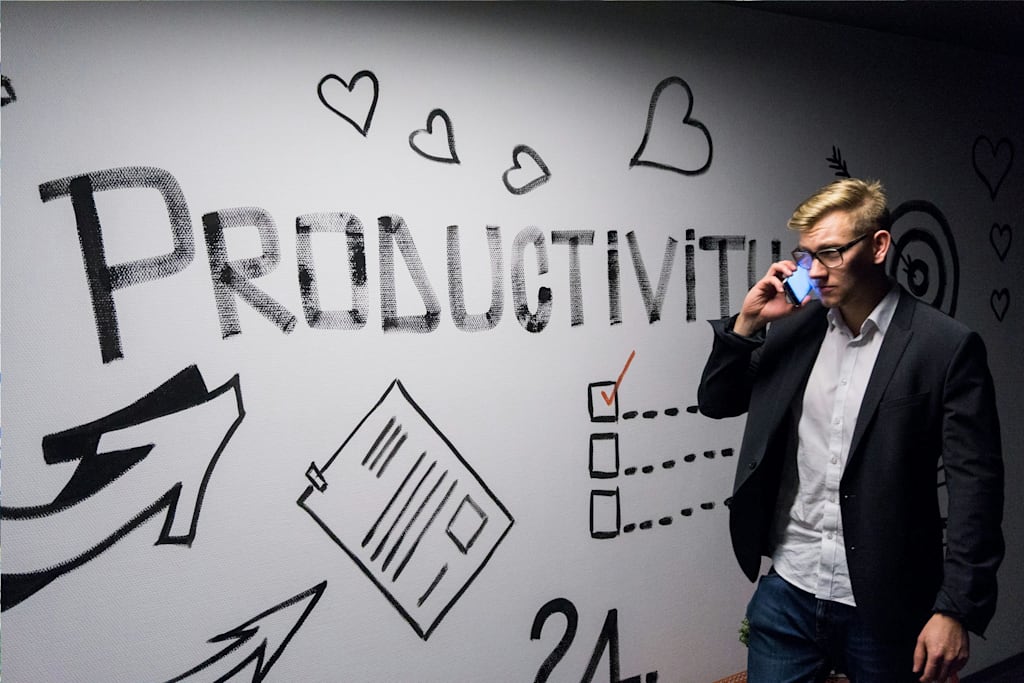
In 2026, artificial intelligence is no longer a futuristic buzzword—it's the backbone of daily work for millions of employees across industries. From agentic AI systems that autonomously handle complex workflows to multimodal models that process text, images, and voice seamlessly, the AI trend dominating workplaces is delivering measurable gains: enterprise users save 40–60 minutes per day, with many reporting up to 40% productivity boosts. Yet, despite widespread adoption (91% of businesses now use AI), most employees still struggle to translate access into real results. The gap isn't in the technology—it's in the productive hacks that turn AI from a novelty into a superpower.
This comprehensive guide delivers over 30 actionable productive hacks tailored for employees navigating the 2026 AI landscape.
Whether you're in marketing, software engineering, HR, finance, or operations, these strategies are designed to help you reclaim time, elevate output quality, and future-proof your career. Backed by the latest data from Goldman Sachs, PwC, Microsoft Research, and Deloitte, each hack includes step-by-step implementation, real-world examples, expected ROI, and pitfalls to avoid. By the end, you'll have a complete playbook to master AI trends while maintaining the human edge that machines can't replicate.

Why Productive Hacks Matter More Than Ever in the 2026 AI Trend
AI adoption has skyrocketed, but results remain uneven. Only 20% of organizations capture 74% of AI's economic value, while the rest stay stuck in pilot mode. Employees who actively deploy productive hacks see outsized benefits: 92% of workers report AI boosts their productivity, frequent users (7–10% of work hours in AI tools) hit 95% productivity rates, and AI-proficient professionals command up to 56% wage premiums.
The 2026 AI trend emphasizes agentic AI—autonomous agents that plan, execute, and adapt—alongside human-AI "centaur" collaboration, where you guide AI like a high-performance teammate. Trends from HBR and Gartner highlight shifting from experimentation to measurable ROI, with focus on growth, innovation, and avoiding "workslop" (polished but inaccurate AI output). Organizations integrating AI deeply report 4.8x faster labor productivity growth.
The hacks below are categorized for easy adoption: daily workflows, communication & collaboration, learning & skill-building, automation & agents, personal well-being, and advanced strategies. Start with 3–5 that fit your role, track results for two weeks, and scale. Most require zero coding—just smart prompting and free or low-cost tools like ChatGPT Enterprise, Claude, Gemini, Notion AI, or Zapier.
Section 1: Daily Workflow Productive Hacks (Reclaim 1–2 Hours Daily)
Hack 1: Master the 4-Part Prompt Framework for Instant High-Quality Output
Generic prompts yield generic results. In 2026, top performers use a structured framework: Context + Task + Constraints + Format. Example: "You are a senior marketing strategist with 15 years experience [Context]. Analyze this campaign brief and generate 5 headline variations optimized for LinkedIn [Task]. Limit to 10 words each, ensure emotional triggers, and rank by expected CTR [Constraints]. Output in a numbered table with rationale [Format]."
Implementation: Save templates in Notion AI or Claude Projects. Test and iterate. Benefit: Cuts drafting time by 70% while improving quality. Goldman Sachs data shows similar prompting techniques contribute to the 40–60 minute daily savings.
Hack 2: Build a Personal AI Second Brain with NotebookLM or Notion AI
Upload meeting notes, PDFs, emails, and research once—then query your "second brain" for summaries, connections, or action items. NotebookLM turns documents into interactive podcasts or study guides.
Step-by-step: Create a dedicated workspace, upload weekly, prompt "Synthesize key insights and flag 3 follow-ups." Result: Never hunt for info again; executives using this hack report reclaiming 5+ hours weekly on research.
Hack 3: AI-Powered Task Prioritization with Motion or Reclaim AI
Instead of manual to-do lists, feed your calendar, emails, and goals into AI schedulers. They auto-prioritize, block focus time, and reschedule dynamically.
Pro tip: Integrate with Google Calendar + Gemini. Employees in the 7–10% AI usage sweet spot see 95% productivity peaks.
Hack 4: Voice-First Capture with Wispr Flow or Granola AI
Speak ideas during commutes or walks—AI transcribes, summarizes, and turns them into tasks or drafts. Perfect for non-desk roles. Saves 30–45 minutes daily on note-taking.
Hack 5: Eliminate Context Switching with Browser-Based AI Agents (Comet or Perplexity)
Use AI browsers that research, summarize tabs, and compile reports without leaving the window. One prompt replaces 10 tabs and 20 minutes of manual searching.
Section 2: Communication & Collaboration Hacks
Hack 6: Instant Meeting Intelligence with Fathom, Fireflies, or Read.ai
Auto-transcribe, summarize, extract action items, and generate follow-up emails. 2026 trend: AI now flags sentiment and decision confidence.
ROI: Teams reclaim 2–3 hours per week; 87% report efficiency gains.
Hack 7: AI Email Zero-Inbox System
Use Claude or Gemini to batch-process inbox: categorize, draft replies, and schedule. Prompt: "Prioritize by urgency, draft responses in my professional tone." Reduces email time by 50%.
Hack 8: Collaborative Centaur Workflows
You handle strategy; AI drafts slides (Plus AI), analyzes data (Julius AI), or iterates designs. Microsoft research shows this hybrid approach shifts roles from execution to high-judgment oversight.
Section 3: Learning & Skill-Building Productive Hacks
Hack 9: Accelerated Skill Acquisition with Custom AI Tutors
Create a custom GPT or Claude project as your personal coach: "Act as a senior data analyst mentor. Review my SQL query and explain improvements." World Economic Forum notes 39% of core skills will change by 2030—AI bridges the gap faster than courses.
Hack 10: AI-Powered Knowledge Hubs in Notion or ClickUp AI
Auto-generate SOPs, wikis, and training modules from meeting recordings. HR teams using this cut onboarding time dramatically.
Hack 11: Daily Micro-Learning Prompts
Set AI to deliver 5-minute daily briefs: "Summarize latest AI trends in my industry with 3 actionable takeaways." Keeps you ahead without overwhelm.
Section 4: Automation & Agentic AI Hacks (The 2026 Game-Changer)
Hack 12: Deploy Personal AI Agents with Zapier Agents or n8n
Build agents that handle end-to-end workflows: e.g., "When email from client arrives, extract requirements, create task in ClickUp, notify team, and draft proposal." Agentic AI now reliably completes 30+ minute human tasks.
Hack 13: Multi-Step Automation Chains
Chain tools: Email → AI summary → CRM update → Calendar block. Top 5 automation hacks include repetitive task elimination, yielding double-digit throughput gains.
Hack 14: Contract & Finance AI Review
Use Claude for redlining contracts or multi-way invoice matching—tasks once reserved for juniors now handled in minutes.
Section 5: Personal Well-Being & Sustainability Hacks
Hack 15: AI Stress & Focus Guardian (AdaptAI or Similar)
Tools track behavior and suggest breaks or automate low-energy tasks. Prevents burnout in always-on AI environments.
Hack 16: "Calm Productivity" Protocol
Use AI to batch deep work, then enforce no-AI reflection time. Counter intuitive but essential—productivity isn't just speed.
Hack 17: Avoid Workshop with Human-in-the-Loop Verification
Always prompt AI for sources + confidence score, then spend 20% of saved time reviewing. Microsoft warns 40% of employees encounter low-quality AI output.
Section 6: Advanced Productive Hacks for Power Users
Hack 18–30:
- Multi modal content creation (text-to-video with tools like Runway or Kling).
- Predictive analytics in spreadsheets via Copilot.
- SEO/content calendars auto-generated in Jasper or Anyword.
- Personal brand AI: Generate LinkedIn posts from weekly wins.
- Cross-department knowledge sharing agents.
- Ethical AI governance checklists.
- Quarterly AI skill audits using self-prompting.
- Revenue-focused hacks: AI lead scoring and proposal personalization.
- Integration hacks: Samsung Galaxy AI for on-device productivity.
- Open-source alternatives (n8n) for cost control.
- Measurement dashboard: Track time saved weekly via ActivTrak-style tools.
- Team-wide hack sharing sessions.
- Future-proofing: Experiment with emerging models quarterly.
Each advanced hack builds on the centaur model—AI handles volume, you provide judgment—delivering 25–33% efficiency uplifts per McKinsey and company data.
Implementation Roadmap: From Beginner to AI Power User in 30 Days
Week 1: Pick 5 foundational hacks (prompting, second brain, meetings).
Week 2: Add automation (1–2 agents).
Week 3: Integrate well-being and verification.
Week 4: Measure and scale—use AI to analyze your own productivity logs.
Pro tip: Dedicate 7–10% of your workweek to AI tools for peak results. Track with simple spreadsheets or built-in analytics.
Common Pitfalls & How to Avoid Them
Over-reliance leading to skill atrophy: Always retain final human approval.
Tool sprawl: Limit to 5–7 core tools.
Equity gaps: Advocate for company-wide training.
Data privacy: Use enterprise versions with SOC-2 compliance.
Organizations forcing AI without support create division; those framing it as augmentation see retention and satisfaction soar.
The Future of Work: Your Competitive Edge Starts Today
By 2026, AI isn't replacing jobs—it's redefining them. Employees who master these productive hacks shift from task-doers to value-creators, commanding higher pay and more fulfilling roles. PwC data shows AI-exposed sectors growing faster, with human expertise mattering more than ever.
Start implementing today. Your future self—and your career—will thank you.

FAQ: Productive Hacks for Employees in AI Trend 2026
Q1: What are the top 3 productive hacks every employee should start with in 2026?
A: 1) The 4-part prompt framework, 2) AI meeting summarizers, 3) Personal second brain. These deliver the fastest 40–60 minute daily time savings.
Q2: Do I need coding skills to use agentic AI hacks?
A: No. No-code platforms like Zapier Agents and Claude Artifacts let anyone build powerful automations.
Q3: How much time can I realistically save with these productive hacks?
A: Average 40–60 minutes daily per Goldman Sachs; power users report 5–9+ hours weekly.
Q4: Which free AI tools should I prioritize?
A: Claude (reasoning), Perplexity (research), NotebookLM (second brain), Gemini (Workspace integration).
Q5: How do I avoid AI workslop and maintain quality?
A: Use verification prompts, confidence scoring, and allocate 20% review time.
Q6: Will these hacks make me replaceable?
A: Opposite. AI-augmented employees are more valuable—human judgment + AI speed creates irreplaceable centaurs.
Q7: How can teams implement productive hacks organization-wide?
A: Start with pilot programs, share templates, measure ROI via productivity dashboards.
Q8: What AI trends should I watch for late 2026?
A: Deeper agentic autonomy, people data as strategic asset, and measurable EBIT impact from AI.
Q9: Are these hacks suitable for non-tech roles?
A: Absolutely—HR, sales, operations, and creative fields see the biggest gains from communication and automation hacks.
Q10: How do I measure ROI from productive hacks?
A: Track time saved (RescueTime), output volume/quality, and personal energy levels weekly.
About the Creator
Sujan Pariyar
Sujan Pariyar is an accomplished international writer. He interview highly successful people from all around the world and write content to inspire young entrepreneurs.
Enjoyed the story? Support the Creator.
Subscribe for free to receive all their stories in your feed.
Comments
There are no comments for this story
Be the first to respond and start the conversation.