
Privacy Filter Market Size Is Set to Hit $3.38 Billion by 2035
From airport lounges to hospital corridors, demand for screen privacy is reshaping a quiet corner of consumer tech.
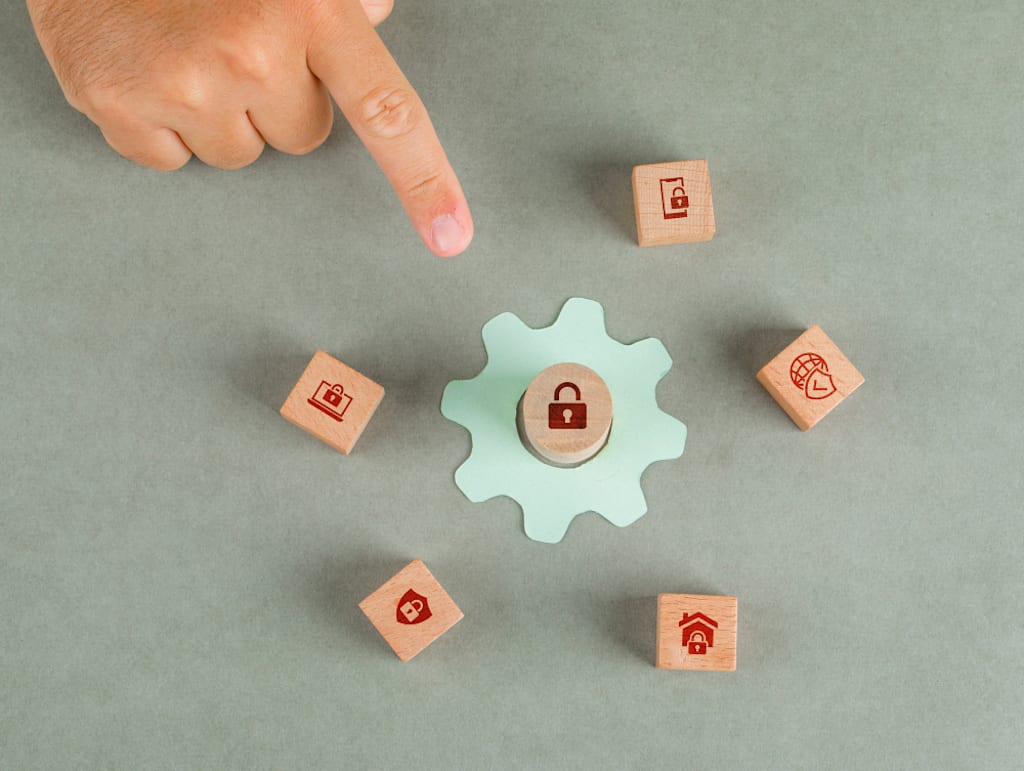
The Stranger Next to You Can See Your Screen. A Billion-Dollar Industry Is Betting on That Fear.
The person sitting beside you at the airport gate almost certainly glanced at your laptop screen. Maybe it was idle curiosity. Maybe it wasn't. Either way, the global market built to stop that from happening is growing faster than most people realize. Privacy Filter Market Size projections point to an industry valued at $1.29 billion in 2025 — and on track to more than double to $3.38 billion by 2035. That's a compound annual growth rate of 10.12%, driven not by novelty but by a very human anxiety: the creeping awareness that screens are not private by default.
A breakdown of the segments, regional drivers, and competitive players behind this expansion is available in this privacy filter industry market overview.
The Shoulder Surfing Problem Nobody Talks About
There's a term in data security circles: shoulder surfing. It refers to someone simply looking over — or beside — you to read confidential information off your screen. It sounds almost too mundane to worry about. But in an era where financial analysts process proprietary trading data at WeWork desks, and clinicians pull up patient records on tablets in busy hospital corridors, mundane has become a real liability.
Corporate offices lead adoption with a 40.86% share of end-user demand. Healthcare facilities and financial services firms follow close behind — both sectors operating under strict regulatory frameworks. HIPAA in the United States and GDPR across Europe don't just encourage physical privacy measures; in practice, they create organizational pressure to document them. Procurement teams at major banks and hospital networks have begun treating privacy filters the same way they treat password managers: standard issue.
What the Technology Actually Does
Most people picture privacy filters as a darkened plastic sheet you slap over a laptop screen. The category has grown well past that. Microlouver film filters — thin overlays using micro-blind structures to block off-axis light — currently hold a 57.41% share of the material technology segment. They work by restricting the viewing angle to roughly 30 to 45 degrees, so only the person sitting directly in front of the screen can see content clearly.
The newer entrants are more interesting. Electrochromic switchable filters let users toggle between privacy mode and full transparency electronically — no physical removal needed. Nanotechnology-based versions offer thinner profiles and better optical clarity. And 3M, whose MicroLouver optical film essentially defined the category, remains the dominant name across enterprise and retail distribution channels globally.
Kensington took a different angle in June 2025, launching privacy screen filters embedded with Eyesafe® technology — combining viewing-angle restriction with blue light filtration. It's a sign of where the privacy filter market growth is heading: toward multi-function accessories that solve more than one problem at once.
Asia Pacific Enters the Frame
North America commands the largest regional share at 34.71%, or roughly $450 million in 2025. But Asia Pacific is the fastest-growing region, and the reasons aren't surprising. Rapid digitalization, surging smartphone penetration, and expanding corporate infrastructure across China, India, Japan, and South Korea are all pulling in the same direction. Online retail channels are closing the gap between product availability in major metros and secondary cities, opening a consumer base that barely existed five years ago.
India deserves a specific mention. Brands like Lapcare have built meaningful market share by targeting the price-sensitive end of the spectrum — affordable accessories distributed through domestic retail and e-commerce networks. The premium filter brands set the category standards; the mid-tier manufacturers are the ones scaling volume.
The Next Frontier: Filters That Disappear Into the Device
The most telling development in recent months came from Samsung. In February 2026, the company unveiled a Privacy Display feature baked into the Galaxy S26 Ultra, allowing users to restrict screen visibility directly from device settings — no physical accessory required. If that functionality migrates to mainstream smartphones and laptops at scale, it will fundamentally reshape what aftermarket filters are competing against.
Manufacturers are already responding. Magnetic removable designs that attach and detach without adhesives are gaining ground. Custom-fit filters — built to exact screen dimensions for specific device models — are becoming the premium tier's preferred format. The trajectory suggests a market that won't simply keep selling the same product in larger volumes, but one that's racing to stay relevant as the devices themselves evolve. Privacy, it turns out, is no longer just a software setting or a legal obligation. It's becoming a design feature — and a competitive one.
About the Creator
Mark K. Belton
I’m Mark K. Belton, 26 years old, currently working as a Digital Marketing Intern. I have a strong interest in digital marketing and have been developing my skills in SEO, social media marketing, content creation, and online campaign
Enjoyed the story? Support the Creator.
Subscribe for free to receive all their stories in your feed.
Comments
There are no comments for this story
Be the first to respond and start the conversation.