
Pin Insertion Machine Market Nears $446M by 2035
Driven by EVs and IoT growth, the global pin insertion machine industry is expanding at a 6.4% CAGR through 2035.
The Quiet Machine That Keeps Modern Electronics Alive
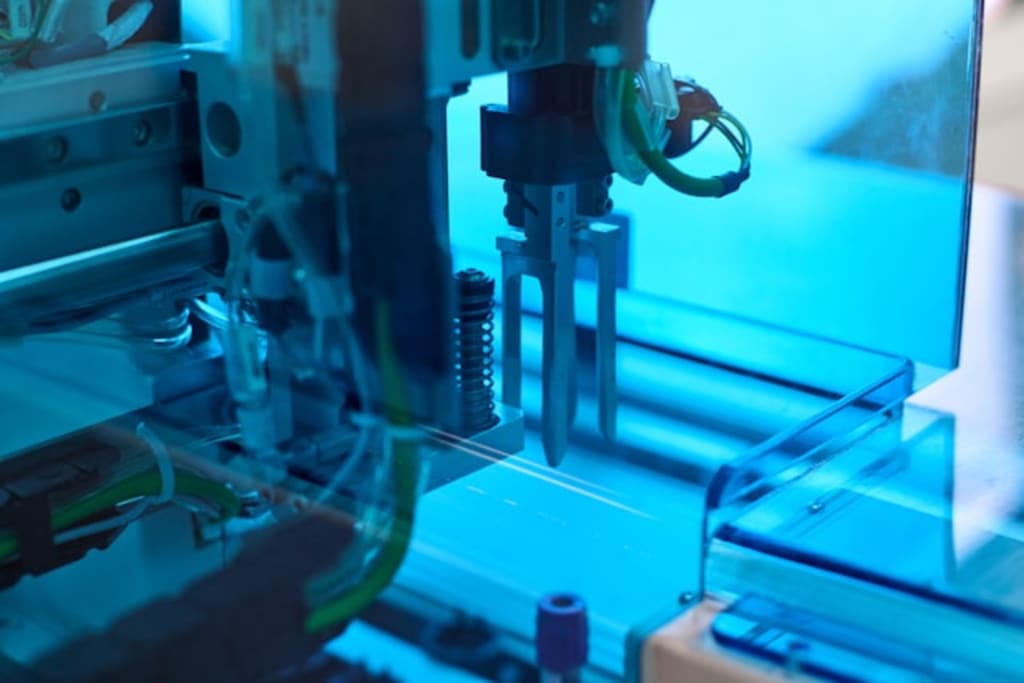
Walk into any facility that assembles printed circuit boards — in Taiwan, Shenzhen, or Guadalajara — and somewhere near the end of a long production line, there's a piece of equipment most people couldn't name. It holds no branding on the finished product. It earns no profile in technology journalism. But without it, the connector pins inside your laptop, your car's infotainment system, and the control boards of industrial equipment would be placed by hand — slowly, inconsistently, and expensively. The pin insertion machine is infrastructure. And it's growing fast.
The global Pin Insertion Machine Market size stood at approximately USD 239.7 million in 2025 and is projected to nearly double, reaching USD 445.7 million by 2035 — a compound annual growth rate of 6.4%. For a segment of capital equipment this specific, that's a striking trajectory. Detailed segmentation data, including regional and application breakdowns, is available in this pin insertion machine market industry overview.
Why Connectors Are Having a Moment
The demand signal is coming from several directions at once. Electric vehicles require far more connector interfaces than their combustion-engine predecessors — harnesses for battery management systems, charging controllers, and sensor arrays multiply the number of pins per vehicle significantly. At the same time, the proliferation of IoT devices in both consumer and industrial settings has pushed PCB assembly volumes higher across dozens of sectors. None of those boards assemble themselves.
Automotive has become one of the clearest growth drivers. A modern EV from manufacturers like BYD or Volkswagen Group contains hundreds of individual electronic control units, each requiring reliable, precisely-seated connector pins. Manual insertion at that scale isn't just slow — it introduces variance that downstream quality checks catch at significant cost. Automated pin insertion eliminates that variability. The economics are not subtle.
Asia-Pacific Anchors the Supply Chain
China and Japan remain the center of gravity for both demand and production capacity. China's electronics manufacturing ecosystem — including the dense supplier networks around Shenzhen and Suzhou — keeps domestic demand for this equipment robust. Japan's contribution is different: companies such as Yazaki and TE Connectivity's Asian operations depend on precision insertion equipment to maintain the connector quality tolerances that automotive OEMs specify.
South Korea and Taiwan add another layer. Semiconductor packaging and display manufacturing in both countries requires pin insertion for test sockets and interface boards — lower-volume applications per product type, but high-frequency production runs that keep machine utilization rates elevated. The Pin Insertion Machine Market share in Asia-Pacific reflects this density, with the region accounting for the largest portion of global revenue. Europe follows, driven by Germany's automotive electronics supply chain and the broader push toward vehicle electrification across the EU.
The Automation Pressure Underneath Everything
Labor cost differentials that once made manual assembly viable in lower-wage markets are compressing. Minimum wage increases across Southeast Asia, combined with rising expectations for defect rates, have shifted the math even in markets where automation capital seemed hard to justify. A machine that seats 3,000 pins per hour with sub-millimeter accuracy doesn't just replace labor — it removes a category of defect.
Software integration is the next front. Newer pin insertion systems increasingly accept digital work order inputs directly from CAD files and ERP systems, eliminating the manual programming step that once made changeovers slow. For contract manufacturers handling short-run, high-mix production, that flexibility matters considerably. It's the difference between a machine that serves a few product families and one that can pivot daily.
The Decade Ahead
The forces pushing this market forward are structural, not cyclical. Defense electronics spending is rising in Europe and Asia, and military-grade PCBs require the kind of precision insertion that can't be sourced from general automation. Medical device manufacturing, similarly, is subject to quality standards that essentially mandate automated insertion for anything going into diagnostic or monitoring equipment. Neither of those demand pools retreats when consumer electronics slow.
As miniaturization continues — with connector pitches shrinking and board densities increasing — the machines doing this work will need to evolve alongside the components they handle. The manufacturers that invest in vision-guided placement and adaptive force control now are positioning for a production environment where tolerances leave no room for yesterday's equipment. The pin insertion machine has always been essential. It's becoming harder to ignore.
About the Creator
Mark K. Belton
I’m Mark K. Belton, 26 years old, currently working as a Digital Marketing Intern. I have a strong interest in digital marketing and have been developing my skills in SEO, social media marketing, content creation, and online campaign
Enjoyed the story? Support the Creator.
Subscribe for free to receive all their stories in your feed.
Comments
There are no comments for this story
Be the first to respond and start the conversation.