
Petrochemicals Market Benefits from Sustainable Production Trends
How sustainability initiatives, circular economy practices, and recycling innovations are transforming production strategies and environmental performance across the petrochemicals industry

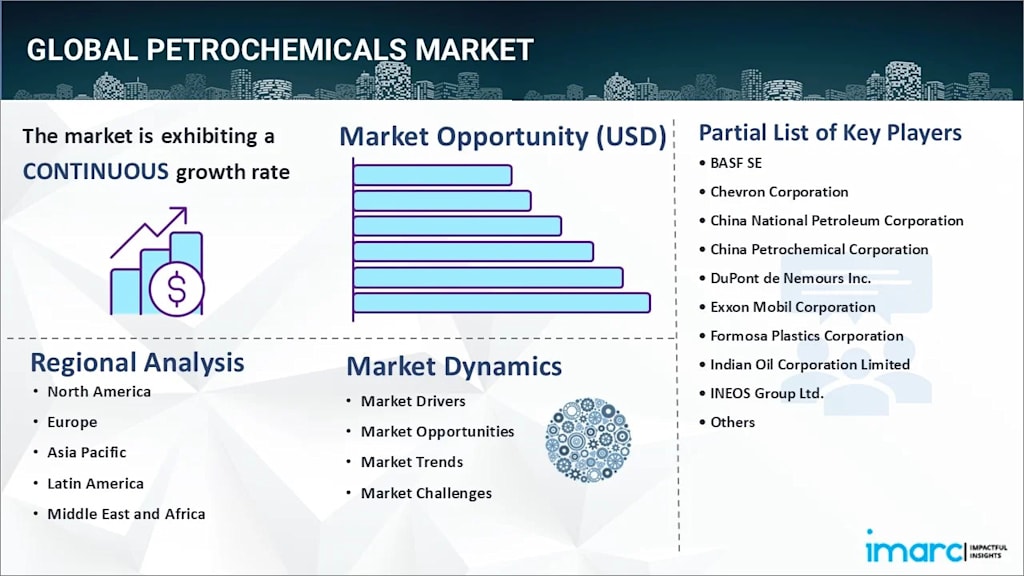
Rising demand for plastics, expanding industrial infrastructure, and expanding applications across automotive and construction sectors are driving petrochemical demand, supported by technological advancements, widespread consumption of derivatives, and growing investments in high-scale production facilities. According to IMARC Group’s latest data, The global petrochemicals market size was valued at USD 675.7 Billion in 2025. Looking forward, IMARC Group estimates the market to reach USD 996.1 Billion by 2034, exhibiting a CAGR of 4.40% from 2026-2034.
The petrochemical industry has established itself as a cornerstone of the modern global economy, with its overall market footprint reaching hundreds of billions of dollars and maintaining an upward trajectory each year. Derived primarily from crude oil and natural gas, these essential chemical building blocks serve as the foundational inputs for manufacturing an endless array of everyday products. Industrial consumption is fueled by rapid global urbanization, escalating demand for resilient plastics, and the vital integration of synthetic materials into advanced manufacturing pipelines.
Request Detailed Petrochemicals Market Forecasts and Insights!
Petrochemicals Market Growth Drivers:
- Surging Product Demand Across Manufacturing Sectors
Industrial consumption across packaging, automotive, and building sectors heavily relies on downstream petrochemical derivatives to produce everyday items. The massive global automotive manufacturing ecosystem depends heavily on these chemical components to fabricate lightweight body panels, durable bumpers, dashboards, and high-performance synthetic tires. In the construction industry, these inputs are essential for manufacturing resilient PVC piping, high-efficiency insulation, and specialized weatherproofing coatings. Real-world applications like these expand as global manufacturers steadily replace legacy, heavier materials with cost-effective, high-durability polymers to streamline large-scale production pipelines.
- Escalating Need for Modern Lightweight Packaging
The global packaging sector serves as a massive consumer of primary polymers, utilizing petrochemical-derived plastics to meet the needs of modern logistics. Driven by rapid urbanization and the continuous expansion of global e-commerce networks, businesses require highly versatile, cost-effective, and robust packaging materials to safely transport products. Polymers like polyethylene and polypropylene offer superior protective barriers, flexible form factors, and reduced weight compared to traditional paper or glass alternatives. This shifting preference directly translates into widespread industrial usage, ensuring safe food preservation and durable containment across consumer and personal care products.
- Pronounced Influence of Feedstock Volatility
Fluctuations in global crude oil and natural gas prices actively shape the production economics, cost structures, and overall pricing dynamics within the petrochemical industry. Because these hydrocarbon resources serve as the primary feedstocks for manufacturing chemical building blocks, any price shift directly affects operational margins across production facilities worldwide. Chemical companies regularly adapt their commercial strategies, investing heavily in state-of-the-art manufacturing technologies and flexible refining setups to balance raw material expenses. This intense focus on optimizing production lines ensures a steady output of essential intermediate materials despite changing international energy values.
Petrochemicals Market Trends:
- Expansion of Advanced Chemical Recycling
Major chemical producers are investing heavily in advanced, closed-loop chemical recycling technologies to transform plastic waste back into virgin-grade polymers. Driven by evolving industrial preferences for circular economies, leading enterprises are designing innovative recycling systems that break down complex plastic materials into fundamental chemical feeds. For example, prominent industry leaders frequently establish strategic joint ventures to deploy large-scale recycling plants capable of diverting plastic waste away from traditional landfills. This widespread operational pivot enables global manufacturers to secure a reliable stream of high-quality secondary feedstocks while addressing long-term material sustainability goals.
- Strategic Investments in High-Capacity Mega Complexes
The global industrial landscape is experiencing a significant surge in the development of massive, integrated petrochemical hubs designed to maximize production efficiencies. Energy corporations and state-owned enterprises are forming large-scale partnerships to fund multimillion-dollar production plants, such as the major collaborative infrastructure projects deployed across North America and the Middle East. These modern mega-complexes combine upstream refining directly with downstream polymer production on a single, massive site, significantly reducing logistical overhead and energy waste. These integrated facilities ensure a steady supply of basic chemicals like ethylene to satisfy growing industrial consumption.
- Integration of Green Chemistry and Bio-Based Feeds
A noticeable paradigm shift is occurring as companies actively research and adopt bio-based alternatives, including green methanol and bio-ethylene, to complement legacy fossil feedstocks. Driven by long-term strategic planning, chemical firms are modifying existing processing infrastructure to blend agricultural and renewable raw materials into standard manufacturing runs. This evolutionary trend manifests in real-world consumer applications, with brands using bio-derived plastics for electronic enclosures, consumer products, and specialized automotive components. This practical integration allows industrial manufacturers to lower their overall footprint while maintaining identical material performance across critical applications.
Recent News and Developments in Petrochemicals Market
- August 2025: QatarEnergy and Chevron Phillips Chemical Company LLC officially finalized a major agreement to construct the Ras Laffan Petrochemicals Complex for approximately USD 6 billion, aiming to optimize production efficiency and secure long-term chemical output.
- September 2025: A major multinational chemical firm announced a strategic partnership with a regional recycling entity to build an advanced molecular recycling facility, focusing on expanding the availability of high-purity recycled polymers for consumer applications.
- September 2025: A major multinational chemical firm announced a strategic partnership with a regional recycling entity to build an advanced molecular recycling facility, focusing on expanding the availability of high-purity recycled polymers for consumer applications.
Note: If you require specific details, data, or insights that are not currently included in the scope of this report, we are happy to accommodate your request. As part of our customization service, we will gather and provide the additional information you need, tailored to your specific requirements. Please let us know your exact needs, and we will ensure the report is updated accordingly to meet your expectations.
About the Creator
Andrew Sullivan
Hello, I’m Andrew Sullivan. I have over 9+ years of experience as a market research specialist.
Enjoyed the story? Support the Creator.
Subscribe for free to receive all their stories in your feed.
Comments
There are no comments for this story
Be the first to respond and start the conversation.