
Pea Protein Market Outlook: Plant-Based Nutrition Demand and Growth Opportunities
The Pea Protein Market is experiencing strong growth driven by increasing consumer preference for plant-based and sustainable protein sources.

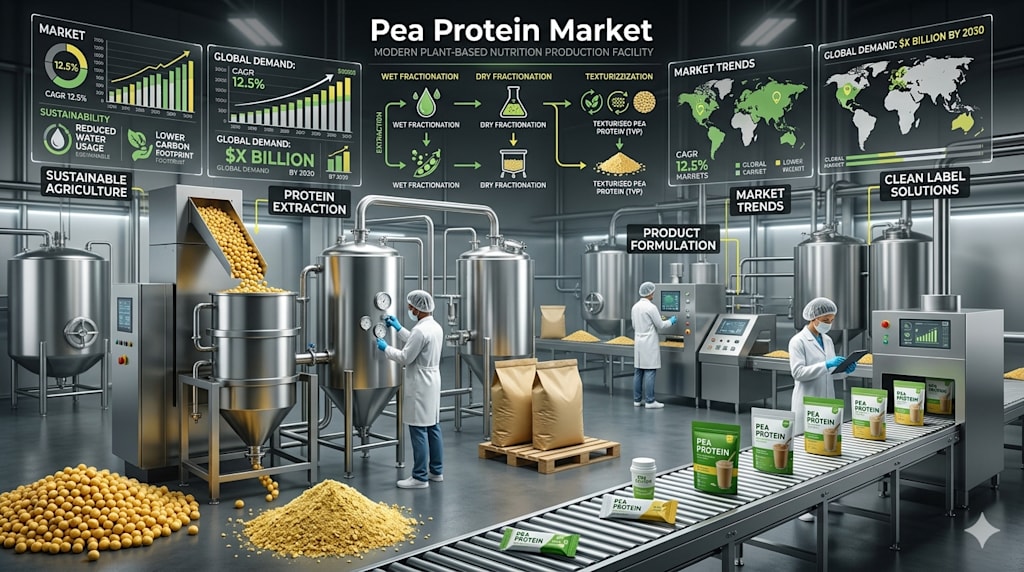
According to IMARC Group's latest research publication, The global pea protein market size reached USD 1,392.5 Million in 2025. Looking forward, IMARC Group expects the market to reach USD 3,834.5 Million by 2034, exhibiting a growth rate (CAGR) of 11.56% during 2026-2034.re
How AI is Reshaping the Future of Pea Protein Market
- Precision Agriculture and Crop Yield Optimization: Machine learning platforms analyze soil data, weather patterns, and pea crop yields to help manufacturers secure consistent raw material supply, cutting procurement uncertainties by up to 30 percent. AI-driven IoT sensors autonomously gather phenotype data throughout growing seasons, enabling farmers to make data-driven decisions improving crop quality.
- Advanced Protein Extraction and Processing Efficiency: AI systems optimize extraction parameters including pH levels, temperature, and solvent ratios in real-time, improving isolate yields and reducing energy consumption across large-scale processing facilities. Machine learning fine-tunes enzymatic and mechanical separation processes, maximizing protein purity while minimizing production costs and environmental impact.
- Predictive Quality Control and Flavor Enhancement: Computer vision systems scan pea batches in real-time for moisture content, foreign particles, and protein purity, ensuring only compliant inputs enter extraction processes. AI-powered sensory analysis tackles pea protein's characteristic earthy flavor challenge, enabling processors to develop improved taste profiles through predictive flavor modeling and formulation optimization.

Pea Protein Industry Overview:
Between January 2021 and March 2023, PropTech startups in India raised approximately USD 2.4 Billion, with 39 growth-stage companies securing USD 2.25 Billion and 69 early-stage startups raising USD 145 Million. Pea protein demonstrates exceptional environmental sustainability as nitrogen-fixing crops, converting atmospheric nitrogen into usable forms and eliminating synthetic fertilizer requirements. Production generates only 0.4 kg CO2 equivalent per kilogram of protein compared to 19.2 kg for beef, representing a 93 percent lower carbon footprint.
Pea Protein Market Trends & Drivers
The explosive growth in plant-based meat alternatives is driving unprecedented demand for pea protein across food manufacturing sectors worldwide. Plant-based meat sales in the United States increased 45 percent, with consumption outstripping supply capabilities as manufacturers scale production to meet consumer preferences. Beyond Meat entered a multi-year supply agreement with Roquette Freres for approximately USD 23.5 Million worth of pea protein through 2027, securing consistent supply for its product portfolio including Beyond Burger IV and Beyond Beef IV featuring pea, brown rice, faba bean, and red lentil protein blends. Pea protein isolates captured 42.66 percent of total market revenue due to excellent emulsification properties and hypoallergenic nature, making them popular in nutritional supplements, energy drinks, fruit mixes, and bakery items.
Rising health consciousness and fitness trends are propelling pea protein adoption across sports nutrition and dietary supplement segments globally. Consumers increasingly engage in regular exercise and adopt healthier lifestyles, driving need for high-quality plant-based protein supporting muscle recovery, growth, and overall wellbeing. Pea protein offers complete amino acid profiles including lysine, arginine, and branched-chain amino acids typically lacking in other plant sources, making it preferred among athletes and fitness enthusiasts seeking vegan protein alternatives. The ingredient remains naturally free from common allergens including soy, dairy, and gluten, addressing dietary restrictions while contributing to muscle development and weight management without saturated fats or cholesterol.
Environmental sustainability mandates and nitrogen-fixing agricultural benefits position pea cultivation as eco-friendly alternative to resource-intensive animal proteins and synthetic fertilizer-dependent crops. Pea production requires 90 percent less water than traditional animal farming and consumes significantly fewer land resources while enriching soil fertility through natural nitrogen fixation, eliminating synthetic fertilizer requirements that contribute 10.6 percent of agricultural and 2.1 percent of global greenhouse gas emissions. Life cycle assessments confirm pea protein generates only 0.3 kg CO2 equivalent per kilogram compared to beef's carbon footprint ranking 60 times higher, enabling food manufacturers to reduce associated carbon emissions by up to 85 percent when substituting animal proteins with pea alternatives.
Leading Companies Operating in the Global Pea Protein Industry:
- Axiom Foods Inc.
- Cosucra-Groupe Warcoing
- Fenchem
- Glanbia Plc
- Naturz Organics
- Nutri-Pea Limited
- Roquette Freres S.A.
- Shandong Jianyuan Foods Co. Ltd.
- Sotexpro SA
- The Scoular Company
Pea Protein Market Report Segmentation:
By Product Type:
- Isolates
- Concentrates
- Textured
Isolates hold the biggest market share since they typically contain the highest protein content, as compared to concentrates.
By Application:
- Dietary Supplements
- Bakery Products
- Meat Substitutes
- Beverages
- Others
Based on the application, the market has been segmented into dietary supplements, bakery products, meat substitutes, beverages, and others.
By End User:
- Retail
- Institutional
Based on the end user, the market has been segmented into retail and institutional.
Regional Insights:
- North America (United States, Canada)
- Asia Pacific (China, Japan, India, South Korea, Australia, Indonesia, Others)
- Europe (Germany, France, United Kingdom, Italy, Spain, Russia, Others)
- Latin America (Brazil, Mexico, Others)
- Middle East and Africa
Europe represents the largest region owing to the implementation of rigorous standards for food labeling, allergens, and genetically modified organisms.
Recent News and Developments in Pea Protein Market
- March 2025: ACI Group, a leading provider of cutting-edge functional ingredients, launched a flexible new selection of pea, soy, and wheat proteins along with a distinct plant-based protein concentrate mixture. This product range targets the increasing need for sustainable, premium proteins, offering solutions suitable for diverse uses from protein bars to meat alternatives, addressing growing demand for allergen-free and clean-label formulations.
- March 2025: Daily Harvest, a company dedicated to simplifying consumption of sustainably-grown fruits and vegetables, announced the release of Organic Pea Protein Powder, an ideal addition for popular smoothies and breakfast bowls. The launch reinforces commitment to pure, straightforward ingredients while addressing increasing customer needs for convenient, high-quality protein choices that align with plant-based lifestyle preferences.
- March 2026: Beyond Meat entered into a multi-year sales agreement with Roquette Freres securing pea protein supply for 2026 and 2027, with aggregate minimum purchase commitment of approximately USD 23.5 Million subject to adjustments for inflation and exchange rates. The agreement establishes Roquette as primary supplier supporting Beyond Meat's long-term growth in the United States and internationally across product portfolios.
- June 2025: Roquette strengthened its NUTRALYS plant protein portfolio with two new textured solutions, launching NUTRALYS T WHEAT 600L textured wheat protein marking the company's entry into textured wheat, and NUTRALYS T PEA 700XC large-chunk textured pea protein with 70 percent protein content. These innovations deliver building blocks for next-generation food experiences supporting manufacturers in creating nutritious, affordable, and sustainable plant-based alternatives.
- July 2025: Protein Industries Canada partnered with Louis Dreyfus Company and Seven Oaks Hospital Chronic Disease Innovation Centre launching pilot project developing new pea protein ingredients and market access opportunities. Louis Dreyfus Company announced production of pea protein isolate at their new Yorkton, Saskatchewan facility currently under construction, expanding Canadian production capacity for domestically-sourced protein alternatives.
Note: If you require specific details, data, or insights that are not currently included in the scope of this report, we are happy to accommodate your request. As part of our customization service, we will gather and provide the additional information you need, tailored to your specific requirements. Please let us know your exact needs, and we will ensure the report is updated accordingly to meet your expectations.
About the Creator
Michael Richard
Michael Richard is a Market Research Expert specializing in market intelligence, competitive analysis, and data-driven insights. He helps organizations understand trends and emerging opportunities through in-depth research.
Enjoyed the story? Support the Creator.
Subscribe for free to receive all their stories in your feed.
Comments
There are no comments for this story
Be the first to respond and start the conversation.