
Paddle Hair Brush Market Is Heading Toward $720 Million by 2035
From drugstore afterthought to a fast-growing global category — here's what's behind the surge.
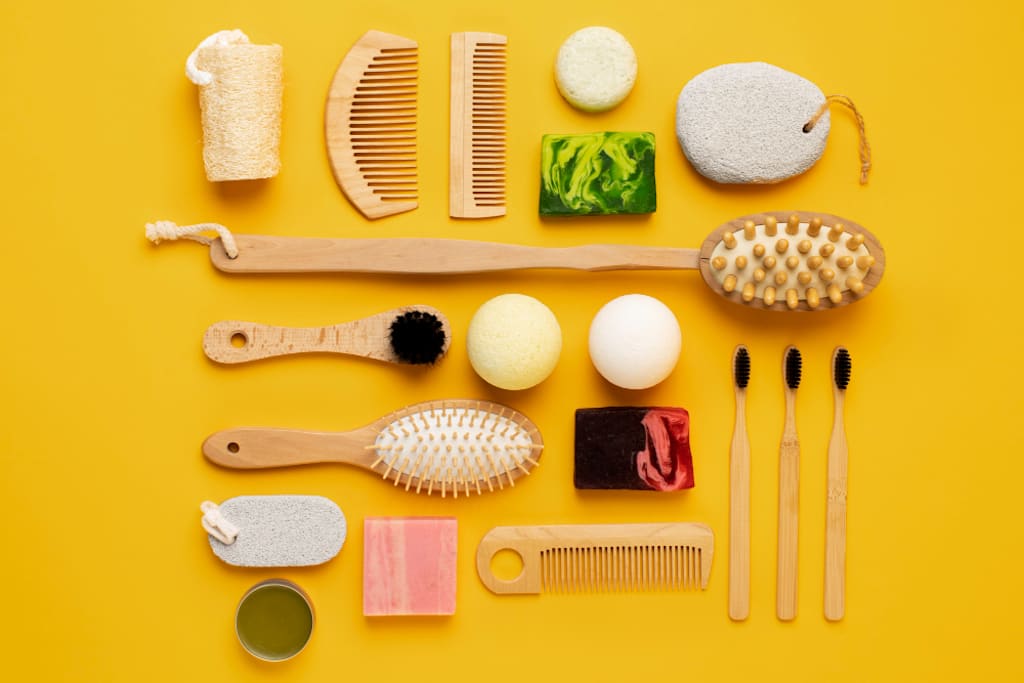
The Humble Paddle Brush Is Quietly Becoming a $720 Million Business
Walk into any Ulta Beauty store in the United States today and count how much shelf space is devoted to paddle brushes. The flat, wide-bodied tools — once considered the utilitarian afterthought of the hair care aisle — have been quietly multiplying. That's not a coincidence. The global Paddle Hair Brush Market Size currently sits at around USD 356 million in 2025 and is on track to more than double to USD 720.1 million by 2035, growing at a compound annual rate of 7.3%. A detailed breakdown of these projections, segment data, and regional trends is available in this paddle hair brush industry overview. For an accessory most people toss into a drawer and forget, that's a remarkable commercial trajectory.
Why the "Basic" Brush Turned Into a Beauty Category
Part of the story is definitional. A paddle brush used to mean one thing: a large, flat cushioned brush for detangling long, straight hair. That's no longer true. Over the past several years, brands have carved the category into subcategories — anti-static versions for color-treated hair, boar-bristle hybrids for adding shine, vented paddle designs for blowouts, and even ergonomically engineered handles aimed at people with limited grip strength. Conair, one of the oldest players in the mass-market personal care space, has expanded its paddle brush SKUs significantly across both its standard and Infiniti Pro lines. Meanwhile, premium players like Mason Pearson — whose brushes run north of $200 — have maintained waiting lists in certain markets, which is a strange thing to say about a brush.
The expansion hasn't been driven by professional salons alone. The real engine is the at-home styling boom that accelerated hard during the pandemic and, contrary to many predictions, never fully reversed. Consumers who learned to blow-dry and style their own hair between 2020 and 2022 kept doing it. They also got more particular. Once someone spends forty minutes watching a YouTube tutorial on achieving a salon-quality blowout, a $6 drugstore brush starts to feel inadequate.
The Geography of Growth Tells a Different Story Than You'd Expect
North America accounts for a substantial portion of current revenue, but the more interesting growth is happening in Asia-Pacific. India and South Korea, in particular, are seeing surging demand driven by two distinct forces. In India, the explosion of affordable e-commerce through platforms like Flipkart and Nykaa has made mid-range grooming tools accessible to a vastly expanded consumer base. In South Korea, the cultural influence of K-beauty and K-pop aesthetics has made hair care a daily ritual rather than an occasional event, and paddle brushes are a core part of that routine. Japanese manufacturers, meanwhile, have long produced some of the highest-quality bristle brushes in the world — a fact that rarely gets mentioned in Western beauty coverage but is well understood by professional stylists.
Europe is more fragmented, with premium and eco-conscious products gaining traction in Germany, France, and the UK, where consumers are increasingly scrutinizing materials. Bamboo-handled brushes with plant-based bristles have moved from novelty items on Etsy to SKUs stocked in mainstream retailers like Boots.
Sustainability Is Pushing Product Design in Unexpected Directions
The paddle hair brush market growth story over the next decade will, in no small part, be written by material science. Conventional paddle brushes rely heavily on plastics and synthetic nylon bristles — both of which face increasing scrutiny under extended producer responsibility regulations taking hold across the EU. Several mid-tier brands have already pivoted toward recycled ABS plastic housings and natural rubber cushions. The shift isn't purely altruistic; regulators in France and Germany have begun applying pressure on single-use and hard-to-recycle personal care accessories, and the brush category is starting to feel that pressure.
Interestingly, this creates an opening for smaller, design-led brands that can move faster than mass-market incumbents. A company doesn't need factory capacity like Conair's to produce a sustainably sourced paddle brush — they need a good supply chain and a credible story. That's a lower barrier than it sounds.
What the Next Decade Actually Looks Like
The forecast to 2035 assumes sustained investment in both product differentiation and distribution. Neither is guaranteed. Retail shelf space remains fiercely competitive, and online discovery is increasingly dominated by social proof — the brush that goes viral on TikTok can outsell an established brand in a week, but that same virality is hard to sustain. The brands most likely to capture the coming decade's growth are those treating the paddle brush not as a commodity to manufacture cheaply but as a considered tool to design thoughtfully — one whose materials, ergonomics, and environmental footprint can all be explained to a consumer who, increasingly, will actually ask.
About the Creator
Mark K. Belton
I’m Mark K. Belton, 26 years old, currently working as a Digital Marketing Intern. I have a strong interest in digital marketing and have been developing my skills in SEO, social media marketing, content creation, and online campaign
Enjoyed the story? Support the Creator.
Subscribe for free to receive all their stories in your feed.
Comments
There are no comments for this story
Be the first to respond and start the conversation.