
Packaging Machinery Market Trends: Flexible Manufacturing Systems, Smart Sensors & Industry Forecast to 2034
How flexible packaging trends, smart filling technologies, and automated sealing equipment are reshaping packaging line operations and manufacturing efficiency worldwide

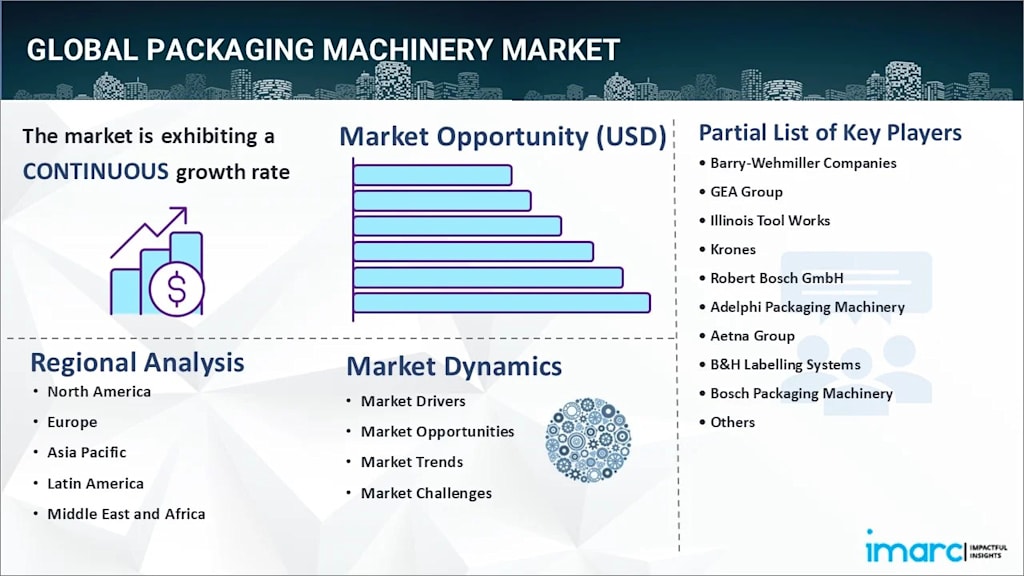
Robust demand for automated production lines and the rapid expansion of the e-commerce sector are fundamentally reshaping the packaging landscape, as manufacturers prioritize speed and precision to meet global consumer needs. According to IMARC Group’s latest data, the global packaging machinery market size was valued at USD 59.6 Billion in 2025. Looking forward, IMARC Group estimates the market to reach USD 83.8 Billion by 2034, exhibiting a CAGR of 3.75% from 2026-2034.
The packaging machinery sector has evolved into a vital pillar of modern industrial operations, now representing a multi-billion-dollar global market exceeding USD 60 billion. This growth is fueled by a massive shift toward convenience-driven consumer habits and the critical need for sterile, high-speed secondary packaging in the pharmaceutical and food industries. Innovations in robotic palletizing, smart sensors, and modular designs are allowing facilities to handle a wider variety of product shapes and sizes with minimal downtime.
Packaging Machinery Market Growth Drivers:
- Rising Global Demand for Packaged and Convenience Goods
Urbanization and shifting dietary habits have led to a surge in the consumption of ready-to-eat meals and processed beverages, creating a direct need for high-capacity packaging lines. Manufacturers are increasingly adopting automated systems to manage the volume required by modern retail environments. In the food sector alone, specialized machinery that offers vacuum sealing and modified atmosphere capabilities is essential for extending shelf life. Global logistics networks rely on these machines to ensure products remain intact and fresh during long-distance transport, making high-speed production a non-negotiable standard for industry leaders.
- Rapid Integration of Automation and Robotics
Persistent labor shortages and the drive for operational efficiency have pushed companies to replace manual processes with sophisticated robotic systems. Modern packaging machines now feature AI-powered predictive maintenance and self-diagnostic tools that significantly lower the risk of unplanned downtime. By utilizing robotics for tasks like high-speed picking, placing, and palletizing, facilities can achieve consistent quality and higher throughput. Statistics show that fully automated lines now capture a majority share of the market, as they offer a clear return on investment through reduced errors and optimized energy consumption across large-scale manufacturing plants.
Get Instant Access to the "Packaging Machinery Market" Sample Report for Free!
- Expansion of the Global E-commerce and Logistics Sector
The explosion of online shopping has revolutionized secondary and tertiary packaging requirements, necessitating machines that can handle diverse SKU sizes and protective wrapping. E-commerce fulfillment centers require automated cartoning and bagging solutions that are both fast and flexible to meet "next-day delivery" promises. This shift is particularly visible in the growth of form-fill-seal (FFS) technology, which allows for customized, secure packaging on the fly. As online retail continues to penetrate emerging markets, the demand for robust machinery capable of high-volume sorting and labeling is reaching unprecedented levels worldwide.
Packaging Machinery Market Trends:
- Shift Toward Sustainable and Eco-Friendly Packaging Solutions
Environmental regulations and consumer pressure are forcing a transition from single-use plastics to biodegradable and recyclable materials. This trend requires packaging machinery to be highly adaptable, as fiber-based materials and thin-gauge films behave differently than traditional plastics. Brands are investing in modular equipment that can switch between different substrate types without extensive mechanical overhauls. Recent initiatives involve a 100% transition to paper-based multipacks, supported by new cartoning technology that reduces carbon footprints while maintaining structural integrity. Over a third of purchase decisions are now influenced by a brand's sustainability profile, driving this technological pivot.
- Adoption of Industrial IoT (IIoT) and Smart Manufacturing
The "Smart Factory" concept is becoming a reality as packaging machines are outfitted with IoT sensors that provide real-time data on every cycle. This connectivity allows plant managers to monitor performance remotely, identifying bottlenecks or mechanical wear before they lead to failure. The usage of Big Data is transforming how lines operate, enabling "digital twins" that simulate production scenarios to maximize efficiency. These connected platforms are the fastest-growing technology segment, as they offer a level of transparency and traceability that is especially critical for meeting strict serialization mandates in the pharmaceutical and healthcare industries.
- Increased Focus on Hygienic Design and Product Safety
Heightened safety standards and a dramatic increase in global product recalls have made hygienic machinery design a top priority. Manufacturers are opting for wash-down fillers and aseptic bottling lines that feature advanced clean-in-place (CIP) and clean-out-of-place (COP) capabilities. This is particularly vital in the dairy and pharmaceutical sectors, where preventing contamination is a legal requirement. New stainless-steel designs eliminate "dead zones" where bacteria can grow, ensuring that equipment meets the most rigorous international health standards. This trend is driving a surge in capital investments for specialized equipment that guarantees sterile packaging for sensitive consumer goods.
Recent News and Developments in Packaging Machinery Market
- August 2025: Krones AG expanded its digital services portfolio by launching a new AI-driven analytics platform designed to optimize the performance of beverage bottling lines, helping clients reduce energy consumption by up to 15% through real-time load balancing.
- September 2025: Robert Bosch Packaging Technology (Syntegon) introduced a highly flexible, modular cartoning system specifically engineered for small-batch pharmaceutical production, addressing the growing market need for personalized medicine and specialized drug delivery formats.
- October 2025: Coesia S.p.A. announced a strategic acquisition of a specialized robotics firm to integrate advanced 3D vision systems into its pick-and-place machinery, enhancing the accuracy and speed of handling delicate consumer electronics packaging.
Note: If you require specific details, data, or insights that are not currently included in the scope of this report, we are happy to accommodate your request. As part of our customization service, we will gather and provide the additional information you need, tailored to your specific requirements. Please let us know your exact needs, and we will ensure the report is updated accordingly to meet your expectations.
About the Creator
Andrew Sullivan
Hello, I’m Andrew Sullivan. I have over 9+ years of experience as a market research specialist.
Enjoyed the story? Support the Creator.
Subscribe for free to receive all their stories in your feed.
Comments
There are no comments for this story
Be the first to respond and start the conversation.