
Orthopedic Implants Market Outlook: Joint Replacement Innovations and Growth Opportunities
The Orthopedic Implants Market is experiencing strong growth driven by rising cases of musculoskeletal disorders and increasing demand for joint replacement procedures.

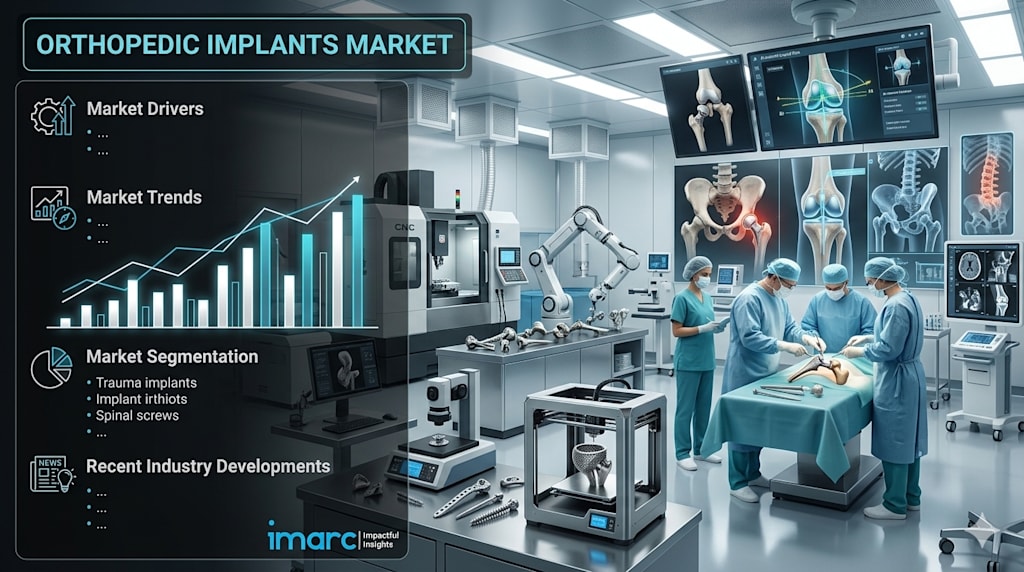
Market Overview:
According to IMARC Group’s latest research publication, the global orthopedic implants market size was valued at USD 58.2 Billion in 2025. The market is projected to reach USD 82.4 Billion by 2034, growing at a CAGR of 3.82% during 2026–2034.
The orthopedic implants market represents a significant segment within the global healthcare industry, driven by the increasing prevalence of musculoskeletal disorders, aging populations, and advancements in surgical technologies. Orthopedic implants are widely used to restore mobility, reduce pain, and improve the quality of life for patients suffering from joint degeneration, trauma injuries, and spinal conditions.
Role of AI in Orthopedic Implants
- AI-Driven Implant Design and Personalization: AI and machine learning technologies are enabling the development of patient-specific implants by analyzing anatomical data and optimizing implant structures. Personalized implants for knee, hip, shoulder, and ankle procedures are improving surgical accuracy and reducing complications.
- Robotic-Assisted Surgery and Real-Time Navigation: AI-powered robotic systems and augmented reality tools are enhancing surgical precision. These systems support real-time navigation during procedures such as knee arthroplasty, helping surgeons achieve accurate implant placement and consistent outcomes.
- Predictive Analytics for Implant Longevity: Machine learning models are being used to predict implant wear and potential failure risks. Data-driven monitoring systems allow clinicians to identify early signs of complications and take preventive action, improving implant lifespan and reducing the need for revision surgeries.

Orthopedic Implants Industry Overview
- The global orthopedic implants industry is evolving due to demographic changes, expanding healthcare infrastructure, and continuous technological innovation. A growing number of patients worldwide are affected by musculoskeletal disorders, creating sustained demand for joint replacement and spinal procedures. Increasing access to healthcare services in emerging economies is further supporting market growth Advancements in implant materials, 3D printing technologies, and surgical techniques are contributing to improved treatment outcomes and expanding the range of available orthopedic solutions.
Orthopedic Implants Market Trends and Drivers
- Aging Population and Rising Disease Burden The aging global population remains a key driver of demand for orthopedic implants. As bone density decreases and joint degeneration becomes more common, procedures such as hip and knee replacements are increasing worldwide. Reconstructive joint replacements represent the largest product segment, supported by their effectiveness in restoring mobility and reducing chronic pain.
- Advancements in Materials and Implant Technologies Metallic biomaterials, including titanium alloys, stainless steel, and cobalt-based alloys, dominate the market due to their strength, durability, and compatibility with the human body. These materials are widely used in load-bearing implants where long-term performance is critical. Emerging innovations, such as 3D-printed implants and biologics-integrated solutions, are further expanding treatment possibilities and improving patient outcomes.
- Growth of Minimally Invasive Procedures Minimally invasive surgical techniques are gaining popularity due to shorter recovery times and reduced hospital stays. These procedures are increasingly performed in ambulatory surgical centers, which offer cost-effective alternatives to traditional hospital-based surgeries. Digital technologies, including robotic systems and augmented reality tools, are enhancing surgical precision and making complex procedures more accessible.
- Expanding Healthcare Infrastructure in Emerging Markets Regions such as Asia Pacific are experiencing rapid growth in orthopedic procedures due to rising healthcare investments, improving hospital infrastructure, and increasing awareness of advanced treatment options. Urbanization and rising injury rates related to physical activity and occupational stress are also contributing to growing demand in these regions.
Leading Companies in the Orthopedic Implants Market
Key companies operating in the global orthopedic implants industry include:
- Arthrex Inc.
- Auxein
- B. Braun SE
- CONMED Corporation
- Enovis Corporation
- Exactech, Inc.
- Globus Medical
- Medical Devices Business Services, Inc. (Johnson & Johnson)
- Narang Medical Limited
- Smith & Nephew plc
- Stryker Corporation
- The Orthopaedic Implant Company
- United Orthopedic Corporation
Market Segmentation
By Product
- Reconstructive Joint Replacements
- Spinal Implants
- Dental Implants
- Trauma Implants
- Orthobiologics
- Others
Reconstructive joint replacements account for the largest share due to their effectiveness in treating severe joint degeneration and improving mobility.
By Type
- Knee
- Hip
- Wrist and Shoulder
- Dental
- Spine
- Ankle
- Others
Knee implants dominate the segment, driven by the high prevalence of knee-related disorders and ongoing improvements in surgical techniques.
By Biomaterial
- Metallic Biomaterials
- Ceramic Biomaterials
- Polymer Biomaterials
- Others
Metallic biomaterials hold the largest share, supported by their mechanical strength, durability, and adaptability across manufacturing processes.
By End User
- Hospitals
- Orthopedic Clinics
- Ambulatory Surgical Centers
- Others
Hospitals remain the leading end users due to advanced infrastructure and specialized surgical capabilities, while ambulatory surgical centers are gaining importance for outpatient procedures.
Regional Insights
- North America
- Asia Pacific
- Europe
- Latin America
- Middle East and Africa
North America leads the market with a significant share, supported by advanced healthcare systems, strong reimbursement frameworks, and high procedure volumes.
Recent Developments
- May 2025: Croom Medical introduced a platform for 3D printing tantalum implants, enabling improved control over implant structure and performance.
- May 2025: restor3d raised USD 38 million to expand its AI-driven personalized implant solutions for joint replacement procedures.
- April 2025: MicroPort Orthopedics launched a knee system designed to replicate natural joint movement, supported by training programs for surgeons.
- January 2025: FH ORTHO introduced a new shoulder prosthesis baseplate designed to improve surgical flexibility and patient-specific outcomes.
- 2024: Sparsh Hospitals established an in-house 3D printing facility to support custom implant development and surgical planning.
Note: If you require specific details, data, or insights that are not currently included in the scope of this report, we are happy to accommodate your request. As part of our customization service, we will gather and provide the additional information you need, tailored to your specific requirements. Please let us know your exact needs, and we will ensure the report is updated accordingly to meet your expectations.
About the Creator
Olivia Smith
Olivia Smits is a Research and Marketing Analyst who specializes in market research, trend analysis, and consumer insights. I help businesses make smarter marketing and strategy decisions by turning data into clear, actionable insights.
Enjoyed the story? Support the Creator.
Subscribe for free to receive all their stories in your feed.
Comments
There are no comments for this story
Be the first to respond and start the conversation.