
Organic Food Market Set to Cross US$586 Billion as Consumers Prioritize Health, Sustainability, and Chemical-Free Nutrition
Growing awareness of food safety, rising demand for environmentally responsible farming, and expanding retail access are fueling remarkable growth in the global organic food industry.

Introduction: The Global Shift Toward Cleaner and Healthier Food
Consumer attitudes toward food have changed dramatically over the past decade. Across the world, people are becoming more conscious of what they eat, how their food is produced, and the long-term impact of dietary choices on both personal health and the environment.
As concerns regarding synthetic pesticides, chemical fertilizers, genetically modified organisms (GMOs), and artificial additives continue to grow, organic food has emerged as one of the most trusted alternatives. Consumers increasingly associate organic products with healthier lifestyles, better nutrition, environmental sustainability, and food transparency.
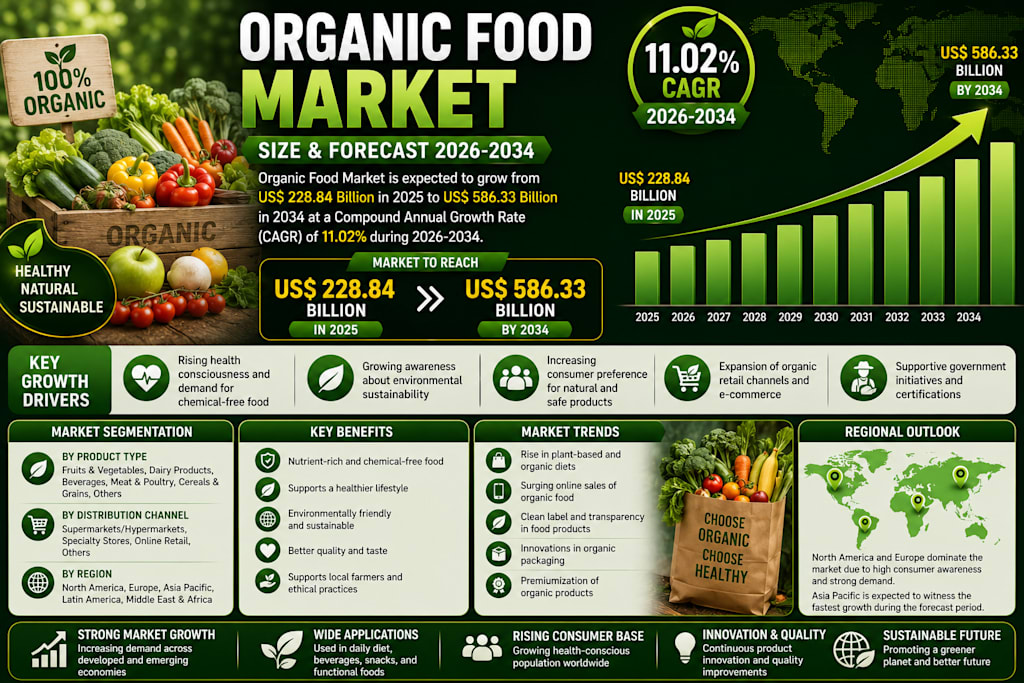
According to Renub Research, the Global Organic Food Market is expected to grow from US$ 228.84 billion in 2025 to US$ 586.33 billion by 2034, expanding at a compound annual growth rate (CAGR) of 11.02% between 2026 and 2034. This growth is being driven by increasing health awareness, rising environmental concerns, growing demand for chemical-free food products, and the expanding availability of organic products across retail and e-commerce channels.
As consumers place greater value on nutrition, sustainability, and clean-label products, organic food is rapidly moving from a niche segment into the mainstream global food industry.
Understanding What Makes Food Organic
Organic food refers to agricultural products that are produced using natural farming methods without synthetic fertilizers, chemical pesticides, genetically modified organisms, antibiotics, growth hormones, or artificial additives.
Organic farming relies on practices such as composting, crop rotation, biological pest control, and natural fertilizers to maintain soil fertility and ecological balance. These methods help protect biodiversity while reducing environmental damage often associated with conventional farming systems.
Consumers increasingly view organic food as a safer and healthier alternative because it is produced through more natural processes. In addition to potential health benefits, many people choose organic products because they support environmentally responsible farming practices.
This combination of personal wellness and sustainability has made organic food one of the fastest-growing categories within the global food and beverage industry.
Health Awareness Is Driving Consumer Demand
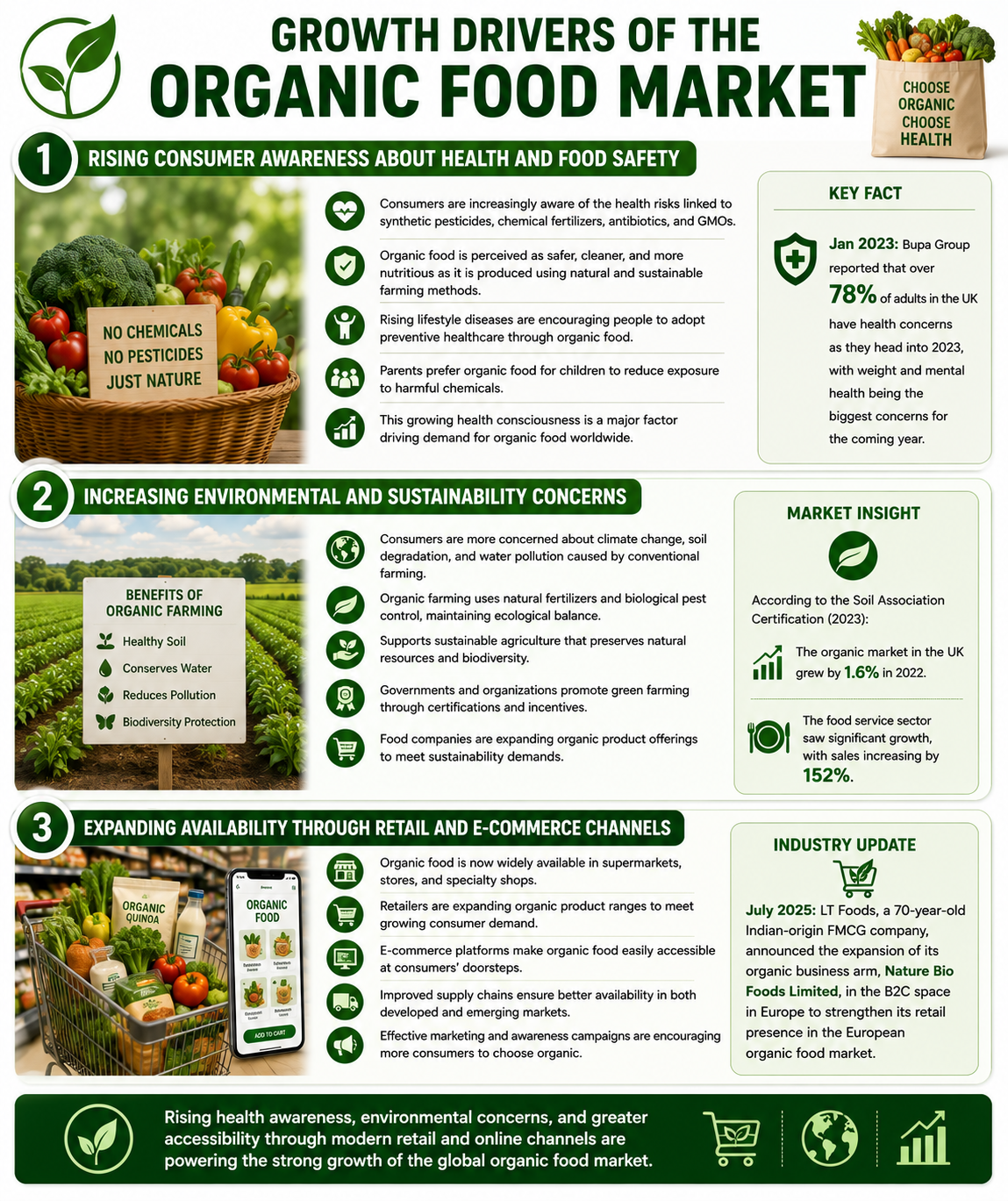
One of the strongest factors contributing to the growth of the organic food market is rising awareness about health and food safety.
Consumers today are paying closer attention to ingredient labels and production methods than ever before. Many are concerned about the long-term effects of exposure to synthetic chemicals, pesticides, antibiotics, and genetically modified ingredients commonly associated with conventional agriculture.
At the same time, the increasing prevalence of lifestyle-related health conditions such as obesity, diabetes, cardiovascular disease, and metabolic disorders is encouraging people to adopt healthier eating habits.
Parents are also becoming more selective about the foods they provide to their children, often choosing organic options to reduce exposure to potentially harmful substances.
The report highlights that more than 78% of adults in the United Kingdom reported health concerns entering 2023, with weight management and mental well-being among the most common issues. This growing focus on preventive health continues to support demand for organic products worldwide.
As health-conscious lifestyles become increasingly common, organic food consumption is expected to continue rising.
Sustainability Concerns Are Supporting Market Expansion
Environmental awareness has become another powerful driver behind the growth of organic food.
Consumers are increasingly concerned about climate change, soil degradation, biodiversity loss, water pollution, and the environmental impact of industrial agriculture. Organic farming offers an alternative approach that emphasizes ecological balance and sustainable resource management.
Unlike conventional farming, organic agriculture avoids synthetic chemicals and promotes natural soil enrichment techniques. These practices help preserve soil health, conserve water resources, and support biodiversity.
Many consumers now view purchasing organic food as a way to support environmentally responsible farming systems.
Governments, environmental organizations, and food companies are also promoting sustainable agricultural practices through certification programs, incentives, and public awareness campaigns.
As sustainability becomes an increasingly important purchasing factor, organic food products are expected to benefit significantly.
Retail and E-Commerce Are Expanding Accessibility
The widespread availability of organic food is helping accelerate market growth.
Historically, organic products were primarily available through specialty health food stores and niche retailers. Today, major supermarkets, hypermarkets, convenience stores, and online marketplaces offer extensive selections of organic products.
Large retail chains have expanded their organic offerings to meet rising consumer demand, making organic food more accessible than ever before.
The rapid growth of e-commerce has further strengthened accessibility. Online platforms allow consumers to browse certified organic products, compare prices, read reviews, and receive home delivery services.
The report highlights the expansion of Nature Bio Foods' retail presence in Europe as part of a broader effort to strengthen access to organic products through business-to-consumer channels.
As digital commerce continues evolving, online sales are expected to play an increasingly important role in the future growth of the organic food industry.
Organic Fruits and Vegetables Lead the Market
Among all product categories, organic fruits and vegetables continue to dominate the global organic food market.
Consumers increasingly prefer fresh produce grown without synthetic pesticides, chemical fertilizers, or genetically modified ingredients. Organic fruits and vegetables are often perceived as healthier, safer, and more environmentally friendly alternatives to conventionally grown produce.
Health-conscious individuals, families, and consumers focused on preventive healthcare represent key drivers of demand within this segment.
Improved availability through supermarkets, farmers' markets, specialty retailers, and online platforms has further expanded market penetration.
Government support for organic farming and growing interest in clean-label products continue strengthening demand for organic produce globally.
Organic Meat Consumption Is Rising Steadily
The organic meat segment is experiencing strong growth as consumers become more aware of food quality and animal welfare practices.
Organic meat comes from livestock raised without antibiotics, synthetic growth hormones, or genetically engineered feed. Animals are typically provided with more natural living conditions and organic feed sources.
Consumers increasingly associate organic meat with improved food safety, better nutritional quality, and more ethical farming practices.
Concerns about antibiotic resistance and intensive livestock production methods are also encouraging many consumers to switch to organic alternatives.
As disposable incomes rise and awareness continues growing, demand for premium organic meat products is expected to remain strong, particularly in developed markets.
Organic Beverages Are Becoming Increasingly Popular
The organic beverages segment is emerging as one of the fastest-growing categories within the organic food market.
Organic juices, teas, coffees, dairy drinks, and plant-based beverages are gaining popularity among consumers seeking healthier alternatives to conventional drinks. These products are valued for being free from artificial ingredients, synthetic additives, and chemical residues.
The growing popularity of plant-based diets and functional beverages is further supporting demand for organic drinks.
Manufacturers continue introducing innovative organic beverage products to meet evolving consumer preferences.
As wellness-focused lifestyles gain momentum worldwide, organic beverages are expected to remain a significant growth area within the broader organic food market.
Convenience Stores Are Strengthening Market Reach
Convenience stores are becoming increasingly important distribution channels for organic food products.
Urban consumers often prioritize accessibility, speed, and convenience when shopping for groceries. In response, convenience retailers have expanded their offerings to include organic snacks, beverages, packaged foods, and fresh produce.
The growing demand for healthy grab-and-go food options has encouraged convenience stores to increase shelf space dedicated to organic products.
Partnerships between retailers and organic food producers are helping improve product availability and visibility.
As urbanization continues and consumer lifestyles become busier, convenience stores are expected to contribute significantly to future market growth.
Online Retail Is Becoming a Major Growth Engine
Online retail has become one of the fastest-growing distribution channels within the organic food industry.
Consumers increasingly appreciate the convenience of purchasing organic products through digital platforms that offer extensive product selections, transparent certifications, customer reviews, and home delivery services.
E-commerce platforms also allow smaller organic brands to reach broader audiences without requiring extensive physical retail networks.
Digital marketing campaigns and health-focused educational content are helping increase awareness of organic products among new consumer groups.
As internet penetration continues expanding globally, online retail is expected to remain a key growth driver for the organic food market.
Regional Markets Continue to Expand
United States
The United States remains one of the world's largest and most mature organic food markets. High consumer awareness regarding health, nutrition, and environmental sustainability continues driving demand across multiple product categories.
The report highlights Walmart's partnership with Smash Kitchen to introduce organic condiment products free from high-fructose corn syrup and artificial additives.
United Kingdom
The United Kingdom continues experiencing strong growth in organic food consumption due to increasing consumer interest in healthy eating, sustainability, and chemical-free food products.
The launch of Kallo's organic vegetable dip range reflects growing demand for convenient and natural food options among UK consumers.
India
India's organic food market is expanding rapidly as consumers become more aware of food safety, nutrition, and sustainable agriculture.
Government initiatives promoting organic farming, combined with rising incomes and expanding online retail networks, are supporting significant market growth. The report highlights the continued expansion of Jivamrit Organic's product offerings across the Indian market.
Saudi Arabia
Saudi Arabia is witnessing growing demand for organic food due to rising health awareness, strong purchasing power, and government support for sustainable agriculture.
Initiatives promoting local organic fruits and agricultural products are helping strengthen consumer awareness and support market development throughout the country.
Challenges Continue to Impact Market Growth
Despite strong growth prospects, the organic food industry faces several challenges.
One of the most significant barriers is the higher cost of organic products compared to conventional alternatives. Organic farming often requires greater labor input, natural fertilizers, and more complex production processes, resulting in higher production costs.
These higher prices can limit accessibility among price-sensitive consumers, particularly in developing economies.
Supply chain limitations also present challenges. Organic farming is often more vulnerable to weather conditions, pests, diseases, and lower crop yields. Certification requirements can further complicate production and distribution processes.
Expanding organic farmland, improving production efficiency, and supporting farmers through training and certification programs will be critical for addressing these challenges.
Leading Companies Driving Industry Growth
The global organic food market includes numerous multinational food companies, retailers, and specialty organic producers focused on expanding product portfolios and meeting growing consumer demand.
Key companies highlighted in the report include Danone S.A., General Mills Inc., Sprouts Farmers Market Inc., The Hain Celestial Group Inc., The Kroger Company, United Natural Foods Inc., Dole Food Company Inc., and Newman's Own.
These organizations continue investing in product innovation, sustainable sourcing, organic certifications, and retail expansion initiatives.
Final Thoughts
The global organic food market is entering a period of extraordinary expansion as consumers increasingly prioritize health, nutrition, sustainability, and food transparency.
With the market projected to grow from US$ 228.84 billion in 2025 to US$ 586.33 billion by 2034, organic food is becoming one of the most influential segments within the global food industry. Rising health awareness, environmental concerns, expanding retail access, and growing demand for clean-label products are creating powerful growth opportunities across the sector.
Although challenges related to pricing and supply remain, the long-term outlook for organic food remains highly positive. As consumers continue seeking healthier and more sustainable lifestyles, organic products are expected to play an increasingly important role in shaping the future of global food consumption.
About the Creator
Enjoyed the story? Support the Creator.
Subscribe for free to receive all their stories in your feed.
Comments
There are no comments for this story
Be the first to respond and start the conversation.