
Online Grocery Market: Subscription Models, Customer Loyalty & Industry Growth
How subscription-based grocery models, loyalty programs, and curated bundles are enhancing customer stickiness and increasing recurring revenue streams for online retailers

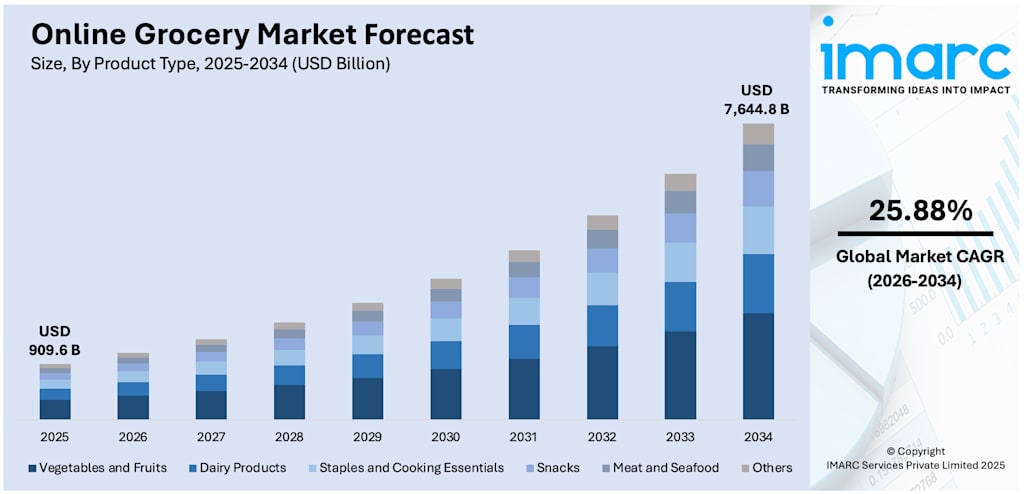
Growing internet penetration, the widespread adoption of smartphones, and a tech-savvy younger population are driving the online grocery demand, supported by the expansion of quick-commerce models, AI-driven personalization, and significant investments in warehousing and cold chain logistics. According to IMARC Group’s latest data, The global online grocery market size was valued at USD 909.6 Billion in 2025. Looking forward, IMARC Group estimates the market to reach USD 7,644.8 Billion by 2034, exhibiting a CAGR of 25.88% from 2026-2034.
The online grocery industry has transformed from a niche convenience into a multi-trillion-dollar global powerhouse, fundamentally altering how households manage their daily essentials. This shift is fueled by a "new normal" where consumers prioritize time-saving features like 10-minute delivery and automated recurring shopping lists. Retailers are aggressively expanding their digital infrastructure, moving beyond simple websites to integrated ecosystems that include dark stores for rapid fulfillment and AI-powered meal planning.
Online Grocery Market Growth Drivers:
- Rising Tech Adoption Among Younger Generations
The surge in digital grocery shopping is largely propelled by Gen Z and Millennials, who view mobile-first commerce as a baseline expectation. In 2025 alone, over 50% of consumers globally engaged in online grocery shopping, with younger demographics being 183% more likely to order monthly compared to older generations. These users demand seamless app interfaces and integrated payment gateways. Consequently, major players are investing heavily in "friction-less" shopping experiences, ensuring that the transition from a social media ad to a digital checkout is instantaneous and intuitive for the digital-native audience.
- Expansion of Quick-Commerce and Hyperlocal Delivery
The race for speed has redefined fulfillment, with "quick-commerce" models now offering delivery in under 15 minutes. This is made possible by the proliferation of dark stores localized micro-fulfillment centers situated in high-density urban areas. For instance, companies like BigBasket have recently rolled out 10-minute food delivery across major hubs to capture the immediate-need market. By reducing the delivery window from days to minutes, platforms are successfully capturing "impulse" and "emergency" purchases that were previously the exclusive domain of physical convenience stores, effectively increasing the total frequency of online orders.
- Advancements in Cold Chain and Logistics Infrastructure
A major barrier to online grocery the fear of receiving spoiled perishables is being dismantled by massive investments in climate-controlled logistics. Modern e-grocers are utilizing advanced warehousing and sophisticated cold storage systems to ensure the integrity of meat, seafood, and fresh produce. Meat and seafood, in particular, have emerged as dominant segments because consumers now trust the specialized packaging and refrigerated transport chains. These technical improvements allow providers to service larger geographic areas, including rural zones where access to high-quality fresh goods was previously limited, thereby broadening the total addressable consumer base significantly.
Online Grocery Market Trends:
- AI-Powered Hyper-Personalization and Predictive Shopping
Retailers are moving away from generic storefronts toward AI-driven "Smart Shops" that predict what a user needs before they realize it. By analyzing past purchasing history, seasonal trends, and even dietary preferences, AI algorithms suggest tailored shopping lists and meal kits. For example, Instacart’s recent integration of generative AI helps users plan weekly menus and automatically populates their carts with the necessary ingredients. This level of personalization increases repeat purchases and builds long-term loyalty, as the platform becomes an indispensable personal assistant rather than just a digital catalog.
- Integration of Omnichannel and Click-and-Collect Models
While home delivery is popular, the "click-and-collect" or "BOPIS" (Buy Online, Pick Up In-Store) trend has become a preferred baseline for many. In the United States, a majority of consumers utilize this method to avoid delivery fees while maintaining control over the timing of their pickup. This hybrid approach benefits retailers by lowering the "last-mile" delivery cost the most expensive part of the supply chain and allows customers to verify the quality of fresh items at the point of collection. It bridges the physical and digital worlds, offering a flexible solution for suburban and rural shoppers.
- Strategic Partnerships and Industry Consolidation
The market is witnessing a wave of high-profile collaborations aimed at diversifying product offerings and improving tech stacks. In 2025, Amazon announced a massive expansion of its same-day grocery service to over 1,000 cities, while Target partnered with specialty providers like ButcherBox to enhance its premium meat selection. These strategic moves allow traditional retailers to quickly upgrade their digital capabilities while giving tech-first platforms access to established supply chains. This consolidation trend ensures that even mid-sized grocers can offer competitive digital services by leveraging the infrastructure of larger e-commerce partners.
Recent News and Developments in Online Grocery Market
- August 2025: Amazon announced a major grocery expansion in the U.S., enabling customers in over 1,000 towns and cities to order fresh groceries with Same-Day Delivery, significantly increasing its competitive edge in the rapid-fulfillment sector.
- September 2025: Walmart expanded its drone delivery program in partnership with Wing, aiming to provide 30-minute delivery for small-batch grocery orders in select suburban markets to reduce road congestion and improve efficiency.
- January 2026: A major initiative was launched to integrate blockchain technology into the grocery supply chain to provide 100% transparency for organic and "farm-to-table" products, allowing online shoppers to trace the origin of their fresh produce.
Note: If you require specific details, data, or insights that are not currently included in the scope of this report, we are happy to accommodate your request. As part of our customization service, we will gather and provide the additional information you need, tailored to your specific requirements. Please let us know your exact needs, and we will ensure the report is updated accordingly to meet your expectations.
About the Creator
Andrew Sullivan
Hello, I’m Andrew Sullivan. I have over 9+ years of experience as a market research specialist.
Enjoyed the story? Support the Creator.
Subscribe for free to receive all their stories in your feed.
Comments
There are no comments for this story
Be the first to respond and start the conversation.