
North America Superfood Market to Reach USD 90.88 Billion by 2033 as Clean Eating and Functional Nutrition Gain Momentum
Rising Demand for Plant-Based Diets, Functional Foods, and Wellness-Focused Lifestyles Is Transforming the North American Superfood Industry

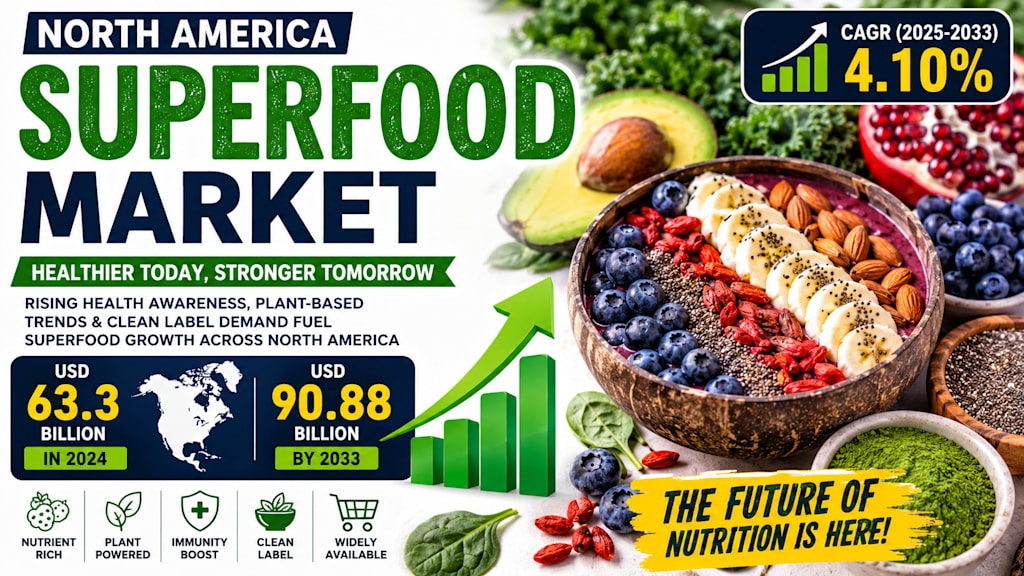
The North America Superfood Market is witnessing strong and steady expansion as consumers increasingly prioritize nutrition, immunity, preventive healthcare, and clean-label eating habits. According to , the market was valued at USD 63.3 billion in 2024 and is projected to reach USD 90.88 billion by 2033, growing at a CAGR of 4.10% during the forecast period from 2025 to 2033.
Driven by rising health awareness, increasing vegan and plant-based food adoption, and the popularity of nutrient-dense ingredients, superfoods are becoming a major component of modern dietary lifestyles across the United States, Canada, and Mexico. Consumers are actively seeking foods that offer functional health benefits, including better digestion, enhanced immunity, heart health support, and weight management.
Superfoods such as blueberries, kale, chia seeds, flaxseeds, turmeric, spirulina, quinoa, and avocado are no longer niche wellness ingredients. They are now mainstream products integrated into beverages, bakery items, snacks, cosmetics, supplements, and even convenience foods.
What Are Superfoods and Why Are They Trending?
Superfoods are foods naturally rich in vitamins, minerals, antioxidants, fiber, healthy fats, and phytonutrients. These ingredients are associated with multiple health benefits and are often promoted as part of balanced wellness and preventive healthcare strategies.
In North America, consumers are increasingly embracing healthier eating patterns after years of growing awareness around obesity, cardiovascular diseases, diabetes, digestive disorders, and immunity-related concerns. Younger demographics, particularly millennials and Gen Z consumers, are fueling this shift by demanding natural, organic, minimally processed, and functional food products.
The modern wellness movement has transformed superfoods into everyday dietary staples. Smoothie bowls, protein shakes, energy bars, organic cereals, herbal drinks, plant-based snacks, and clean-label bakery products are increasingly being fortified with superfood ingredients.
According to the report, restaurants, retailers, and foodservice brands are rapidly integrating superfood-based menu items and packaged products into their offerings, further accelerating market growth.
Health Consciousness Continues to Drive Market Growth
One of the strongest growth drivers in the North America Superfood Market is the rising focus on preventive healthcare and healthy living.
Consumers today are more informed about nutrition than ever before. Many are actively replacing processed foods with nutrient-rich alternatives that support long-term wellness goals. Superfoods are increasingly viewed as natural solutions for improving energy levels, digestion, cardiovascular health, and immunity.
The growing popularity of fitness culture, wellness influencers, organic food trends, and personalized nutrition has also increased awareness regarding the benefits of superfoods.
Healthcare organizations are contributing to this trend as well. According to the report, in March 2024, Hackensack Meridian Health announced plans for a first-of-its-kind health and wellness center in New Jersey designed to provide extensive ambulatory care and wellness services.
Such developments reflect the broader movement toward integrated wellness ecosystems where nutrition and functional foods play an important role.
Expansion of Plant-Based and Clean Label Foods
The rapid rise of plant-based diets has significantly strengthened the demand for superfoods across North America.
Consumers are increasingly avoiding artificial additives, preservatives, genetically modified ingredients, and highly processed foods. As a result, naturally sourced ingredients like chia seeds, flaxseeds, matcha, spirulina, quinoa, and kale are gaining popularity.
The clean-label movement is particularly influential among urban consumers who prioritize transparency, sustainability, and ingredient traceability. Brands are responding by launching organic, vegan, gluten-free, and minimally processed superfood products.
The report highlights that in February 2025, Slovenian alternative meat company Juicy Marbles launched Meaty Meat, a whole-cut plant-based lamb substitute in the United States and Canada.
This reflects how plant-based innovation is increasingly connected with superfood integration and functional nutrition.
Product Innovation Is Creating New Revenue Opportunities
Manufacturers are aggressively innovating to meet changing consumer preferences and expand product accessibility.
Superfoods are now being incorporated into:
- Functional beverages
- Smoothies and shakes
- Protein powders
- Energy bars
- Breakfast cereals
- Healthy bakery products
- Nutritional supplements
- Organic snacks
Skincare and cosmetic products
The versatility of superfood ingredients allows brands to target multiple consumer groups simultaneously, including athletes, vegan consumers, busy professionals, and aging populations seeking healthier lifestyles.
According to the report, Laird Superfood launched “The Market Place” in March 2025, a curated e-commerce platform focused on health and performance-oriented brands.
Digital commerce platforms are further improving product visibility and making superfoods accessible to a wider audience across North America.
Fruits Segment Leads the Market
Fruit-based superfoods remain among the most popular product categories in North America.
Blueberries, acai berries, cranberries, goji berries, and pomegranates continue to dominate consumer preferences because of their antioxidant-rich profiles and perceived anti-aging benefits.
These fruits are commonly used in smoothies, yogurts, juices, cereals, snack bars, and desserts. Rising consumer demand for natural sugar alternatives and immunity-boosting foods is further driving growth in this segment.
Consumers are particularly attracted to fruits that support skin health, digestion, cognitive wellness, and heart health.
Vegetable Superfoods Witness Strong Consumer Adoption
Vegetable-based superfoods are becoming daily nutritional essentials among health-conscious consumers.
Kale, spinach, beets, broccoli, and sweet potatoes are highly favored because they are rich in fiber, vitamins, minerals, and plant compounds.
The expansion of salad chains, plant-based restaurants, meal-kit services, and healthy fast-casual dining concepts has significantly boosted the visibility of vegetable superfoods.
Trends such as detox diets, gut-health nutrition, and vegan meal plans are expected to maintain strong demand for vegetable-based superfood products across the region.
Superfoods Gain Momentum in Bakery Products
The bakery segment is rapidly evolving as consumers increasingly seek healthier indulgence options.
Manufacturers are adding chia seeds, flaxseeds, quinoa, pumpkin seeds, and other nutrient-rich ingredients into bread, muffins, cookies, crackers, and pastries.
Consumers are showing growing interest in bakery products that provide nutritional benefits without compromising taste or convenience.
Artisan bakeries and premium organic food brands are especially benefiting from this trend, particularly in urban and affluent markets.
Cosmetics Industry Embraces Superfood Ingredients
The integration of superfoods into cosmetics and personal care products is creating a new avenue for industry growth.
Ingredients such as turmeric, avocado, aloe vera, seaweed, and green tea are increasingly used in skincare and haircare formulations because of their antioxidant and anti-inflammatory properties.
The clean beauty movement has encouraged cosmetic companies to adopt natural and sustainable ingredients. Consumers are now looking for products that promote both beauty and wellness simultaneously.
This “beauty from within” trend is expected to further strengthen the connection between functional nutrition and cosmetic innovation.
Supermarkets and Convenience Stores Expand Product Visibility
Large retail chains are playing an essential role in making superfoods more accessible to mainstream consumers.
Hypermarkets and supermarkets such as Whole Foods, Walmart, and Kroger are expanding dedicated organic and wellness sections that prominently feature superfood products. Retail promotions, private-label launches, and in-store sampling campaigns are increasing consumer engagement.
Convenience stores are also adapting quickly to changing demand patterns by introducing healthy grab-and-go snacks, protein drinks, energy bites, and functional beverages enriched with superfoods.
The increasing availability of these products through offline and online retail channels is significantly contributing to overall market expansion.
United States Dominates the Regional Market
The United States remains the largest superfood market in North America due to high health awareness, strong purchasing power, and continuous product innovation.
American consumers are highly responsive to dietary trends promoted through social media, wellness influencers, healthcare professionals, and fitness communities.
The country also benefits from a mature health and wellness ecosystem that supports rapid adoption of functional foods and nutritional supplements.
According to the report, EatThis Superfood expanded its U.S. product portfolio in March 2025 by launching roasted foxnuts in multiple flavors targeted at health-conscious consumers.
Canada Emerges as a Strong Growth Market
Canada is experiencing growing demand for superfoods due to rising interest in organic foods and plant-based nutrition.
Canadian consumers are particularly supportive of sustainable and locally sourced products. Government-backed nutritional awareness initiatives and strict labeling regulations are also helping improve transparency and consumer trust.
The report notes that Purely Inspired introduced Superfood Greens in Canada, featuring 39 superfoods and 18 vitamins and minerals.
The country's environmentally conscious consumers continue to support clean-label and wellness-focused brands.
Mexico Shows Emerging Growth Potential
Mexico’s superfood market is gradually expanding as awareness regarding nutrition and wellness improves.
Traditional ingredients such as amaranth, chia seeds, and nopal cactus already have strong cultural relevance in Mexican diets, giving local superfoods a unique advantage.
Increasing urbanization, a growing middle class, and rising concerns over lifestyle-related diseases are expected to accelerate future demand for functional foods and natural nutrition products.
Challenges Continue to Affect Market Penetration
Despite strong growth prospects, the North America Superfood Market faces several challenges.
High Product Costs
Superfoods are often expensive due to sourcing, cultivation, processing, and transportation costs. This limits accessibility among price-sensitive consumers and slows mass-market penetration.
Premium pricing remains a key obstacle, especially in lower-income and rural communities.
Regulatory and Misinformation Concerns
The industry also faces scrutiny regarding exaggerated health claims and inconsistent labeling practices.
Some products marketed as “superfoods” may lack sufficient scientific validation, which can impact consumer trust and brand credibility.
Regulatory agencies continue to monitor labeling standards and marketing practices within the functional food industry.
Recent Developments in the North America Superfood Market
- Laird Superfood launched “The Market Place” e-commerce platform in March 2025 focused on wellness-oriented brands.
- Juicy Marbles introduced a plant-based lamb substitute called Meaty Meat across the U.S. and Canada in February 2025.
- Hackensack Meridian Health announced a USD 200 million wellness center project in New Jersey in March 2024.
- EatThis Superfood expanded its roasted foxnuts portfolio in the U.S. market during March 2025.
- Purely Inspired launched Superfood Greens products in Canada featuring 39 superfoods.
- Navitas Organics expanded its organic superfood snack and smoothie product range in North America.
- Sunfood Superfoods increased its functional nutrition portfolio with plant-based wellness products.
- Organifi strengthened its superfood supplement distribution through online wellness platforms.
- Archer Daniels Midland (ADM) expanded investments in plant-based and functional nutrition ingredients.
- Del Monte Pacific Limited continued expanding healthy fruit-based packaged food offerings targeting wellness-focused consumers.
Final Thoughts
The North America Superfood Market is entering a transformative growth phase as consumers increasingly prioritize nutrition, immunity, clean-label ingredients, and sustainable lifestyles. The convergence of plant-based eating trends, functional nutrition, preventive healthcare, and product innovation is creating long-term opportunities for food manufacturers, retailers, wellness brands, and ingredient suppliers.
As awareness surrounding healthy living continues to rise, superfoods are expected to evolve from premium wellness products into mainstream dietary essentials across North America.
About the Creator
Enjoyed the story? Support the Creator.
Subscribe for free to receive all their stories in your feed.
Comments
There are no comments for this story
Be the first to respond and start the conversation.