
North America Snack Bar Market to Reach US$ 25.58 Billion by 2034 as High-Protein and Functional Snacking Gain Momentum
Health-focused consumers, better-for-you innovations, and strategic corporate moves are reshaping the snack bar category across the United States, Canada, and Mexico

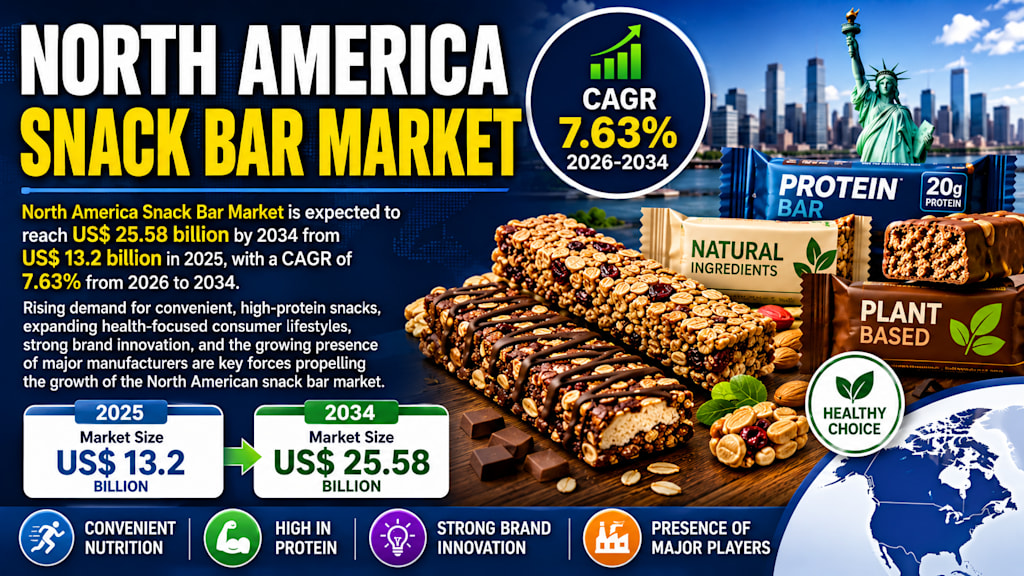
The North America snack bar market is set for strong expansion over the next decade. According to Renub Research, the market is expected to rise from US$ 13.2 billion in 2025 to US$ 25.58 billion by 2034, registering a CAGR of 7.63% from 2026 to 2034. The growth is being driven by rising demand for convenient, high-protein snacks, expanding health-conscious lifestyles, strong brand innovation, and a growing presence of major manufacturers.
What was once a simple grab-and-go snack has now become a major part of modern nutrition habits. Today’s snack bars are no longer limited to basic cereal or sweet convenience products. They now serve multiple needs, including energy support, meal replacement, digestion, fitness recovery, and weight management. This shift has made the category more attractive to both mainstream consumers and specialized health-focused buyers.
The market’s growth is also supported by the rapid evolution of ingredient preferences. Consumers increasingly want products that are high in protein, low in sugar, plant-based, clean-label, and made with natural ingredients. In response, manufacturers are reformulating products and expanding their portfolios to capture demand across different consumption occasions. Strong retail availability across supermarkets, convenience stores, and online channels continues to keep the category visible and accessible.
A Changing Consumer Mindset Is Driving the Market
The North America snack bar market is benefiting from a major change in how consumers think about snacks. Convenience still matters, but nutrition now matters just as much. Busy consumers want foods that can be eaten quickly without compromising health goals. At the same time, fitness-oriented consumers are looking for portable products that support energy, muscle recovery, and satiety.
This has created a strong market for bars made with nuts, grains, seeds, dried fruits, chocolate, and protein ingredients. Snack bars are increasingly being positioned as a smarter alternative to traditional sweet snacks. Their portability, shelf stability, and broad flavor variety make them a practical choice for workers, students, athletes, and families alike.
Clean-label preferences are also reshaping buying decisions. Consumers are more likely to choose products with transparent ingredient lists, lower sugar content, and functional benefits. This is especially visible in the United States and Canada, where health awareness and premium snacking habits are strongest. As a result, snack bars are evolving into a category that blends convenience with nutrition and lifestyle branding.
Strategic Acquisitions Are Strengthening the Category
One of the strongest growth drivers in the market is consolidation among large food companies. Major players are buying functional snack brands to expand their presence in the better-for-you segment and capture consumers who are moving away from traditional packaged snacks.
A key example is Ferrero Group’s acquisition of Power Crunch in January 2025. This move strengthened Ferrero’s U.S. position in high-protein and functional snacking and added a well-known protein snack brand to its portfolio. The deal also expanded Ferrero’s ability to compete in a category that is growing faster than many traditional snack segments.
Post Holdings also made a major strategic move by acquiring PowerBar and Musashi from Nestlé in January 2025. That acquisition expanded Post’s Active Nutrition Group and further strengthened its role in sports nutrition and performance-oriented snacking.
These kinds of acquisitions are important because they do more than add revenue. They bring brand recognition, manufacturing capabilities, product development expertise, and stronger retail reach. In a crowded market, that combination can create a major competitive advantage.
High-Protein and Sports Nutrition Trends Are Expanding Demand
Protein has become one of the defining ingredients in the snack bar market. Consumers increasingly associate protein with fullness, strength, recovery, and overall wellness. That has turned high-protein snack bars into a mainstream product rather than a niche fitness item.
The source report shows that protein-enhanced bars are growing in appeal as consumers adopt more active and health-driven lifestyles. Brands are now using athletic endorsements, scientific formulations, and low-sugar claims to attract consumers who want better nutrition from everyday snacks.
This trend is not limited to sports enthusiasts. Office workers, travelers, and students are also looking for snack bars that can function as a quick meal or energy boost. The line between sports nutrition and general snacking is becoming increasingly blurred. That is why protein bars, energy bars, and functional bars are now competing in the same aisle and often for the same customer.
As consumers demand more than one benefit from a single product, companies are developing bars with protein plus caffeine, fiber, vitamins, or digestive support. This trend is likely to continue as brands search for new ways to stand out.
Manufacturing Expansion Is Supporting Faster Innovation
Another important market driver is manufacturing innovation. Snack bar producers are investing in flexible production systems, improved efficiency, and broader co-manufacturing capabilities. These investments help brands move faster, launch more products, and respond quickly to changing consumer tastes.
The report highlights the rebranding of TruFood and Bar Bakers as Tandem Foods following their merger. The combined company now operates eight U.S. facilities and is focusing on collaboration, innovation, and better customer partnerships. This stronger manufacturing base allows the company to support clean-label, protein-rich, and functional snack bar production at scale.
This matters because product innovation is now a speed game. Brands that can launch new flavors, formats, and ingredient combinations more quickly are more likely to gain shelf space and consumer attention. Domestic manufacturing also helps reduce some supply chain risks and improves responsiveness to retailer demand.
As the category becomes more competitive, manufacturers with strong technical capabilities will continue to play a central role in shaping market growth.
Ingredient Costs and Supply Pressure Remain a Challenge
Despite the positive outlook, the market faces real pressure from rising ingredient costs and supply chain volatility. Raw materials such as nuts, oats, whey protein, and natural sweeteners can fluctuate in price because of weather conditions, agricultural uncertainty, and logistics disruptions. That affects margins and can force brands to rework recipes or raise prices.
Packaging and transportation costs also remain a concern. These pressures are especially difficult for smaller brands that do not have the purchasing power of large multinational companies. They must compete on quality and price at the same time, which can be difficult in a category that increasingly expects premium ingredients.
These challenges are not likely to disappear soon. As a result, companies will need to keep balancing affordability, quality, and transparency if they want to remain competitive.
Competition Is Becoming More Intense Across All Categories
The snack bar market is crowded. There are protein bars, granola bars, energy bars, nutrition bars, cereal bars, and fruit-and-nut bars, all competing for consumer attention. Large companies, private-label brands, and new startups are all fighting for shelf space and online visibility.
Because of this, differentiation has become essential. Brands are using limited-edition flavors, functional claims, brand storytelling, and targeted marketing to stand out. Regulatory scrutiny around health claims also makes the category more complex, since companies must be careful about how they communicate benefits.
Brand loyalty can be fragile in this environment. Many consumers are willing to switch products if another bar offers better nutrition, better taste, or a lower price. That means companies need more than a good product; they need a clear identity and a strong innovation pipeline.
The United States Remains the Core Market
The United States is the most important market for snack bars in North America. It has a large consumer base, a highly developed retail system, and strong demand for convenient, high-protein foods. Supermarkets, convenience stores, fitness outlets, and online platforms all support broad category access.
American consumers are especially open to functional and clean-label snack bars. That makes the country a natural launchpad for innovations in plant protein, low sugar formulations, and premium nutrition bars. Major acquisitions, co-manufacturing growth, and continued product launches all reinforce the U.S. market’s central role in the region’s growth story.
A strong fitness culture and rising interest in meal replacement products also support demand. As more consumers prioritize health without sacrificing convenience, the U.S. market is likely to remain the largest revenue contributor in the region.
Canada Is Growing Through Clean-Label and Sustainable Snacking
Canada is also seeing steady growth in snack bar consumption. Consumers there are increasingly drawn to portable, nutritious, and minimally processed snack options. Demand is rising for high-protein, plant-based, gluten-free, and low-sugar formulations across multiple bar types.
Canadian shoppers also tend to value sustainability. That is encouraging brands to use eco-friendly packaging and locally sourced ingredients. Retailers are expanding private-label offerings, while e-commerce and subscription-based snack services are helping the category reach more consumers.
Partnerships between CPG companies and co-manufacturers are also improving production capacity and product variety. This gives the Canadian market room to expand beyond standard snack formats into more specialized and premium products.
Mexico Is Emerging as a Strong Opportunity Market
Mexico is becoming an increasingly important part of the North American snack bar story. Urbanization, employment growth, and higher health awareness are all contributing to stronger demand for convenient snack products. Busy lifestyles are pushing consumers toward portable foods that can be eaten at work, during travel, or between meals.
The market is seeing growing interest in cereal bars, fruit-based bars, and protein-enhanced products. Consumers are also showing more interest in portion control, natural ingredients, and added functional benefits such as fiber and vitamins. Local brands are gaining attention by using familiar flavors like cacao, amaranth, and tropical fruits.
With stronger modern retail penetration and growing online access, Mexico offers meaningful growth potential for both domestic and international brands.
Recent Developments in the North America Snack Bar Market
In January 2025, Ferrero Group acquired Power Crunch, strengthening its presence in high-protein snacking and expanding its U.S. functional snack portfolio.
In January 2025, Post Holdings acquired PowerBar and Musashi from Nestlé, deepening its position in sports nutrition and active lifestyles.
In January 2025, TruFood and Bar Bakers were rebranded as Tandem Foods after their merger, creating a stronger co-manufacturing platform with eight U.S. facilities.
In March 2025, Simply Good Foods launched Quest Protein Milkshakes, extending the brand beyond bars into high-protein drinkable nutrition.
In March 2025, General Mills introduced the Nature Valley Trix Cereal Bar, using nostalgic branding to appeal to families and younger consumers.
In February 2025, Simply Good Foods released Quest Overload Bars, combining 45 grams of protein with added caffeine for dual-use energy and recovery appeal.
Major snack companies continued expanding clean-label, high-protein, and low-sugar offerings to match changing consumer preferences.
Co-manufacturers strengthened flexible production capabilities to support faster product launches and customized formulations.
Retailers expanded shelf space for functional bars as demand for better-for-you snacks remained strong.
E-commerce and subscription-based snack sales continued to improve reach for premium and specialized snack bar brands.
Key Companies Operating in the North America Snack Bar Market
The market includes several major players, such as Abbott Laboratories, Core Foods, General Mills Inc., GoMacro LLC, Jamieson Wellness Inc., Kellogg Company, Mars Incorporated, Mondelēz International Inc., and PepsiCo Inc. These companies compete through product innovation, brand strength, distribution scale, and nutritional positioning.
Their strategies reflect the direction of the entire category. Some are expanding into protein and sports nutrition, while others are focusing on nostalgic flavors, clean-label recipes, or functional ingredient combinations. The companies that combine strong branding with meaningful nutrition benefits are likely to lead future growth.
Final Thoughts
The North America snack bar market is moving far beyond its original identity as a convenience snack category. It is becoming a fast-growing segment shaped by health awareness, sports nutrition, premium ingredients, and product innovation.
The forecast from Renub Research points to a market that is more than doubling by 2034, and the reasons are clear. Consumers want quick, nutritious, and portable foods that fit modern lifestyles. Companies want to capture that demand through acquisitions, reformulation, and manufacturing expansion. Retailers want products that meet rising wellness expectations. Together, those forces are pushing the market into a new phase of growth.
At the same time, the category will need to navigate ingredient inflation, intense competition, and shifting consumer expectations. Brands that succeed will be the ones that balance taste, function, affordability, and trust. The next decade will likely belong to companies that can turn snack bars into truly multipurpose nutrition products.
About the Creator
Enjoyed the story? Support the Creator.
Subscribe for free to receive all their stories in your feed.
Comments
There are no comments for this story
Be the first to respond and start the conversation.