
North America Salmon Fish Market Set to Cross US$ 12.33 Billion by 2033 Amid Rising Demand for Healthy Seafood
Sustainable sourcing, health-conscious eating habits, and innovation in ready-to-cook seafood products are transforming the North American salmon industry

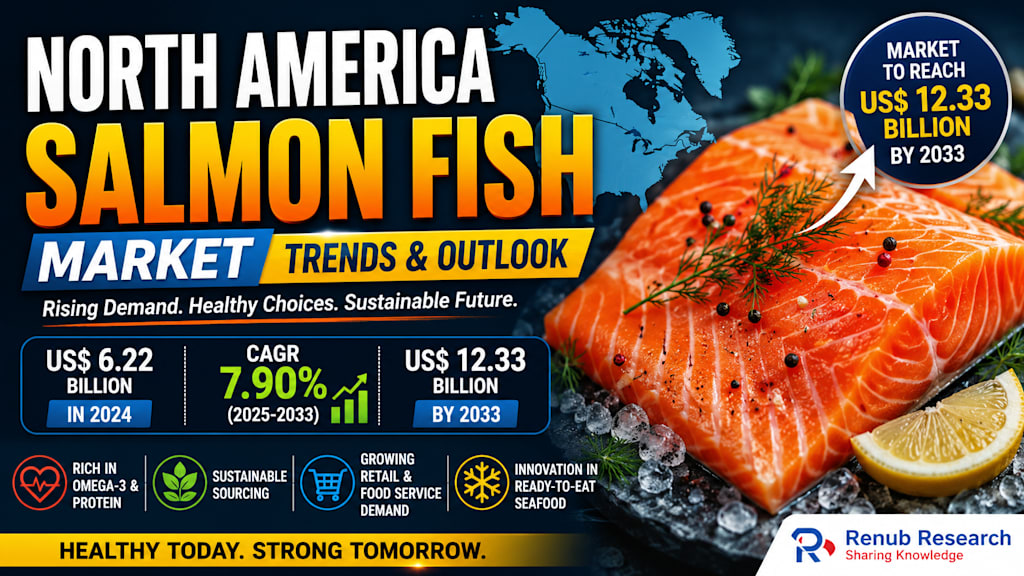
The North America salmon fish market is entering a strong growth phase as consumers increasingly prioritize healthy eating, premium seafood choices, and sustainable food sourcing. Salmon, long regarded as one of the most nutritious fish varieties globally, has become a staple across households, restaurants, and processed food industries throughout the region.
According to Renub Research, the North America Salmon Fish Market is projected to grow from US$ 6.22 billion in 2024 to US$ 12.33 billion by 2033, expanding at a CAGR of 7.90% during 2025–2033.
The industry’s rapid expansion is being fueled by rising awareness regarding the health benefits of salmon, the increasing popularity of ready-to-eat seafood products, and major technological advancements in aquaculture and seafood processing. Consumers across the United States, Canada, and Mexico are now choosing salmon not only for taste but also for nutrition, convenience, and sustainability.
Salmon Continues to Dominate Healthy Seafood Choices
Salmon has become one of the most preferred seafood options because it offers a combination of excellent taste and exceptional nutritional value. Rich in omega-3 fatty acids, protein, vitamin D, vitamin B12, and selenium, salmon supports heart health, brain function, immunity, and bone strength.
Modern consumers are actively shifting toward healthier diets, and seafood consumption is growing steadily as part of that trend. Salmon fits perfectly into this lifestyle transition because it is viewed as a premium, nutrient-rich food that can be prepared in multiple ways.
The growing prevalence of lifestyle-related diseases such as obesity, cardiovascular disorders, and diabetes has also encouraged consumers to adopt healthier food alternatives. Nutritionists and healthcare professionals frequently recommend fatty fish like salmon as part of balanced meal plans.
This rising health awareness is creating long-term momentum for the salmon industry throughout North America.
Ready-to-Eat and Convenience Foods Boost Market Expansion
One of the strongest drivers of the North America salmon market is the increasing demand for convenience foods. Consumers with busy lifestyles are looking for nutritious meals that require minimal preparation time.
As a result, food companies are rapidly expanding their portfolios with salmon-based products such as:
Smoked salmon
Frozen salmon fillets
Canned salmon
Salmon jerky
Salmon spreads
Ready-to-cook salmon meals
Salmon burgers
Salmon poke bowls
These products appeal to consumers seeking convenience without compromising nutrition or taste.
Retail chains, supermarkets, and online grocery platforms are also dedicating more shelf space to value-added seafood products. The expansion of cold-chain logistics and temperature-controlled transportation has further improved product availability across urban and rural markets.
Food service providers, including hotels, restaurants, and catering businesses, are also integrating salmon into diverse menu offerings because of its versatility and growing popularity among customers.
Sustainability Becomes a Defining Industry Trend
Sustainability is now at the center of the salmon industry’s future.
Consumers are increasingly demanding responsibly sourced seafood, encouraging fisheries and aquaculture companies to adopt environmentally friendly practices. Ethical seafood sourcing has become an important purchasing factor, especially among younger consumers.
Certified sustainable fisheries and eco-conscious aquaculture operations are receiving more attention across North America. Governments and environmental organizations are also tightening regulations around fishing practices, marine conservation, and aquaculture operations.
Companies are investing heavily in sustainable farming systems, waste reduction technologies, and improved fish welfare standards to meet evolving consumer expectations.
This sustainability-driven transformation is expected to reshape the competitive landscape of the salmon market during the coming decade.
Technological Advancements Revolutionize Salmon Farming
Technological innovation has significantly improved salmon farming efficiency and product quality across North America.
Modern aquaculture operations now utilize:
Advanced feeding systems
Selective breeding technologies
Automated water quality monitoring
Disease management tools
Smart aquaculture systems
Precision farming technologies
These advancements help producers improve fish health, reduce mortality rates, and increase operational efficiency.
In addition, innovations in seafood processing and packaging are extending shelf life and maintaining freshness throughout the supply chain. Vacuum-sealed packaging, advanced freezing methods, and efficient cold-storage logistics have enabled salmon producers to expand distribution networks into new regions.
Technology is also helping companies reduce environmental impact while increasing production output, creating a more sustainable and profitable industry model.
Culinary Versatility Keeps Consumer Interest High
One of salmon’s biggest advantages is its culinary flexibility.
Its rich flavor, soft texture, and nutritional profile make it suitable for multiple cuisines and cooking styles. Consumers can grill, bake, roast, smoke, steam, or pan-sear salmon, making it a favorite ingredient in both home kitchens and professional restaurants.
Fusion cuisine trends have further expanded salmon’s popularity. Chefs and food brands are creating innovative dishes that combine traditional seafood preparations with international flavors.
Salmon is now commonly featured in:
Sushi and sashimi
Mediterranean dishes
Asian-inspired bowls
Gourmet sandwiches
Healthy salads
High-protein meal kits
The ability of salmon to adapt to changing culinary trends continues to support strong market demand.
Disease Management Remains a Major Industry Challenge
Despite strong growth prospects, the salmon market faces several operational and environmental challenges.
Disease and parasite control remain among the biggest concerns for aquaculture producers. Sea lice infestations, bacterial infections, and viral outbreaks can significantly impact farmed salmon populations.
Managing these issues requires constant monitoring, advanced treatment methods, vaccination programs, and strict biosecurity protocols. However, implementing such systems often involves high operational costs and technical expertise.
The use of antibiotics and chemical treatments has also become controversial, with consumers and environmental groups raising concerns about ecological impact and food safety.
Producers must therefore balance productivity, profitability, and sustainability while maintaining strict health standards.
Climate Change Threatens Long-Term Salmon Production
Climate change is becoming another major concern for the North America salmon industry.
Rising ocean temperatures, ocean acidification, and unpredictable weather conditions are affecting marine ecosystems and salmon habitats. These environmental changes can alter migratory patterns, reduce oxygen levels in water, and increase the spread of diseases and parasites.
Extreme weather events such as storms and flooding may also damage aquaculture infrastructure and disrupt supply chains.
Both wild-caught and farmed salmon populations face increasing pressure from environmental instability. Industry stakeholders are therefore investing in climate-resilient aquaculture technologies and sustainable marine management strategies.
The future success of the salmon market will depend heavily on how effectively the industry adapts to these climate-related challenges.
United States Leads Regional Salmon Consumption
The United States remains the dominant market for salmon consumption in North America.
American consumers are increasingly choosing seafood as part of healthier lifestyles, and salmon continues to be one of the most preferred fish varieties in the country. Both wild-caught and farm-raised salmon are widely available through supermarkets, online retailers, and food service channels.
The U.S. market is also witnessing strong demand for premium smoked salmon products and ready-to-eat seafood meals.
Product innovation remains a key competitive strategy, with seafood brands introducing new flavors, packaging formats, and convenience-focused offerings to attract consumers.
Strong retail distribution, expanding e-commerce grocery platforms, and growing awareness regarding seafood nutrition are expected to continue driving market growth in the United States.
Canada Focuses on Sustainable Aquaculture Transition
Canada plays a critical role in the North American salmon industry, particularly through aquaculture operations located in British Columbia, Nova Scotia, Newfoundland and Labrador, New Brunswick, and Prince Edward Island.
Atlantic salmon remains the dominant species cultivated in Canadian aquaculture farms.
However, the country is also facing intense debate regarding environmental sustainability and fish farming practices. Canadian authorities have announced plans to phase out open-net pen salmon farming in British Columbia by 2029.
The transition toward closed-containment systems is expected to create both opportunities and operational challenges for producers. While sustainable farming systems may improve environmental outcomes, they also require significant investments and technological adaptation.
Despite these challenges, Canada remains one of the most important contributors to North America’s salmon supply chain and seafood export economy.
Mexico Emerges as a Growing Salmon Consumer Market
Mexico’s salmon market is growing steadily due to rising seafood consumption and changing dietary preferences.
Although domestic salmon production remains limited, imports from countries such as Chile, Norway, and the United Kingdom are helping meet rising demand. Salmon consumption is expanding across retail stores, restaurants, and urban households.
Major seafood distribution hubs like La Nueva Viga in Mexico City play a vital role in supporting salmon trade and supply networks.
Mexican consumers are increasingly purchasing frozen, canned, and fresh salmon products as awareness regarding seafood nutrition continues to rise.
The country’s expanding middle class and growing interest in international cuisine are expected to support future market expansion.
10 Recent Developments by Major Salmon Industry Companies
1. Multi X Launches New Smoked Salmon Products
In March 2024, Multi X introduced Latitude 45 Smoked Salmon Candy Bites and Smoked Chipotle Salmon during Seafood Expo North America.
2. King Oscar Expands Atlantic Salmon Portfolio
In January 2024, King Oscar launched a new line of skinless and boneless Atlantic salmon packed in extra virgin olive oil for the U.S. market.
3. Acme Smoked Fish Opens Florida Facility
Acme Smoked Fish expanded operations by launching a new manufacturing facility in Florida to meet rising demand across the southeastern United States.
4. Leroy Seafood Group Strengthens Sustainable Farming Initiatives
Leroy Seafood Group continued investments in sustainable aquaculture technologies and environmentally responsible salmon production systems.
5. Camanchaca Focuses on Premium Export Growth
Camanchaca expanded its premium salmon product portfolio to strengthen exports and improve global market positioning.
6. Marine Harvest Advances Aquaculture Innovation
Marine Harvest increased investments in smart aquaculture systems and fish health monitoring technologies.
7. Multiexport Foods Enhances Cold Chain Operations
Multiexport Foods upgraded logistics and cold-storage infrastructure to improve product quality and supply efficiency.
8. Atlantic Capes Fisheries Expands Seafood Distribution
Atlantic Capes Fisheries expanded seafood distribution capabilities to support growing retail and food service demand.
9. Seatrade Accelerates Sustainable Seafood Partnerships
Seatrade strengthened partnerships focused on traceable and sustainable seafood sourcing across North America.
10. Atalanta Corporation Broadens Seafood Import Network
Atalanta Corporation expanded its seafood sourcing network to improve salmon product availability and market reach.
Final Thoughts
The North America salmon fish market is entering an exciting phase of transformation driven by health-conscious consumers, sustainability initiatives, technological innovation, and growing demand for premium seafood products.
As salmon becomes increasingly integrated into everyday diets, companies are investing heavily in sustainable aquaculture, product diversification, and advanced logistics infrastructure. At the same time, environmental concerns and climate-related risks are pushing the industry toward more responsible production practices.
With demand continuing to rise across the United States, Canada, and Mexico, the industry is expected to witness substantial growth over the next decade.
According to Renub Research, the market’s projected rise to US$ 12.33 billion by 2033 highlights the enormous opportunities ahead for seafood producers, retailers, food service providers, and sustainability-focused innovators.
About the Creator
Enjoyed the story? Support the Creator.
Subscribe for free to receive all their stories in your feed.
Comments
There are no comments for this story
Be the first to respond and start the conversation.