
No Place Left to Disappear
Getting pulled over twice for a suspended license taught me that the cameras already know—and the old fantasy of vanishing on the open road is gone

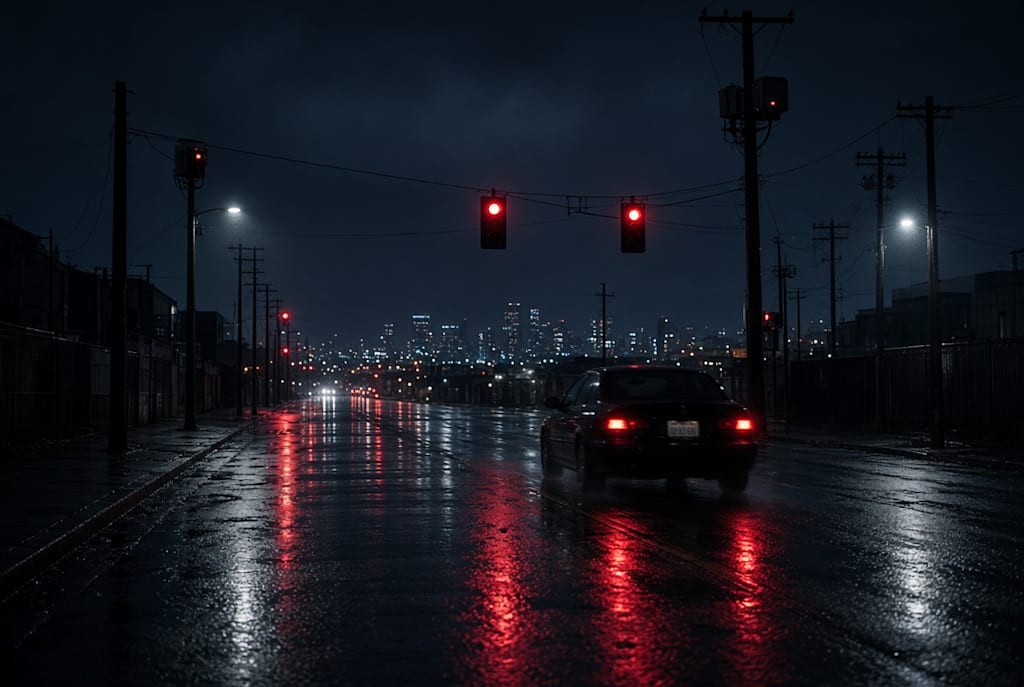
I got pulled over twice while my license was suspended, both times because of license plate readers. The first time I was just trying to get to work. The second time I was running an errand that couldn’t wait. Neither stop involved me speeding, running a light, or doing anything that looked wrong from the outside. An automated system scanned my plate, matched it to a hot list, and told an officer I was driving on a suspended license. That was enough.
I used to think the only way police would know about a suspended license was if they had some other reason to look me up—maybe a broken taillight or a random checkpoint. I was wrong. The cameras are already watching. They sit on poles, on police cars, and often near traffic lights and intersections. They read every plate that passes, check it against databases of suspended drivers, warrants, stolen vehicles, and more, and send real-time alerts when there’s a hit. You don’t have to do anything special to get noticed. You just have to drive.
That experience changed how I see the roads. Before it happened, the idea that traffic cameras or fixed readers could quietly flag me felt like something from a government-conspiracy movie—Enemy of the State or Minority Report territory. In those stories people still found ways to disappear for a while. They switched cars, stayed off main roads, or somehow stayed off the grid. Now that option is mostly gone. Once your plate is on a hot list, the system treats every public road as a potential checkpoint. You never know when you’ll want to be invisible, but the technology has made invisibility almost impossible.
I didn’t set out to test the system. My license was suspended for reasons that felt bureaucratic more than dramatic—unpaid tickets that stacked up, a process that took longer than I expected to resolve. I kept driving because I needed to work and take care of basic things. I told myself the odds of getting caught were low if I stayed careful. The plate readers proved that calculation wrong. The first stop felt almost clinical: the officer already knew the plate was flagged before he walked up. The second stop was the same. No drama, no high-speed chase, just a quiet electronic match that turned an ordinary drive into a police encounter.
What makes this technology feel like science fiction is how ordinary it has become. Automated license plate readers—ALPRs—capture the plate, convert the image to text, and compare it to hot lists that include suspended or revoked licenses and people with outstanding warrants. Fixed cameras are mounted on existing infrastructure, including poles and locations near traffic lights. Mobile units ride on police cruisers and scan continuously as the car moves. In many places private networks run by companies like Flock Safety add even more coverage and share data across agencies. The system doesn’t wait for suspicion. It scans everyone and alerts when there’s a match.
The personal cost is the loss of that residual anonymity most of us used to take for granted. There was a time when driving across town didn’t automatically generate a searchable record of where you had been. You could visit certain places, take certain routes, or simply move through the day without creating a digital trail that any authorized user could later pull up. That buffer is shrinking. The cameras don’t care whether you’re going to work, to a doctor, to see family, or just trying to handle life while your paperwork is in limbo. Every pass is data. And once you’re on a hot list, that data can bring an officer to your window with almost no additional effort on their part.
I keep thinking about the moments when invisibility would have mattered. Not for committing crimes, but for the ordinary, messy reasons people sometimes need space—privacy during a hard time, the ability to handle personal business without every movement being logged, the simple wish not to be found until you’re ready. The technology doesn’t distinguish. It treats the suspended driver the same way it treats the stolen car or the person with a warrant. Efficient, continuous, and indifferent.
This is the quiet change the technology is making. It is rewriting the assumptions we once held about freedom of movement on public roads. Catching suspended drivers and people with warrants can improve safety. Recovering stolen vehicles is a clear public good. But the same system that delivers those results also erases the old possibility of slipping under the radar for a while. You never know when you’ll want that option. Now, in most places where the cameras are dense, it is no longer realistic.
The science-fiction part isn’t the existence of the cameras. It’s how completely they have become background infrastructure. Twenty years ago continuous automated plate scanning at this scale still belonged in speculative stories. Today it is a standard tool for departments large and small. The conspiracy-movie fantasy of total visibility arrived not as a dramatic central computer but as thousands of ordinary cameras doing their quiet work every day. I learned that the hard way, twice, on otherwise ordinary drives.
I eventually got my license reinstated. The stops stopped. But the knowledge stays with me every time I pass another pole-mounted camera or see a cruiser with the distinctive readers on top. The system is still running. It is still reading plates. And the old idea that you could become invisible on a public road—the way characters once did in the movies—feels more like a relic every day.
About the Creator
Alexandria Hypatia
A philosopher and Libra to the fullest. I have always enjoyed writing as well as reading. My hope is that someday, at least one of my written thoughts will resonate and spark discussions of acceptance and forgiveness for humanity.
Enjoyed the story? Support the Creator.
Subscribe for free to receive all their stories in your feed.
Comments
There are no comments for this story
Be the first to respond and start the conversation.