
Netherlands Diabetes Devices Market Set for Strong Growth Through 2034 Amid Rising CGM Adoption and Digital Healthcare Expansion
Advanced glucose monitoring systems, insulin delivery innovations, and preventive healthcare strategies are reshaping diabetes management across the Netherlands

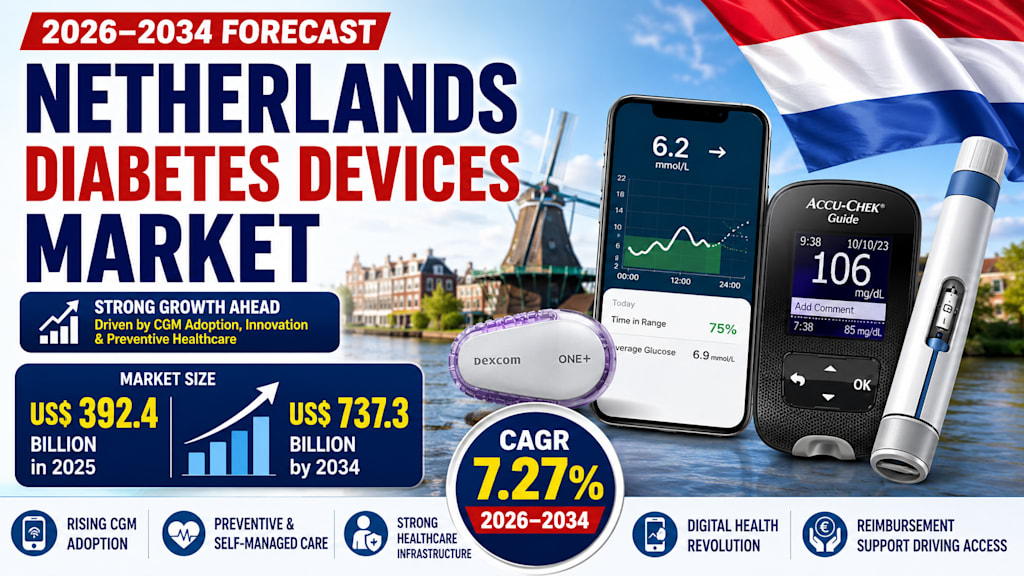
The Netherlands diabetes devices market is entering a transformative growth phase as the country accelerates the adoption of advanced glucose monitoring technologies, digital healthcare systems, and patient-centered diabetes management solutions. According to recent market insights, the Netherlands diabetes-care devices market is projected to grow from approximately US$ 392.4 billion in 2025 to nearly US$ 737.3 billion by 2034, expanding at a CAGR of 7.27% during the forecast period from 2026 to 2034.
This remarkable expansion reflects a broader shift in the Dutch healthcare ecosystem toward preventive care, early diagnosis, and technology-enabled disease management. As diabetes cases continue to rise, healthcare providers, policymakers, and device manufacturers are increasingly focusing on innovative tools that improve patient outcomes while reducing long-term healthcare costs.
The growing penetration of continuous glucose monitoring (CGM) systems, insulin pumps, smart insulin pens, and remote monitoring platforms is redefining how diabetes is managed in the Netherlands. These technologies not only offer real-time glucose insights but also empower patients to take greater control of their daily health decisions.
Growing Diabetes Burden Driving Device Demand
Diabetes has become one of the most significant chronic health challenges in the Netherlands. Rising obesity rates, sedentary lifestyles, genetic predispositions, and aging demographics are contributing to an increasing number of diabetes diagnoses across the country.
The report notes that nearly 1.2 million people in the Netherlands are currently living with diabetes, with approximately 10% affected by type 1 diabetes. This growing patient population is creating sustained demand for devices that support continuous monitoring, insulin administration, and personalized diabetes management.
Healthcare experts emphasize that early detection and proactive disease management are essential for reducing complications associated with diabetes, including cardiovascular disease, kidney disorders, nerve damage, and vision impairment. As a result, medical technologies that enable accurate and consistent glucose tracking are gaining widespread acceptance among both healthcare professionals and patients.
The Netherlands’ highly developed healthcare infrastructure further supports rapid adoption of these advanced solutions. Easy access to healthcare services, strong insurance coverage, and public awareness campaigns have collectively strengthened the country’s diabetes management ecosystem.
Preventive Healthcare Becoming a Core Market Driver
One of the most important factors fueling market growth is the Dutch healthcare system’s strong emphasis on preventive care and self-management.
Healthcare providers in the Netherlands actively encourage patients to monitor their blood glucose levels regularly and make lifestyle adjustments based on real-time health data. Devices such as self-monitoring blood glucose (SMBG) systems, continuous glucose monitors, and insulin pens have therefore become essential tools in daily diabetes care.
This shift toward self-managed care is increasing device utilization rates while also supporting repeat purchases of consumables such as test strips, lancets, and CGM sensors. The strategy not only improves patient independence but also reduces pressure on hospitals and clinics by enabling home-based disease management.
Preventive healthcare policies are expected to remain a cornerstone of the Netherlands healthcare strategy throughout the next decade, ensuring sustained growth opportunities for diabetes device manufacturers.
Digital Health Revolution Accelerating Market Expansion
The Netherlands has emerged as one of Europe’s leading adopters of digital healthcare technologies, creating a highly favorable environment for advanced diabetes management systems.
Patients and healthcare professionals are increasingly embracing connected health solutions that provide real-time glucose tracking, automated insulin delivery, cloud-based analytics, and smartphone integration.
Modern CGM systems can now transmit glucose data directly to mobile applications, allowing users to monitor glucose fluctuations continuously throughout the day. These systems also enable remote monitoring by healthcare providers and family members, improving safety and personalized treatment planning.
The rapid digitalization of healthcare has significantly improved patient engagement and treatment adherence. Physicians are also using data-driven insights generated by digital diabetes tools to optimize insulin therapy and identify patterns that may otherwise go unnoticed.
One major industry development highlighted in the report is the February 2024 European launch of the Dexcom ONE+ real-time continuous glucose monitoring system. The device offers customizable features and can be worn on multiple body locations, reflecting the industry’s increasing focus on convenience and patient comfort.
As digital health infrastructure continues to mature across the Netherlands, demand for intelligent diabetes devices is expected to accelerate further.
Reimbursement Support Encouraging Early Adoption
A major advantage for diabetes patients in the Netherlands is the country’s strong reimbursement framework.
Many advanced diabetes devices, including CGMs and insulin pumps, are partially or fully covered under healthcare reimbursement programs. This reduces the financial burden on patients and encourages early adoption of innovative diabetes management technologies.
The availability of reimbursement support is particularly important for insulin-dependent patients who rely on continuous monitoring and precise insulin delivery systems for daily disease management.
Long-term reimbursement stability also promotes consistent device usage, leading to better health outcomes and stronger market growth.
In 2023, Roche introduced the Accu-Chek Guide system in the Dutch market, aiming to simplify blood glucose testing for diabetes patients. The launch reflects ongoing efforts by major healthcare companies to enhance usability and improve patient experiences.
Continuous Glucose Monitoring Segment Witnessing Rapid Growth
Among all device categories, the continuous glucose monitoring (CGM) segment is expected to experience some of the fastest growth during the forecast period.
CGM devices provide real-time glucose readings, trend analysis, and automated alerts that help users avoid dangerous glucose fluctuations. These features are particularly valuable for patients with type 1 diabetes and insulin-dependent type 2 diabetes.
Unlike traditional finger-prick testing methods, CGMs offer continuous insights throughout the day and night, helping users make faster and more informed decisions regarding insulin dosage, meals, and physical activity.
The integration of CGMs with smartphones and digital health applications has further improved convenience and accessibility. Healthcare professionals can also remotely review patient data, enabling more personalized treatment strategies.
As awareness of diabetes technology grows, CGM devices are increasingly becoming a standard component of diabetes management in the Netherlands.
SMBG Devices Continue to Maintain Market Stability
Despite the rapid growth of advanced monitoring technologies, self-monitoring blood glucose (SMBG) devices continue to hold a stable position within the market.
Glucometers, lancets, and test strips remain widely used among diabetes patients, particularly older individuals and newly diagnosed patients.
SMBG devices are valued for their affordability, simplicity, and ease of use. Many healthcare professionals continue recommending them as an effective option for routine blood glucose testing.
Although SMBG growth rates may be slower compared to CGM technologies, recurring demand for replacement consumables ensures continued market relevance.
Insulin Pumps Transforming Diabetes Treatment
The insulin pump market in the Netherlands is also gaining momentum as patients seek more precise and flexible insulin delivery solutions.
Insulin pumps continuously administer insulin through a subcutaneous infusion system, eliminating the need for multiple daily injections.
These devices provide improved glycemic control and greater lifestyle flexibility for users. Advanced insulin pumps can also integrate with CGM systems to create semi-automated insulin delivery platforms, often referred to as hybrid closed-loop systems.
While insulin pumps remain relatively expensive and require patient training, growing healthcare support and patient education initiatives are helping drive adoption rates higher.
The Netherlands’ supportive healthcare infrastructure is expected to play a critical role in expanding insulin pump accessibility in the coming years.
Smart Insulin Pens Gaining Popularity
Insulin pens remain among the most widely adopted diabetes devices in the country due to their portability, convenience, and dosing accuracy.
Both disposable and reusable insulin pens are commonly prescribed for patients with type 1 and type 2 diabetes. In recent years, smart insulin pens equipped with dose tracking and connectivity features have emerged as an important innovation trend.
These devices can record insulin usage data and synchronize with mobile applications, helping patients and healthcare professionals track treatment adherence more effectively.
As digital health adoption increases, smart insulin pens are expected to become a larger component of the Netherlands diabetes management landscape.
Diagnostic Centers and Retail Pharmacies Supporting Market Growth
Diagnostic centers are playing an increasingly important role in diabetes detection, monitoring, and long-term management. These facilities utilize CGM systems, SMBG solutions, and insulin management technologies to analyze glycemic trends and optimize treatment strategies.
Preventive healthcare initiatives and routine diabetes screening programs are further driving demand for advanced monitoring devices within diagnostic centers.
Retail pharmacies also remain a crucial distribution channel for diabetes devices across the Netherlands. Pharmacies provide easy access to glucose meters, test strips, insulin pens, CGM sensors, and related consumables.
As home-based diabetes management becomes more common, retail pharmacies are expected to strengthen their role in supporting patient access and education.
Market Challenges Still Exist
Despite strong growth prospects, the Netherlands diabetes devices market faces several challenges.
One major concern is the high cost associated with advanced diabetes technologies such as continuous glucose sensors and insulin pumps. These devices often require ongoing expenditures for consumables, maintenance, and software integration.
Healthcare authorities must continuously evaluate cost-effectiveness when determining reimbursement policies, which may slow adoption of premium technologies.
Another challenge involves usability and clinician adoption barriers. Some patients, particularly elderly individuals, may struggle with technology setup, data interpretation, and continuous device usage.
Addressing these challenges will require ongoing investment in patient education, digital literacy programs, and user-friendly device designs.
10 Recent Developments by Major Companies
Dexcom launched the Dexcom ONE+ real-time CGM system across Europe in February 2024, offering customizable wear locations and improved usability.
Roche introduced the Accu-Chek Guide system in the Netherlands in 2023 to simplify glucose monitoring for diabetes patients.
Medtronic continued expanding its smart insulin pump ecosystem with advanced automated insulin delivery technologies.
Abbott Laboratories strengthened its FreeStyle Libre product portfolio with enhanced connectivity and data-sharing capabilities.
BD (Becton Dickinson) focused on improving insulin injection technologies with advanced pen needle solutions.
Eli Lilly accelerated development of connected insulin delivery systems and digital diabetes platforms.
Terumo Corporation expanded its diabetes care product offerings with precision insulin administration technologies.
Dexcom increased partnerships with digital health providers to improve remote diabetes monitoring capabilities.
Roche continued investing in integrated diabetes management software and cloud-based analytics tools.
Abbott Laboratories enhanced smartphone integration features for continuous glucose monitoring devices to improve patient convenience.
Future Outlook
The future of the Netherlands diabetes devices market appears highly promising as technological innovation, preventive healthcare policies, and digital transformation continue reshaping diabetes management.
Continuous glucose monitoring systems, smart insulin delivery devices, and AI-powered analytics are expected to become increasingly integrated into routine care practices. Healthcare providers will likely continue emphasizing home-based management and personalized treatment approaches, further driving demand for connected diabetes technologies.
Strong reimbursement support, high digital literacy, and a proactive healthcare system position the Netherlands as one of Europe’s most advanced diabetes care markets.
As device manufacturers continue introducing more accurate, user-friendly, and connected solutions, the Netherlands diabetes devices market is expected to witness sustained long-term expansion through 2034.
About the Creator
Enjoyed the story? Support the Creator.
Subscribe for free to receive all their stories in your feed.
Comments
There are no comments for this story
Be the first to respond and start the conversation.