
NASA’s Cryogenic Revolution: Fueling the Future of Deep Space Exploration
How NASA’s LOXSAT Mission is Solving the Hidden Fuel Problem That Will Unlock Deep Space Travel

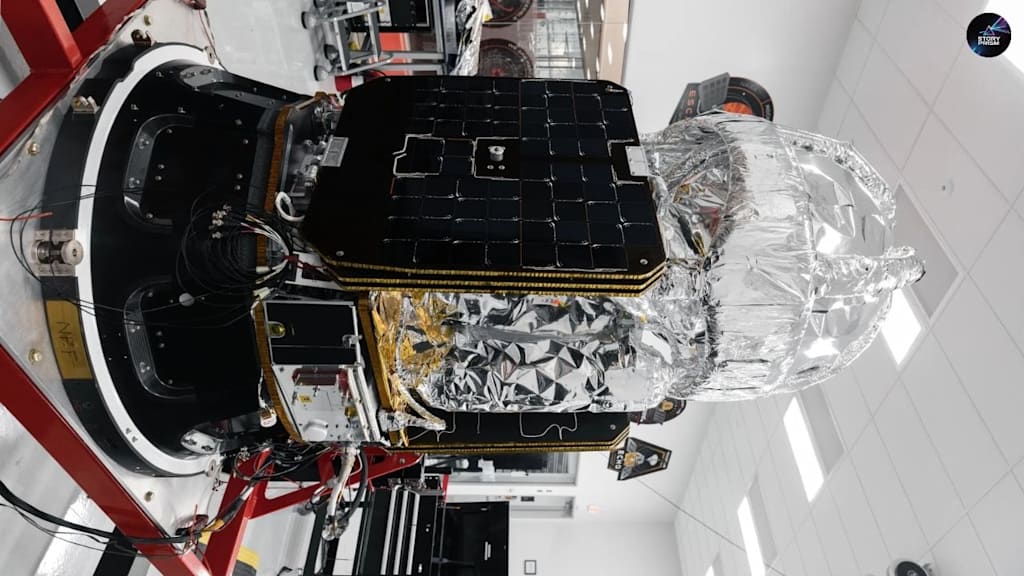
NASA is entering a new era of space exploration that goes beyond rockets and spacecraft design. At the center of this transformation is something less visible but absolutely essential: fuel. More specifically, cryogenic propellants—super-cold liquids such as liquid oxygen, liquid hydrogen, and liquid methane that power the most advanced space missions. While these fuels provide the energy needed to escape Earth’s gravity, they also create one of the biggest engineering challenges in space: how to store and manage them safely over long periods without losing them.
To address this challenge, NASA is developing a breakthrough initiative under its Cryogenic Fluid Management (CFM) program. The goal is to solve one of the most critical barriers to deep space exploration: preventing cryogenic fuel loss and enabling reliable fuel handling in space. This effort is not just a technical improvement; it is a foundational step toward building a sustainable infrastructure beyond Earth.
Cryogenic fuels must be kept at extremely low temperatures to remain in liquid form. Even in the vacuum of space, heat from the Sun and surrounding environment slowly enters storage tanks. This causes the fuel to warm up and eventually boil, turning into gas. This process, known as boiloff, leads to permanent fuel loss unless it is captured and managed. Over time, boiloff can significantly reduce the amount of usable fuel available for a mission, limiting how long spacecraft can operate and how far they can travel.
This problem becomes even more serious for long-duration missions such as those planned for the Moon and Mars. Unlike short orbital flights, deep space exploration requires spacecraft to remain operational for months or even years. Traditional fuel storage methods are not sufficient for these extended timelines. As a result, NASA is working on advanced technologies that can stabilize cryogenic propellants in microgravity, reduce heat transfer, and enable efficient fuel transfer systems in space.
To test these technologies, NASA is preparing an ambitious flight demonstration mission called LOXSAT, short for Liquid Oxygen Flight Demonstration. This spacecraft will operate in low Earth orbit for approximately nine months and evaluate eleven different cryogenic fluid management technologies under real space conditions. LOXSAT represents a major step forward because it moves these systems from laboratory testing and simulations into the actual environment where they are intended to operate.
The mission focuses on solving several key challenges. One of the primary objectives is reducing boiloff so that cryogenic fuel can remain usable for longer periods. Another important goal is enabling the transfer of cryogenic propellants between tanks in microgravity, a process that is extremely difficult due to the behavior of liquids in weightlessness. The mission will also test systems for measuring how much fuel remains in storage tanks, which is surprisingly complex when dealing with liquids that can shift unpredictably in space. In addition, LOXSAT will examine how to maintain stable tank pressure, which is essential for safe and efficient fuel usage.
If successful, these technologies could revolutionize space travel. One of the most significant applications would be the creation of orbital refueling stations. Instead of launching fully fueled spacecraft from Earth every time, future missions could refuel in space, dramatically reducing cost and increasing flexibility. This would make it possible for spacecraft to travel farther, stay in space longer, and carry out more complex missions than ever before.
The implications for NASA’s Artemis program and future Mars exploration are enormous. Lunar missions could be supported by in-orbit fuel depots, allowing astronauts to travel between Earth, the Moon, and lunar bases more efficiently. Even more importantly, Mars missions—which require enormous amounts of energy and long travel times—could become more feasible if spacecraft can refuel and manage fuel effectively in space.
The LOXSAT mission is also a strong example of collaboration between NASA and the private sector. NASA’s Space Technology Mission Directorate is leading the program, while industry partner Eta Space is responsible for building the spacecraft and integrating the technology payloads. Rocket Lab is also involved, providing spacecraft systems and launch support. This partnership reflects a broader shift in space exploration, where government agencies and private companies work together to accelerate innovation and reduce development timelines.
Beyond individual missions, cryogenic fluid management represents a critical building block for the future space economy. If fuel can be stored, transferred, and reused efficiently in space, it opens the door to entirely new systems of infrastructure. Spacecraft could be reused multiple times, satellites could be refueled instead of replaced, and permanent stations in orbit could support ongoing exploration. This would transform space from a series of isolated missions into a connected, sustainable system.
Ultimately, NASA’s work in cryogenic fuel technology is about more than solving a technical challenge. It is about enabling humanity to operate beyond Earth in a practical and sustainable way. By addressing the hidden but essential problem of fuel loss and management, NASA is laying the groundwork for the next generation of exploration—one where reaching the Moon, Mars, and beyond is not just possible, but routine.

About the Creator
Enjoyed the story? Support the Creator.
Subscribe for free to receive all their stories in your feed.
Comments
There are no comments for this story
Be the first to respond and start the conversation.