
Nanocoatings Market Gains Momentum Amid Rising Industrial Demand
How industrial automation, smart manufacturing trends, and advanced production processes are improving efficiency and scalability within the nanocoatings market

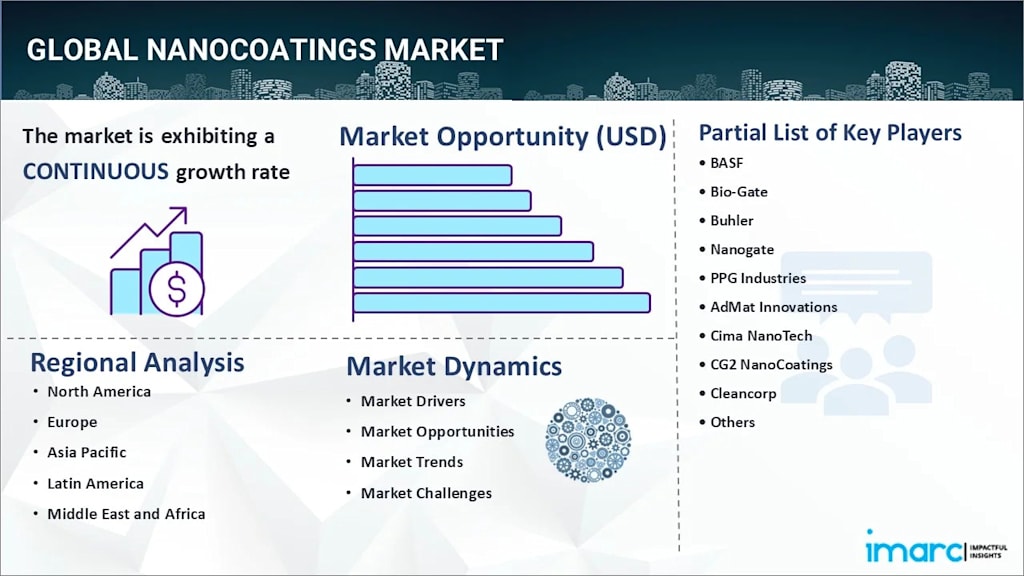
Rising demand for advanced surface modifications, high-performance materials, and protective barriers across industrial sectors is driving nanocoatings demand, supported by technological advancements, strict environmental regulations, and expanding manufacturing capabilities globally. According to IMARC Group’s latest data, The global nanocoatings market size was valued at USD 16.5 Billion in 2025. Looking forward, IMARC Group estimates the market to reach USD 59.4 Billion by 2034, exhibiting a CAGR of 14.83% from 2026-2034.
Nanocoatings now represent a multi-billion-dollar global market exceeding USD 16 billion and exhibiting steady year-on-year expansion. Demand is driven by rising requirements for surface longevity, heavy industrial infrastructure protection, and increased interest in anti-microbial, self-cleaning, and anti-corrosive properties. Manufacturing innovation and materials science, private-sector R&D investments, and product reformulation for ultra-thin protective films are further accelerating uptake. Major segments include anti-microbial, self-cleaning, anti-fingerprint, and anti-corrosion variants, with industrial users prioritizing structural durability, transparent chemical bonding, and explicit performance guarantees.
Nanocoatings Market Growth Drivers:
- Growing Utilization in Advanced Drug Delivery Systems
Medical professionals and pharmaceutical developers prioritize target-specific solutions to improve medication solubility and bioavailability while minimizing side effects. This structural shift heavily favors specialized nanocoatings designed for medical devices, implants, and nanomedicine carriers over traditional systemic treatments. Global clinical frameworks highlight the industry's pivot toward these advanced surface modifications, noting reduced pathogen attachment and optimized therapeutic release rates. Industry leaders continuously innovate with biocompatible polymer and lipid formulations to fulfill these rigorous standards, ensuring safer patient outcomes and enhanced material integration in modern hospital settings.
- Rising Focus on Solar Energy Infrastructure Protection
Energy operators invest heavily in maximizing solar panel efficiency by protecting photovoltaic cells from dust, scratches, moisture, and environmental pollutants. This operational challenge drives massive implementation of hydrophobic and self-cleaning nanocoatings that prevent debris accumulation and maintain optimal light transmittance. The global energy infrastructure segment leverages these thin-film solutions to lower maintenance costs and eliminate frequent manual cleaning cycles in arid regions. As utility-scale solar farms expand across major geographic zones, the reliance on these durable surface treatments remains vital to sustaining peak power outputs over extended field operations.
- Thriving Global Textile and Apparel Manufacturing Sector
Textile manufacturers actively adopt advanced finishing technologies to supply functional, high-performance fabrics that satisfy evolving consumer and industrial performance standards. Applying nanocoatings grants ordinary textiles excellent oleophobic and hydrophobic properties, making them highly resistant to oils, water, and deep stains without altering fabric breathability. This capability sees widespread deployment in activewear, military uniforms, and protective medical garments where liquid repellency and breathability are equally essential. Production facilities integrate these nanoscale treatments directly into finishing lines, creating premium-grade, long-lasting apparel that withstands rigorous commercial laundering and harsh environments.
Nanocoatings Market Trends:
- Surging Integration in Next-Generation Consumer Electronics
Electronics manufacturers prioritize water-resistance, scratch protection, and anti-fingerprint aesthetics to satisfy consumer demands for durable, premium-tier devices. Designing modern smartphones, wearables, and circuit boards requires ultra-thin barriers that protect sensitive components without altering device form factors or adding unnecessary weight. Engineering teams deploy liquid-repellent nano-layers to safeguard internal circuitry from sweat, accidental spills, and humidity. This deployment extends product lifespans and decreases warranty claims, offering significant value to high-volume electronic assembly plants and global consumer technology brands aiming for total structural reliability.
- Widespread Adoption of Anti-Microbial Formulations in Healthcare
Hospitals, clinics, and public transit networks prioritize long-term surface hygiene to limit the spread of pathogens on frequently touched communal fixtures. This focus accelerates the deployment of silver, copper, and zinc-based anti-microbial nanocoatings across medical instruments, bed rails, and interior wall surfaces. These continuous-action coatings actively disrupt microbial cellular walls, suppressing bacterial and viral growth between standard sanitization protocols. Regulatory compliance pushing for reduced hospital-acquired infections further establishes these coatings as a vital layer of structural defense within crowded clinical and public transport environments.
- Increasing Deployment of Self-Cleaning Building Exteriors
Architects and civil engineering firms focus heavily on sustainable building designs that minimize maintenance overhead and withstand intense ultraviolet exposure and heavy rain. Utilizing photocatalytic and hydrophobic nanocoatings allows modern glass facades, concrete walls, and ceramic tiling to break down organic dirt via sunlight exposure, allowing rain to cleanly wash away debris. This real-world application maintains clean architectural aesthetics and slashes building maintenance budgets for high-rise commercial structures. The trend remains exceptionally strong across urban centers investing heavily in smart city infrastructure and eco-friendly building designs.
Recent News and Developments in Nanocoatings Market
- December 2023: Nanofilm Technologies International initiated an expansion into the European industrial sector via a USD 9.9 million venture with Germany-based AxynTeC Dünnschichttechnik, aiming to deploy advanced thin-film coating equipment and specialized coating services across medical and heavy industrial manufacturing operations.
- January 2024: PPG Industries announced a comprehensive USD 44 million capital investment strategy dedicated to upgrading and modernizing five powder coating manufacturing plants throughout the United States and Latin America, directly expanding production capacity for advanced surface treatment technologies.
- May 2024: BASF’s Coatings division and INEOS Automotive finalized a long-term strategic partnership focused on global automotive refinish body and paint development, ensuring specialized vehicle body repairs meet high-performance surface protection and coating industry standards.
Note: If you require specific details, data, or insights that are not currently included in the scope of this report, we are happy to accommodate your request. As part of our customization service, we will gather and provide the additional information you need, tailored to your specific requirements. Please let us know your exact needs, and we will ensure the report is updated accordingly to meet your expectations.
About the Creator
Andrew Sullivan
Hello, I’m Andrew Sullivan. I have over 9+ years of experience as a market research specialist.
Enjoyed the story? Support the Creator.
Subscribe for free to receive all their stories in your feed.
Comments
There are no comments for this story
Be the first to respond and start the conversation.